Dubai Tour in 2026: Best Time to Go (Spring–Summer Guide)
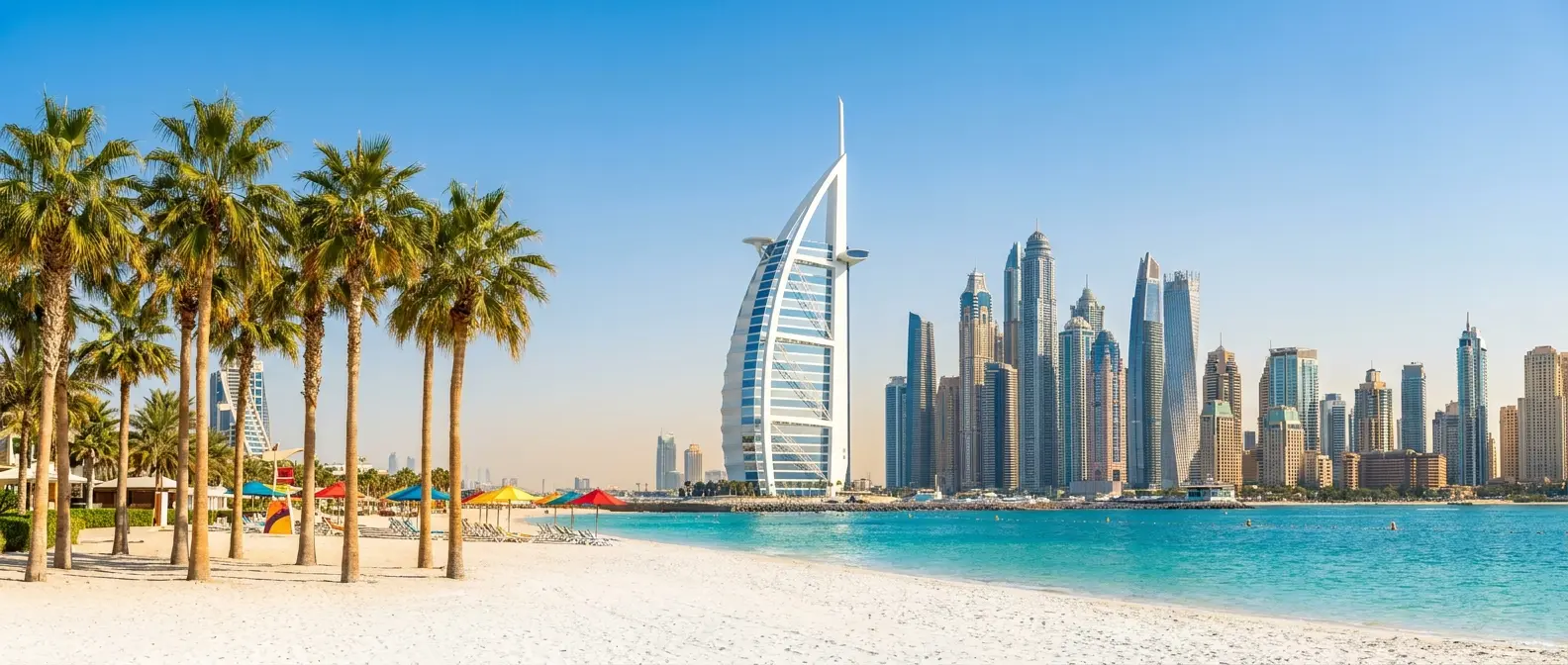
Ask ten travellers about a Dubai trip and nine of them will talk about hotels and day counts. Almost nobody asks the question that actually decides whether the holiday works: which week are you flying? The same four-night package behaves like two completely different products depending on the departure date. A stroll along the Dubai Marina in early April and the same stroll in late June are not the same experience, and the difference is not cosmetic. It changes how much of the city you can realistically see, how much you spend on taxis, and whether you come home refreshed or depleted.
This guide works from the actual departure calendar of the Görkemli Dubai & Lüksün Başkenti 4-night tour, which you can view on Turlago, and answers the timing question month by month, date by date. No weather guesswork, no generic advice — just what each window in the 2026 spring and summer season actually delivers.
The three variables that decide your Dubai dates
Dubai sits in one of the most extreme climate bands in the Gulf. The annual spread is wide enough that the same itinerary turns into a comfortable city break in one month and a carefully air-conditioned logistics exercise in another. Three things matter:
- The thermometer. A waterfront walk that feels pleasant at 33°C in April becomes a very different proposition above 40°C with high humidity in July.
- The local calendar. The UAE weekend runs Saturday and Sunday. Because every departure on this tour leaves on a Wednesday, the two busiest days in the city land inside your trip.
- Your wallet. The package price is fixed, but your on-the-ground spend is not. In hotter months you lean harder on taxis, malls and indoor attractions, which quietly raises the daily budget.
Ignore any one of these and you usually end up with one of two outcomes: a week so hot you cannot fully explore, or a week so crowded that every queue eats into your sightseeing time. The sections below deal with both traps directly.
The 2026 departure calendar on Air Arabia
All flights operate with Air Arabia between Istanbul Airport (IST) and Sharjah, with the return leg also on Air Arabia. The published 2026 spring and summer departures are:
- April: 8, 15, 22 and 29 April
- May: 6, 13 and 27 May
- June: 24 June
- July: 15 July
- August: 26 August
- September: 23 and 30 September
The first thing worth noticing is that every single departure falls on a Wednesday. The tour runs five days and returns on Sunday, which means you get the entire weekend in Dubai. If you are counting annual leave, that is a significant advantage: you only need three working days (Wednesday, Thursday, Friday) to unlock a five-day international trip.
The second thing is how the dates line up with Turkish public holidays, and this is clearly deliberate given how the tour is categorised:
- 22 April departure: your second full day in Dubai is 23 April, and that is the day the panoramic city tour and the Old Souks tour are scheduled. Ideal if you want to convert a national holiday into a city break.
- 15 July departure: the tour begins precisely on 15 July, giving you three full days in the city after arrival.
- 26 August departure: the return leg lands on 30 August, so you spend Victory Day travelling home.
- 29 April departure: you spend 1 May in Dubai, which suits anyone extending a long weekend abroad.
Meeting point on departure day is the Air Arabia counter at Istanbul Airport international departures, three hours before the flight. The outbound flight leaves at 14:10 and reaches Sharjah at 19:30 local time. One practical detail: the UAE is one hour ahead of Türkiye, so when it is 19:30 in Istanbul it is already 20:30 in Dubai.
Month by month: what each 2026 window actually feels like
The notes below are based on long-term climate averages and on what this specific itinerary includes. The goal is not a precise forecast but a clear picture of which month suits which type of traveller.
April: the most balanced window
April is the most comfortable month in this calendar. Daytime temperatures typically sit in the 30–33°C range and evenings stay warm enough for light clothing. The Gulf is warming up, humidity has not yet become a factor, and outdoor sightseeing feels natural rather than strategic. That matters because the panoramic city tour is the most walking-heavy part of the programme, covering Sheikh Palace, Emirates Tower, the skyscraper avenue, the Burj Al Arab — the world's only seven-star hotel — the Jumeirah district and Palm Island. April also offers four departure dates, which gives you flexibility on availability. The one thing to watch is the 23 April week, when demand from Türkiye spikes and seats close earlier than you might expect.
May: the transition month
In May daytime averages climb toward 36–38°C and humidity starts to register. Even so, mornings and late afternoons remain perfectly workable, and because this itinerary places the open-air sightseeing in the first half of the day, May is still a manageable choice. The date that deserves attention is 27 May. In 2026, Eid al-Adha is expected to fall in late May, which means both Istanbul airports and Dubai hotels may be busier than usual in that window. Anyone booking early will feel a clear advantage.
June: hot but quiet
By June, daytime averages approach 40°C. On the other hand, June is comparatively quiet in Dubai, because the main European visitor flow shifts later in the year. The 24 June departure therefore appeals to travellers who dislike crowds. What compensates for the heat is Dubai's indoor infrastructure: malls, covered souks and museums all operate at full capacity. The Old Souks tour included in the programme covers exactly the kind of area where you can spend the hottest hours productively, browsing electronics, laptops, consoles, textiles, gold and spices at some of the best prices you will find anywhere.
July: the hardest month with the most symbolic date
July is Dubai's hottest and most humid month. Average daytime temperatures hover around 41°C, and humidity pushes the perceived temperature higher still. Planning long outdoor walks is simply unrealistic. That said, the 15 July departure coincides exactly with a Turkish public holiday, which makes it the most emotionally appealing date on the calendar. If you pick it, treat the trip as an indoor-experience holiday rather than a walking holiday: finish outdoor sightseeing early, reserve the afternoon for malls and covered souks, and save the evening for being outside.
August: long, humid days
August runs close to July in temperature terms, with averages around 40–41°C. The advantage of the 26 August departure is that the return lands on 30 August, aligning the trip with Türkiye's official holiday calendar. In August, hotel location matters more than at any other time of year, because the need to return and rest mid-day increases. If you plan to add optional tours, favour enclosed, air-conditioned experiences such as The View at The Palm, which noticeably improves comfort.
September: the slow retreat of the heat
September is still hot in Dubai but the days begin to shorten. Daytime averages sit around 38–39°C. The final two departures, 23 and 30 September, close out the summer season. The 30 September date finishes the tour on 4 October, which means you ease into the more temperate autumn weather on the way home. For travellers who like early autumn, 30 September is the most sensible late option.
Five days, four nights — but how many real days in Dubai?
The tour is marketed as five days with four nights of accommodation. When you plan your days, however, the usable time is tighter than it looks:
- Day 1: flight from Istanbul, arrival in Sharjah at 19:30, hotel transfer and overnight. No active sightseeing.
- Day 2: full day. Panoramic Dubai city tour and the Old Souks tour.
- Day 3: full day. Optional The View at The Palm in the morning, then an optional programme departing at 15:00.
- Day 4: full day. Optional Abu Dhabi, Sheikh Zayed Grand Mosque and Yas Island tour.
- Day 5: breakfast, airport transfer and the 13:50 flight back to Istanbul, arriving 18:00.
In other words, you get three full days on the ground. That is a solid framework for a first visit, but it is a tight tempo for anyone intending to fill every hour. When you choose your date, factor in how hard you want to push those three days. In the hotter months, a smarter plan is two intensive days and one slower day rather than three full-throttle days.
How the season changes each day of the programme
Day 2: panoramic city tour and the Old Souks
This is the most outdoor-heavy day of the trip. The route takes in Sheikh Palace, Emirates Tower, the skyscraper avenue, the Burj Al Arab, the Jumeirah district and Palm Island, before moving on to the Old Souks. In cooler months this is also the most photogenic day: skies are typically clear and the skyline reads sharp. In hotter months the same route increasingly becomes a coach-based panoramic experience. That is why April and May departures get noticeably more out of the city tour.
Day 3: The View at The Palm and the afternoon programme
The morning of day three is reserved for the optional The View at The Palm experience (70 USD). You ascend to the 52nd floor of Palm Tower and take in a 360-degree view of Palm Jumeirah from a 240-metre observation deck. Because it is indoors and air-conditioned, it works in any month. For photographic clarity, though, April and May have the edge, since summer haze can soften distant silhouettes — so if you are travelling in high summer, aim for a morning slot. The second half of the day includes an optional programme departing at 15:00; for green passport holders this is arranged as an evening dinner desert safari, and it becomes far more enjoyable once the evening cools down.
Day 4: Abu Dhabi, Sheikh Zayed Grand Mosque and Yas Island
Day four is dedicated to the optional Abu Dhabi, Sheikh Zayed Grand Mosque and Yas Island tour (70 USD). Abu Dhabi lies roughly 140 km from Dubai and is both the UAE capital and one of the seven emirates. Highlights include the Etihad Towers, which featured in a Fast and Furious film, Emirates Palace — among the most expensive hotels ever built — and the Heritage Village museum, which recreates traditional desert life. The day culminates at Sheikh Zayed Grand Mosque, one of the four largest mosques in the world.
Seasonal impact here is very concrete. The mosque visit involves moving between outdoor and indoor areas and requires modest dress: long sleeves, long trousers or a long skirt, shoulders and knees covered. In summer, thin but covering fabrics such as linen and cotton work best. In April, a light cardigan will be useful on the return journey. It is also worth knowing that mosque visiting hours can be more restricted on Fridays; on this itinerary day four falls on a Saturday, so you stay within normal visiting hours.
Crowds, holidays and price: which date suits whom
- You prioritise cool weather and maximum walking: 8, 15, 22 or 29 April.
- You want the trip to line up with a national holiday: 15 July or 26 August.
- You want a quieter city: 24 June.
- You want a gentle transition into autumn: 30 September.
- You want to use minimal annual leave: any date. Wednesday out, Sunday back means three working days off in every case.
On pricing, the published tour price is 29,139 TRY with a capacity of 100 guests. That large capacity makes seats easier to find on most dates, but the most in-demand windows — the 23 April and 15 July weeks — close early. Because flights, transfers and accommodation are bundled, comparing this against building the trip yourself is really a question of comparing a package against a patchwork of separate bookings.
What is included, what is not, and how to budget
The included services cover more than you might assume:
- Air Arabia return flights Istanbul (IST) – Sharjah – Istanbul (IST)
- Airport taxes
- Airport, hotel and airport transfers
- Four nights bed and breakfast in hotels of the selected category
- Panoramic Dubai city tour
- Dubai Old Souks tour
- Dubai visa fee
- Turkish-speaking guide services
Budget separately for the following:
- Turkish international exit fee: confirm the current amount from official sources before departure.
- Travel health insurance: not included, and strongly recommended.
- Tourism Dirham (hotel tax): set by hotel category and paid directly at reception. It is 10 AED per night at three-star hotels, 15 AED at four-star and 20 AED at five-star. Over four nights, a four-star hotel adds roughly 60 AED.
- Optional tours: The View at The Palm at 70 USD and the Abu Dhabi, Sheikh Zayed Grand Mosque and Yas Island tour at 70 USD.
- Personal spending and optional guide or driver tips.
Green passport holders get a notable benefit: because they are exempt from the visa requirement, that allowance is instead applied to an evening dinner desert safari. In practice, that is one optional experience folded into the package at no extra cost — worth factoring into your budget.
Practical rules for handling the Dubai heat
- Front-load outdoor activity. Do the panoramic city tour and observation deck early in the day to catch both cooler air and better light.
- Treat 13:00–16:00 as indoor time. Malls, covered souks and museums are the natural refuge in this window.
- Drink more water than feels necessary. Carry a bottle at all times, particularly in the summer months.
- Confirm transfer times with your guide. This matters especially for the 15:00 departure on day three and the airport transfer on day five.
- Save the evenings for outdoors. Gulf evenings are far more forgiving than the daytime, whatever the month.
Packing list that changes with the season
Dubai runs on 220–240 volts with UK-style type G plugs, so a travel adaptor is non-negotiable. Everything else depends on your month:
- April and May: light linen shirts, a thin layer for air-conditioned interiors and evenings, comfortable walking shoes, sunglasses, a hat.
- June to September: very light, breathable fabrics, SPF 50 sunscreen, a wide-brimmed hat, spare T-shirts, a power bank.
- Any month: clothing that covers shoulders and knees for the Abu Dhabi and Sheikh Zayed Grand Mosque visit. A light scarf is useful for women; abayas are generally available to borrow at the mosque, but do not rely on it.
- Documents: passport, travel insurance policy, hotel voucher and your guide's phone number. Visa processing is handled within the tour, so there is no separate application to make.
Money is straightforward. The UAE dirham has long been pegged to the US dollar, so budgeting is predictable. Bargaining is normal in the gold and spice souks; cards are accepted almost everywhere, but carrying some cash makes smaller purchases easier.
Who this tour suits — and who should look elsewhere
Honestly, this programme is not for everyone. It fits you well if you are seeing Dubai for the first time, want the framework of a guided city tour, prefer not to handle visas and transfers yourself, and want to convert three days of annual leave into a five-day international trip. It also suits travellers willing to layer optional tours on top of the base itinerary.
Adjust your expectations if you want beach days — there is no dedicated beach day in the programme — or if you prefer a very slow pace. Anyone trying to fit the city tour plus both major optional tours into three full days needs to choose their month carefully.
Frequently asked questions
What is the best month for a Dubai trip in 2026?
Within this specific calendar, April offers the best balance for outdoor sightseeing. If you want fewer crowds, June works well. If you want the trip to align with a Turkish public holiday, choose 15 July or 26 August.
What changes if I hold a green passport?
You are exempt from the visa requirement, so that allowance is applied to an evening dinner desert safari instead — an extra experience included at no additional cost.
Why do all departures leave on a Wednesday?
A Wednesday departure with a Sunday return gives you the weekend in Dubai while using only three working days of leave. It is an efficient structure.
Why do flights land in Sharjah rather than Dubai?
Air Arabia is based in Sharjah. You land there and are transferred to your hotel by the vehicle waiting at the airport, and that transfer is already part of the package.
Do I need to book optional tours in advance?
Payment is made on the ground and participation is optional. On busy dates, it is still worth speaking to your guide on arrival to secure a place.
The bottom line: the right week beats the wrong week every time
A great Dubai holiday is not about the most expensive hotel or the longest itinerary. It is about seeing the city in the right season at the right pace. For the 2026 spring and summer season there are four April departures, three in May, and dates running through to the end of September. If cool weather and walking comfort come first, aim for April. If you want the trip to coincide with a public holiday, look at 15 July or 26 August. If you would rather avoid crowds, 24 June is your window. And if you want a soft landing into autumn, 30 September closes the season neatly.
To compare dates, review the included services and check current availability in one place, view the Görkemli Dubai & Lüksün Başkenti 4-night tour on Turlago and lock in the departure that actually fits your calendar.