Ekspress Benelux Paris Tour: Winter Timing Guide
Winter on the Benelux–Paris circuit: the quiet season pays off
Ask anyone who has walked Amsterdam, Brussels and Paris in high summer what they remember most, and the answer is usually the same: beautiful cities, exhausting crowds. Winter flips that equation. The same squares, canals and boulevards become genuinely walkable, and the sightseeing itself becomes faster, calmer and more photographic.
This guide does not repeat a brochure. It answers one practical question: when is the right window for this itinerary, and how does winter's short daylight change the way each day should be used? The tour departs Istanbul on Pegasus scheduled flights, runs six days, and includes five nights bed-and-breakfast in three-star hotels. You can view the Ekspress Benelux Paris winter tour on Turlago for current dates, inclusions and pricing. Below, we work through timing, optional extras and budget line by line.
One thing up front: winter here does not mean things are shut. Museums, churches, squares, shopping streets and public transport all run at normal capacity. What shrinks is daylight, and that single factor should shape how you plan every afternoon.
What actually changes on this route in winter?
Crowds drop and the cities feel local again
Amsterdam's canal ring and the Champs-Élysées are busy most of the year. In winter that pressure eases noticeably. The practical gains are bigger than they sound: you can hear your guide during panoramic city tours, boarding and alighting the coach takes less time, and you rarely queue for a photo spot. A guided tour's biggest efficiency loss is congestion, and winter removes most of it.
Daylight shortens and the pace tightens
In northern Europe the winter daylight window is narrow. In Amsterdam in December the sun rises around 08:45 and sets around 16:30; by late January the window has visibly widened. Paris runs roughly half an hour to an hour ahead of Amsterdam. So on a winter departure, "what do I do at five in the afternoon?" becomes a real question — one that never comes up on a summer trip. The answer is straightforward: outdoor sightseeing and city panoramas go in daylight; museums, shopping and dinners fill the dark hours.
Temperatures fall, but walking becomes easier
Walking a canal ring in 30-degree heat is punishing. In winter, with the right layers, you can walk for hours. That matters most during free time after panoramic tours: people stop for photographs, sit in cafés and actually absorb the city instead of hunting for shade.
Flights and hotel inventory behave more predictably
Winter tends to be a calmer period for conference and trade-fair calendars in European cities, which helps fixed-departure package tours keep stable programmes and prices. The listing on Turlago currently shows a price of 31,809 TRY with capacity noted at 100 travellers. If you are booking as a family or a group of friends, assume seats can close early and avoid leaving the date decision to the last moment.
Reading the six-day itinerary through a timing lens
Below is the published programme, annotated with how each day works best in winter conditions. Flight times and the order of activities can shift with departure dates, so always confirm against the live itinerary on the tour page.
Day 1 — Istanbul to Amsterdam: the panoramic tour happens the same day
The programme sets the meeting point at 03:50 at Sabiha Gökçen Airport international departures, in front of the Pegasus counter, with a three-hour pre-flight buffer. The sample flight is SAW–AMS 08:50–10:45 (PC1251). You leave Istanbul in darkness and land in Amsterdam before local noon.
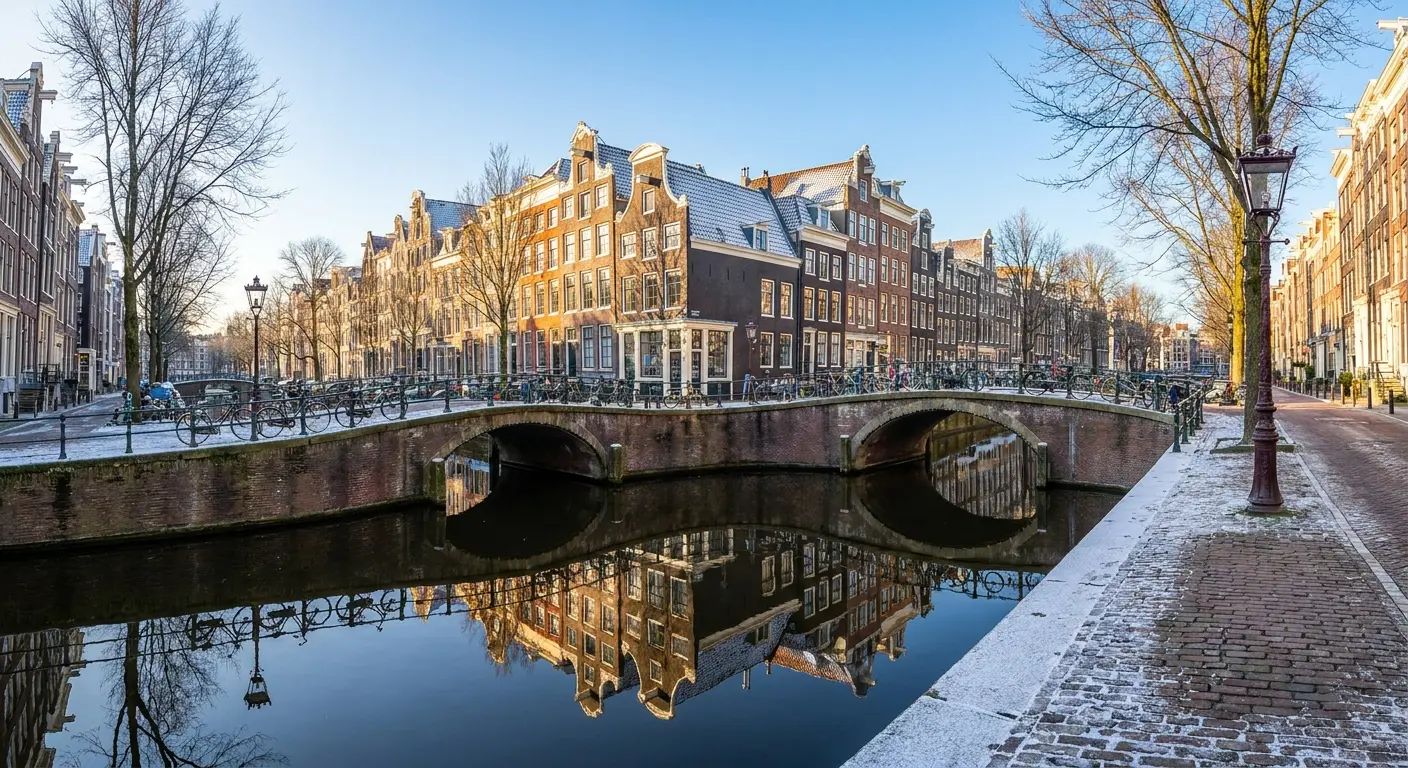
That is the single biggest logistical advantage of this winter departure: half of arrival day is still daylight. After baggage and ticketing formalities, the panoramic Amsterdam city tour runs through Dam Square, the Royal Palace, the Flower Market and the Red Light District. In winter the low sun angle picks out canal facades far more clearly than the flat summer light does. The day ends with a transfer to the hotel and the first overnight.
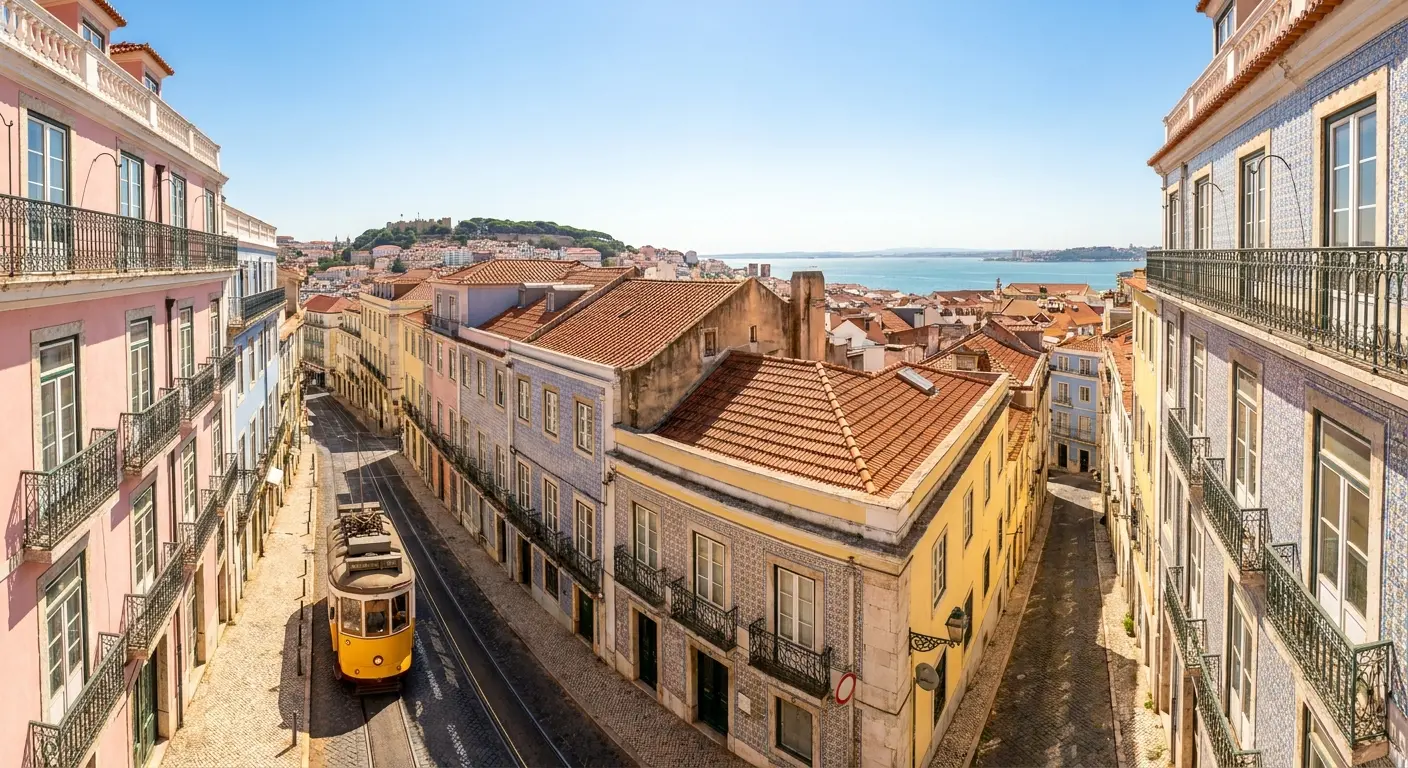
Suggested image alt text: "Amsterdam canal houses and a bicycle-lined bridge under a clear winter midday sky"
Day 2 — A free day in Amsterdam: the best day to take the optional tour
After breakfast the day is free. The guide's optional Magnificent Holland Tour (85 EUR) is the headline add-on: Marken, Volendam, Zaanse Schans, a canal boat trip in Amsterdam and a visit to a jewellery and diamond factory.
Winter changes the character of this excursion. The windmills at Zaanse Schans read very differently against bare trees and low light, and Volendam's harbour area becomes genuinely walkable without summer queues. If boat segments link Marken and Volendam, schedules can flex with weather in winter, so confirm details with your guide on the day. The canal cruise through the stretch often called the Venice of the North is comfortable in winter when the boat is enclosed and heated; if you plan to stand on deck, a windproof outer layer is non-negotiable.
Timing note for winter: this optional tour consumes most of the day. If you skip it, this is the natural slot for Amsterdam's museum-heavy day, since indoor collections are unaffected by short daylight.
Day 3 — Amsterdam to Brussels: the Roermond outlet stop
After breakfast the coach heads for Brussels, with a stop and free time at McArthurGlen Designer Outlet Roermond, one of the region's largest outlet centres. Winter suits this stop for two reasons: seasonal sale calendars often land in this period, and an indoor outlet is immune to daylight limits.
On arrival in Brussels there is a panoramic city tour covering the Royal Palace, the Chinese and Japanese pavilions, the Grand Place, the Stock Exchange building, the Atomium, the Heysel Stadium and the Mannequin Pis fountain. The Grand Place's evening lighting turns the square into a completely different scene from its daytime self. The day ends with a hotel transfer and overnight stay.
Practical note: this is a coach-heavy day. Heating settings on board vary by seat, so a thin cardigan or scarf in your day bag improves comfort considerably.
Day 4 — Brussels to Paris: this is the day for the Bruges option
After breakfast the coach continues toward Paris. The guide's en-route optional Bruges City Tour (35 EUR) is the cheapest add-on of the trip; the programme highlights canal-side lanes, old bridges, UNESCO-protected architecture and the city's chocolate reputation.
At 35 EUR it is the lowest-cost extra on the itinerary. Bruges' canal ring and stone streets rarely deliver the postcard mist in winter; expect crisp, cold, clear conditions instead, which means gloves and a hat are essential. Afterwards the journey continues to Paris.
On arrival, the panoramic Paris city tour covers the Eiffel Tower, the Champs-Élysées, the Louvre and its pyramid, the Musée d'Orsay, the Arc de Triomphe, Place de l'Étoile, Napoleon's tomb, the National Assembly, Pont Alexandre III, the Grand Palais, the Petit Palais and Place de la Concorde. Winter's early dusk works in your favour here: within a single afternoon you see the city by daylight and then under its evening lights.
Day 5 — A full day in Paris: highest-value day for the combination tour
After breakfast the day is free. The guide's optional Paris Combination Tour (90 EUR) bundles several components: ascent to the second floor of the Eiffel Tower, a one-hour Seine river cruise, Montmartre and the Sacré-Cœur, Notre-Dame Cathedral and the Fragonard perfume museum.
In winter the logic is clear. The Eiffel Tower ascent and the Seine cruise are outdoor activities; Montmartre and Fragonard are indoor or low-effort walking stops. Slotting the outdoor half into daylight and the dark hours into museums and the hill walk is the most efficient use of the day. Seine boats are enclosed and heated, so winter is comfortable — though if you want deck photographs, factor in the wind. The Montmartre funicular removes the stair climb entirely, which matters more when the ground is cold and damp.
If you skip it, a solid alternative is to spend the whole daylight window walking and leave the evening for indoor spaces. Winter evenings in Paris are far quieter than summer ones, which is a pleasure in itself.
Suggested image alt text: "Paris boulevard in winter daylight with bare trees and historic facades"
Day 6 — Paris to Istanbul: early check-out, clean plan
After breakfast, transfer to Paris airport depending on the flight time, complete baggage and check-in formalities, then fly back to Istanbul on Pegasus. The sample flight is ORY–SAW 11:50–17:50 (PC1134). A late-morning departure means the final day is not a sightseeing day, so finishing Day 5 early rather than late keeps your return day from becoming a slog.
Five rules for building a plan around short daylight
- Put outdoor sights between 10:00 and 15:30. That is when the light is at its most usable for both photography and walking.
- Push museums and shopping past 16:00. Once it is dark, indoor time stops feeling like a compromise.
- Find out which side of the coach faces the sights. On short winter routes, choosing the right seat matters more than usual.
- Anchor each day to one main activity. Stacking three stops in winter is less realistic than one anchor plus flexibility around it.
- Do not treat the evening as downtime. Because outdoor sightseeing shifts to daylight, evenings become ideal for city walks and dinners.
Winter packing: ten items that genuinely earn their space
This itinerary covers three cities, long coach transfers and plenty of walking. Pack for layering rather than for pure warmth.
- Base layer (thermal): bring two. Laundry time at hotels may be limited.
- Mid layer (wool or fleece): must be removable, because coach and museum temperatures swing.
- Outer layer (windproof and water-resistant jacket): in northern Europe, wind chills you faster than temperature alone.
- Hat, scarf and gloves: essential for the canal cruise and the Seine boat.
- Waterproof, non-slip boots: Brussels and Bruges pavements can be damp.
- Spare thin socks: dry feet rescue an entire rainy day.
- Small backpack: keeps your hands free on free-time days.
- Power bank: phone batteries drain quickly in the cold.
- Document folder: passport, visa, insurance and flight papers in one place, at your travel agent's recommendation.
- Thermos or collapsible water bottle: something warm makes breaks more productive.
Suggested image alt text: "Winter travel packing laid out flat: hat, gloves, thermal base layer and waterproof boots"
Optional tours: which one makes sense, and when
There are three optional extras in the programme. Budgeting for them in advance prevents the mid-trip fatigue of deciding day by day.
- Magnificent Holland Tour — 85 EUR (Day 2): a full day out of the city combining Marken, Volendam and Zaanse Schans. If it is your first time in the Netherlands, it delivers more of a "Dutch" feel than a free day in the centre. Winter works in its favour because the small towns empty out.
- Bruges City Tour — 35 EUR (Day 4): en route and the cheapest option. The real question is timing: it shares a day with the Paris panoramic tour. If your energy runs low, skipping it is a reasonable call.
- Paris Combination Tour — 90 EUR (Day 5): the densest package. Buying the Eiffel second-floor ascent, Seine cruise, Montmartre, Sacré-Cœur, Notre-Dame and Fragonard separately would cost more and consume more time. Conversely, if you only want museums, it may be unnecessary.
Decision rule: first-time visitors should budget for the optional tours. Repeat visitors get more value from free time spent on their own plan.
Budget: what the package covers and what it does not
Included
- Economy class Pegasus scheduled flights on Istanbul (SAW) – Amsterdam (AMS) and Paris (ORY) – Istanbul (SAW) sectors
- Airport taxes
- Five nights bed-and-breakfast in three-star hotels
- Airport–hotel–airport transfers and all intercity transfers
- Panoramic Paris, Brussels and Amsterdam city tours
- Professional Turkish-speaking guide services
Not included (add these to your budget)
- Visa fee and service charge — a Schengen application is required.
- City taxes: 20 EUR — paid in cash to the guide during the tour. Forgetting this line is the most common first-day surprise.
- Travel health insurance
- Turkish overseas departure fee
- Lunch, dinner and other meals
- Hotel extras and personal spending
- Optional tours and experiences
- Museum and site entrance fees
- Any service not explicitly listed as included
Daily spending logic: set aside a realistic per-person daily amount for one meal out, local transport and small purchases. Supermarkets and bakeries instead of restaurants are the fastest way to cut costs in European cities.
Six logistics points most travellers get wrong
- Flight details can change with departure date. The programme lists SAW–AMS 08:50–10:45 (PC1251) and ORY–SAW 11:50–17:50 (PC1134) as samples; confirm exact times before departure.
- Ask before buying domestic-connection tickets. The listing specifically advises checking this. A tight connection puts both outbound and return legs at risk.
- Meeting time is 03:50 at Sabiha Gökçen. Arrange your pre-dawn transport in advance and allow for traffic.
- Check your baggage allowance under the Pegasus fare. Travelling with cabin baggage only is a major advantage on coach transfers.
- The return flight from Paris is late morning. Do not schedule anything ambitious for the final day; you will be checking out early.
- Keep all documents in one folder. Passport, visa, insurance and flight papers — you do not want to search for them during a three-hour winter airport wait.
Who this tour suits — and who it does not
A good fit for: travellers who want to see several cities in a short window, those who enjoy museums and guided city tours, people who dislike crowds, travellers comfortable with coach transfers, and first-time visitors to Europe. In six days the itinerary shows Amsterdam, Brussels and Paris with a guide.
Less suitable for: beach and sea holiday seekers, anyone who dislikes long coach rides, late risers (the first day's meeting is after midnight), and travellers who prefer to go deep into a single city. If you like a packed schedule, there is generous free time; if you prefer a slow pace, the transfer days are heavy. Set expectations accordingly.
Six common winter mistakes on this route
- Ignoring daylight. There is no 21:00 sunset here; if you do not move outdoor plans into daylight, you will end up photographing in the dark.
- Not preparing the 20 EUR city tax in cash. It is paid to the guide during the tour.
- Deciding on optional tours too late. Guides organise participation numbers in advance; deciding early secures your place and clarifies your budget.
- Under-layering. A single heavy coat fails when you move between a heated coach and a museum.
- Leaving insurance and visa paperwork to the final week. Appointment calendars tighten in winter.
- Treating coach days as empty days. The Roermond and Brussels–Paris legs consume most of the day; do not try to squeeze in another city plan.
Frequently asked questions
What is the ideal month for this tour?
Within the winter-season departure window, the sweet spot is the period when crowds are at their lowest while daylight is still workable — typically edging toward the later part of winter. Exact departure options are listed on the tour page calendar. Because daylight length changes with the date, build your daily plan after choosing your departure.
Will rain ruin the tour?
Winter precipitation in this region is generally light and short-lived. Because the city tours are largely panoramic coach tours, rain does not cancel anything. A foldable umbrella and waterproof shoes solve most of it.
What should I do about the visa?
The visa fee and service charge are not included in the package. For a Schengen application, which consulate you apply to depends on your first entry country and where you spend the most nights; the safest path is to follow your tour operator's guidance. Also check that your passport remains valid well beyond your return date.
Which days are busiest?
Days 3, 4 and 5 are the heaviest; Day 2 is the most flexible. If you plan to join the optional tours, budget money and energy for Days 2, 4 and 5.
Is it suitable for solo travellers?
Because it is a guided, pre-planned tour, the logistics burden that solo travellers struggle with most — transport and city planning — disappears. Capacity is listed at 100 travellers, so the group dynamic is lively; in a large group, keep pace with the walking speed.
Conclusion: the right timing turns a good Europe tour into a great one
The winter version of this route makes sense for anyone who wants to see three cities without fighting crowds. Three things decide your experience: put daylight into the schedule, put optional tours into the budget, and put layers into the suitcase. Because flight times and the sequence of activities can change by date, check the live listing before you commit.
For the full day-by-day programme, inclusions and exclusions, current price and availability, view the Ekspress Benelux Paris Tour with Pegasus winter package on Turlago. Compare the dates, calculate your optional-tour budget up front, and use winter's quiet cities to your advantage.