Espresso Italy Tour 2026: The Best Months to Go
The calendar does more work than the itinerary
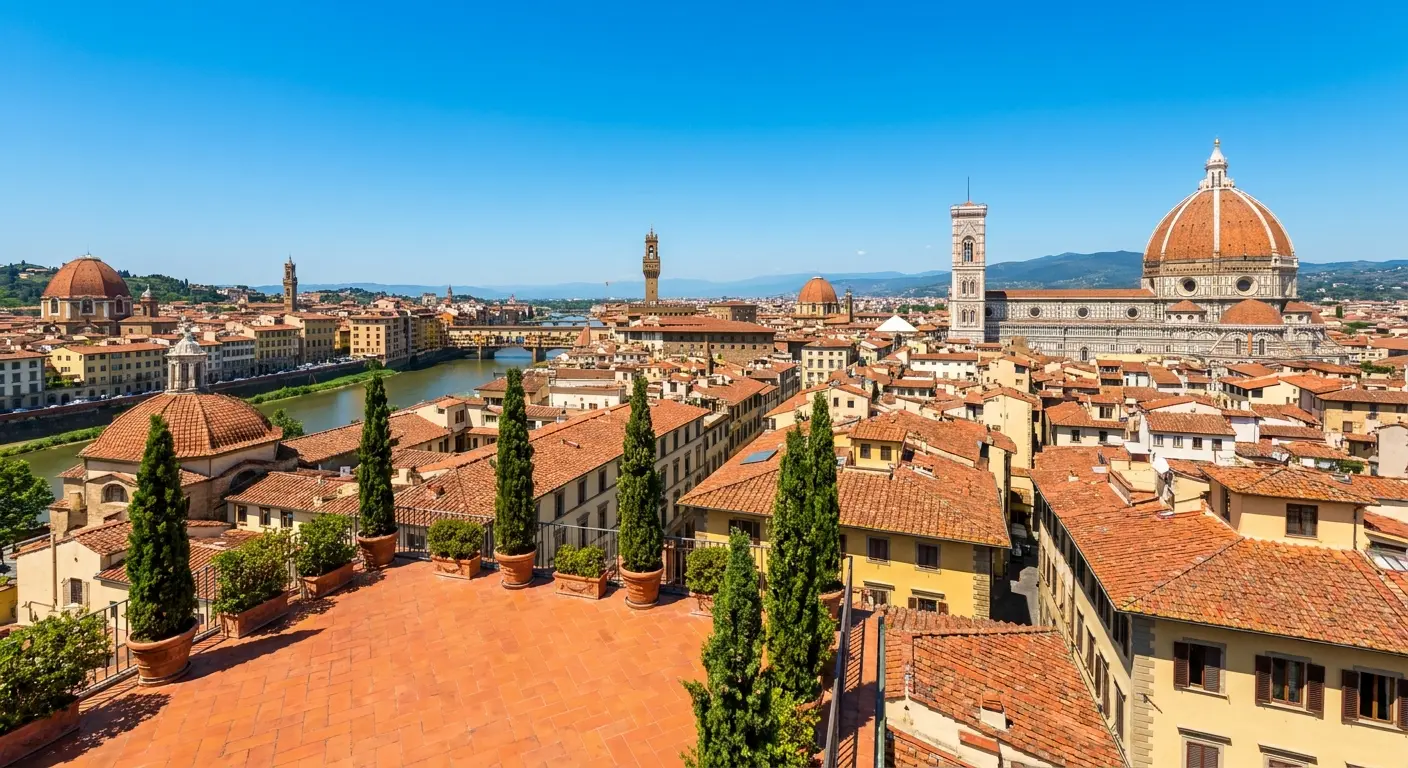
Stand on the Ponte Vecchio on a quiet April morning and you can hear the Arno. Stand there on an August afternoon and you hear forty different phone conversations in six languages. Same bridge, same tour, completely different trip. On a six-day route that packs three cities into five hotel nights, weather and crowd levels are not background details — they decide how tired you are at dinner and how much of each city you actually absorb.
This guide is built around the real programme behind the Espresso Italy Tour, which you can view on Turlago: six days, five nights in 3- and 4-star hotels on bed-and-breakfast basis, Pegasus scheduled flights, entering through Rome and exiting through Bologna, departing from Istanbul Sabiha Gökçen. One question runs through everything below: when should you actually walk this route?
The short answer: late April to early June, or mid-September to mid-October. The long answer involves Italian public holidays, lagoon water levels and the fact that Florence sits in a bowl of a valley and gets hotter than you expect.
The shape of the route: one-way, three hotels, five nights
Before choosing a month, understand the physical shape of the trip. It is a one-way line, not a loop: Rome in, Bologna out. That saves you a long return leg, but it means three hotel changes across five nights.
- Rome: 2 nights. Day 1 arrival plus panoramic city tour, Day 2 entirely free.
- Florence: 2 nights. Day 3 panoramic tour, Day 4 free (the Tuscany optional runs this day).
- Venice: 1 night. Day 5 panoramic tour, Day 6 morning transfer to Bologna airport.
Accommodation is bed-and-breakfast, so lunch and dinner are on you. This matters for timing more than it first appears. In May and June, sunset sits around 20:30–21:00, which means that after the panoramic tour you still have two or three usable hours of daylight to find food and wander. In November and December it is dark by 17:00 and you tend to stay close to the hotel.
Flight times shift with the date. The programme shows, as an example, a 14 March 2026 departure with Istanbul–Rome at 10:40–11:20 and the return Bologna–Istanbul at 13:30–18:00; the same page also shows a 09:50–10:30 departure for a different date. In other words, do not assume a fixed schedule. Confirm the flight times for your own date before booking, and if you are connecting from another Turkish city, raise it with the operator in advance rather than on the day.
The meeting point is the Pegasus counter at Sabiha Gökçen international departures at 07:30. That is early enough that a same-morning domestic connection is genuinely risky; arriving in Istanbul the night before is the sane option.
Italy month by month on this exact route
Treating Italy as one climate is the most common mistake on this itinerary. Rome, Florence and Venice behave differently in the same week, and the programme puts all three in a single trip.
March and April: the most balanced window, with one catch
Daytime temperatures generally sit between 15 and 22°C. You will peel off a jacket in the afternoon and want it back by early evening. Crowds are still well below summer levels, so the queue for a photo at St Peter's Square, the walk across Ponte Vecchio and the vaporetto ride in Venice are all tolerable.
The catch is rain. April is one of the wetter months in northern and central Italy. Venice gets only an afternoon and evening in this programme, and a wet Venice narrows your options around St Mark's Square — though the short crossing from Tronchetto by water still delivers. The upside is price: flights and hotels have not yet hit summer levels, which is why the programme's sample 14 March 2026 departure sits in this band.
May and June: long days, rising crowds, still comfortable
This is the sweet spot for this route. With sunset close to 21:00, you can complete the panoramic tour and still have time to explore on foot. If Day 2 in Rome is your free day, you can fit both the Vatican area and a wander towards Trastevere without rushing.
May is also the best month for the Tuscany optional — Pisa, San Gimignano and Siena in one long day. That excursion involves serious coach time between stops, so cooler hours make a real difference. By early June the crowds have visibly thickened, and once Italian schools break up the real wave arrives.
July and August: hottest, busiest, most expensive
Rome in July regularly reaches 33–36°C, and stone squares amplify it. Day 1 of this programme puts a panoramic city walk immediately after a flight, which on a hot day is a punishing combination — in March or October the same day feels like a gentle welcome.
Mid-August brings Ferragosto. Around 15 August many small restaurants, bakeries and shops close. Because breakfast is included at the hotel you are not stranded, but dinner options thin out noticeably. Venice also hits peak humidity, and the lagoon can feel heavier than the thermometer suggests.
The one genuine reward of high summer is the light in Venice. Arriving on Day 5 in the late afternoon and crossing to St Mark's as the sun drops is the single most photogenic moment in the whole itinerary.
September and October: the strongest value-to-comfort ratio
From mid-September temperatures fall into the 22–28°C range, the crowds visibly retreat and walking becomes a pleasure again. October is the most underrated month on this route: Rome is easy on foot, Florence's museums breathe, and Venice gets soft light and morning haze that photographers pay for.
The trade-off in October is daylight. Depending on your arrival time on Day 5, the Venice panoramic tour may run partly at dusk. If you travel in October, treat the Venice afternoon as the thing to protect and plan around it.
November to February: good for cities, wrong for the optional excursions
Winter brings low prices, near-empty museums and a genuinely calm Rome and Florence. Two problems though. First, Venice sees seasonal high water (acqua alta), which can shorten your walking route around St Mark's. Second, several of the optional excursions are lake-and-countryside based, and their appeal drops sharply in cold weather.
If your goal is crowd-free city walking and you pack properly, late February and early March are reasonable. Just do not expect the water-based and countryside add-ons to be the highlight.
Dates to rule out before you look at price
Italy's own calendar matters as much as the weather. These periods turn the same programme into a much more crowded and expensive version of itself:
- Easter week: Rome around the Vatican is at its absolute peak. If Day 2 includes free time near St Peter's Square, space will be scarce.
- 25 April and 1 May: Italian public holidays. Domestic travel spikes and Florence and Venice fill up.
- Early June, around Republic Day (2 June): ceremonies and parades can partially close central squares in Rome.
- Mid-August: Ferragosto. Small businesses close and free-time dining gets harder.
- Turkish public holidays and the summer school break: these are the main demand drivers for Istanbul-departure Italy packages, and they mean a fuller group and firmer prices.
Conversely, November and December in Rome and Florence sit around 8–15°C — perfectly walkable with a proper coat. Only Venice, with fog and high water, puts your Day 5 at real risk.
What the 29,154 TRY price actually covers
The listed price is 29,154 TRY, and knowing what sits inside it changes how you read the calendar. The package includes economy class Pegasus flights on Istanbul (SAW) – Rome (FCO) and Bologna (BLQ) – Istanbul (SAW), airport taxes, five nights bed-and-breakfast in 3- and 4-star hotels, airport–hotel–airport transfers, all intercity transfers, the panoramic Venice, Florence and Rome city tours, and professional Turkish-speaking guiding.
Flights and hotels are the two biggest cost lines, and both are seasonal. The same itinerary in early April and mid-August are not the same product financially. That is why booking early has a concrete payoff on this route: the May–June and September–October windows sell out first precisely because they offer the best weather-to-price ratio.
One more detail worth knowing: capacity is listed at 100 people. This is a large-group operation. On the ground that means staying reasonably close to the guide during panoramic walks and treating meeting times seriously. If a big group is not your idea of a holiday, choosing a shoulder month helps — but it does not change the group size, so read the format honestly before booking.
The six days, read through the seasons
Day 1 — Istanbul to Rome
Meet at Sabiha Gökçen at 07:30, check bags, fly with Pegasus, then board the private coach for a panoramic Rome city tour — the programme highlights Castel Sant'Angelo among the stops. Doing an outdoor walk straight off a flight is a real strain in August and a pleasant orientation stroll in April or October. Transfer to your hotel, evening free.
Image suggestion: Castel Sant'Angelo in bright morning light. Alt text: Castel Sant'Angelo in Rome, seen during the first-day panoramic tour of the Espresso Italy Tour.
Day 2 — Rome: a free day and two optional routes
After breakfast the day is yours. The guide's optional Outlet, Lakes and Vatican tour is 80 EUR per person and combines the village of Nemi, the Castel Romano outlet area, and free time around St Peter's Square and the basilica. The lakes section is at its best in spring and autumn; in high summer the shopping and Vatican legs carry the day. In the evening there is a Rome by Night option. With sunset near 21:00 in June, that tour inevitably starts late; in October it starts earlier and shows you considerably more.
Day 3 — Rome to Florence
Breakfast, then transfer towards Florence, with an optional Orvieto tour en route at 35 EUR per person covering the ancient centre and the Orvieto Duomo. It is a compact, photogenic stop that breaks up the coach leg. On arrival, the panoramic Florence tour: the Arno, Ponte Vecchio, Palazzo Vecchio, and Piazza della Signoria with its Hercules and David statues.
One seasonal note: Florence summer evenings combine heat and mosquitoes, which makes the post-tour walk less appealing. May, June and September are far kinder.
Day 4 — Florence: the Tuscany day
A free day, and the optional Tuscany tour at 110 EUR is the biggest add-on of the trip: the Leaning Tower and Miracles Square in Pisa, the thirteen towers and Cisterno Square of San Gimignano, then Siena with its contrade culture and the Palio tradition. Three stops, one day, long coach distances. April to June and September to October are the right months for this; July and August mean hours outdoors at peak heat.
If you skip Tuscany, this full day in Florence is the most valuable free time in the whole programme — and a rainy day is not wasted here, because the city's indoor options absorb it well.
Day 5 — Florence to Venice
Breakfast, then travel towards Venice with an optional Bologna tour at 35 EUR per person: Piazza Maggiore, the Neptune Fountain, the old stock exchange building, Europe's first university building, the Quadrilatero old market, and the Garisenda and Asinelli towers. Bologna's porticoes make it walkable even in rain, which makes this add-on a useful weather hedge.
Then Venice: arrival at Tronchetto, a short water crossing and St Mark's Square. The vaporetto fee is 15 EUR per person, paid to the guide during the tour — budget it upfront. This is the most weather-exposed day of the itinerary. November to February brings high-water risk, April and May bring rain risk. Late September and early October are the safest bet for Venice.
Day 6 — Venice to Bologna to Istanbul
Breakfast, then a transfer to Bologna airport depending on flight time, and the Pegasus scheduled service back to Istanbul. Do not plan anything for the final morning; an early flight can compress breakfast into fifteen minutes.
Optional excursions: which one fits which season
The panoramic city tours are the backbone of the programme; the optionals fill the rest. Rather than buying all of them, pick by season and by your own energy levels.
- Outlet, Lakes and Vatican (80 EUR): best in spring and autumn when the lake district delivers; in summer the shopping and Vatican legs dominate.
- Rome by Night: starts late in June and July because of late sunset; more rewarding in April and October.
- Orvieto (35 EUR): works year-round — short walk, compact town. Take care on wet rock underfoot.
- Tuscany (110 EUR): April–June and September–October. July and August involve long outdoor stretches at peak heat.
- Bologna (35 EUR): the safest option on a rainy or very hot day thanks to the porticoes.
Adding all five optionals comes to roughly 260 EUR per person in excursion fees. Add the 25 EUR city taxes and the 15 EUR vaporetto fee and your fixed extras land close to 300 EUR. Choosing two or three optionals that match the season is the realistic approach.
Packing by month
Shoes are the single biggest comfort factor on this trip. Eight to twelve thousand steps a day is normal, and the stone surfaces of Florence and Venice double the toll.
- March–April: a light rain shell, layers, closed walking shoes. Carry something that covers shoulders and knees for basilica visits.
- May–June: light cotton, a hat, sunglasses, plus a thin cardigan for cooler evenings.
- July–August: breathable fabrics, a wide-brimmed hat, a refillable bottle. The shoulder-and-knee rule for churches is the most commonly broken one in summer.
- September–October: layering system, light rain jacket, a thin jacket for evenings.
- November–February: waterproof shoes, warm coat, scarf. A rain jacket is non-negotiable for Venice.
Plugs in Italy are compatible with Turkish sockets, so no adapter needed. Turkish citizens need a Schengen visa, and the visa fee and service charge are not included in the package price — add that line to your budget before you pick a date, because appointment availability tightens in peak season too.
The budget beyond the package
Keep the excluded items in one clear list. City taxes of 25 EUR per person and the 15 EUR vaporetto fee are paid to the guide during the tour. Airport and intercity transfers are included, so you are not budgeting separately for transport between cities.
Lunch, dinner, museum and site entry fees, hotel extras and personal spending are yours. The gap between eating standing up and eating seated is wide in Rome and Venice. Keep a separate line for museums, because the panoramic city tours are orientation walks from the outside and interior entries are not included.
Who this tour suits — and who it does not
A good fit: first-time visitors to Italy, anyone with limited leave who wants Rome, Florence and Venice in one go, travellers who value Turkish-speaking guiding and organised transfers, and people who would rather book flights, hotels and city tours as one package.
A poor fit: travellers who want three days minimum in each city, serious museum-goers planning long indoor visits, people who dislike large groups, and anyone with limited walking stamina. Three cities in six days is fast by design.
Quick answers
Which month is best overall?
Late May to early June for the weather balance; mid-September to mid-October for the crowd-and-price balance. If you must choose, note that the risk profile is different: May risks rain in Venice, October risks losing daylight there.
How many hotel changes are there?
Three hotels: 2 nights Rome, 2 nights Florence, 1 night Venice. You pack and unpack twice on the road.
How big is the group?
Capacity is listed at 100, so expect a large-group operation. Stay near the guide during panoramic walks and respect meeting times.
Is it suitable with children?
The programme is walking-heavy. With children, target the shoulder months and avoid the July–August heat.
Can I join solo?
Yes, but confirm the room type and single-supplement conditions at the time of booking — room sharing and single supplements are the two most common questions on group tours.
When should I apply for the visa?
A Schengen visa is required and the fee is not included. Peak-season appointment slots are harder to find, so apply well ahead of your travel date.
Pick the date and you have half the trip
The Espresso Italy Tour is a deliberately tight programme: three cities, five nights, one direction. The content does not change. What changes is the light you see it in and the number of people standing next to you. If this is your first time in Italy and you want to actually enjoy the cities rather than survive them, late September to mid-October is the safest choice. If long bright evenings matter more than empty streets, late May to early June delivers. If budget leads, look at the shoulder months outside March and November.
To see the day-by-day programme and current departure dates in one place, view the Espresso Italy Tour on Turlago — and since flight times vary by date, confirm your own departure details before you commit. Choose the month carefully and this stops being a compressed summary of Italy and starts being an actual memory of it.