Flight Delayed? How Airport to Hotel Transfers Work
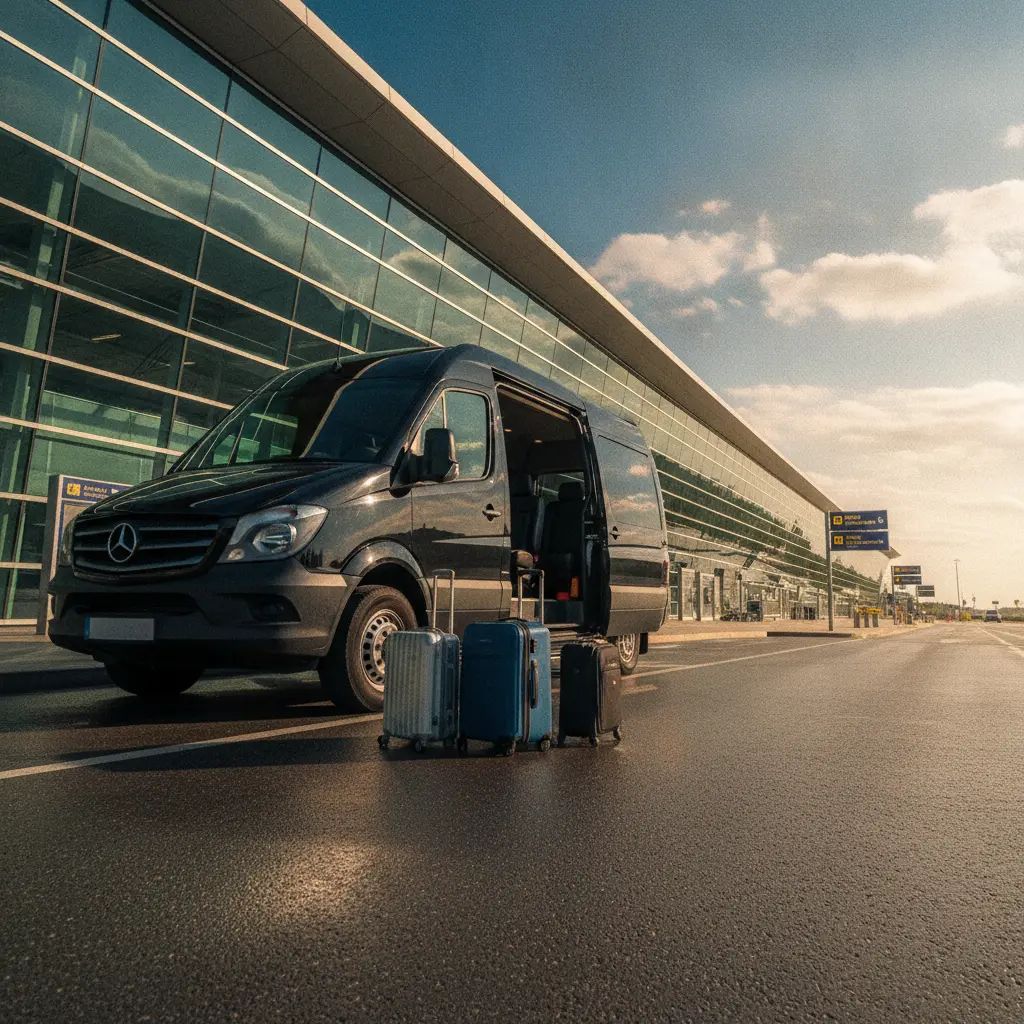
Your flight has been pushed back by ninety minutes and the only thing you can picture is the car waiting outside arrivals and whether it has already given up on you. Here is the short version: a well-built transfer booking does not collapse because of a delay. The vehicle is planned against the flight, not against the clock on your confirmation email. What follows is a question-and-answer walkthrough of how airport to hotel transfers actually behave when a flight runs late, plus the pre-booking details that decide whether the whole thing goes smoothly.
Does a delayed flight cancel my transfer?
No. Reputable airport transfer services build the booking around your flight number rather than a fixed pickup time. Once your flight code is on the reservation, the operations team tracks the arrival leg and updates the driver's job sheet when the aircraft is late, lands early, or changes gate. Nothing is required from you: the car is dispatched when the plane actually touches down.
The only scenarios that genuinely affect the booking are a full cancellation or you never arriving at all. Even then, most providers offer a refund or date change against the airline's cancellation notice. The line “the flight was late so my transfer was cancelled” is almost never accurate in practice.
Does the provider track the flight automatically?
Yes, provided you supplied the flight number. The nuance is what happens next. Some operators update the driver's waiting time automatically through their dispatch system; others monitor the flight but still expect a confirmation from you before shifting the pickup. Asking the question at booking (“is flight tracking automatic, or do I need to notify you?”) removes most of the anxiety from an international return leg.
The real value of automatic tracking appears on connecting itineraries. When the first leg slips, the second departure usually slips too. A tracked booking follows the final arrival time only, so you do not have to do the chain arithmetic while standing in a departure lounge.
What happens if I never send my flight number?
The car starts waiting at the time you declared. If the aircraft is late, your free waiting window still runs from your stated hour, and once it expires you are exposed to an extra waiting charge or a recorded no-show. This is the single most common mistake in airport transfers: leaving the flight field blank, or entering a flight code that changed weeks ago.
If your flights were rebooked, send the new code to the provider in writing. A number spoken over the phone does not always reach the dispatch sheet. A written message, kept as a screenshot, is your evidence.
How will the driver actually find me at arrivals?
The standard sequence looks like this: the driver receives the landing notification, allows a reasonable buffer for passport control and baggage, then moves to the designated meeting point in the arrivals hall. Most services display a name board or send a location pin and a photo of the meeting spot through a messaging app.
In a delay, three habits make the handover quicker:
- Keep the phone number on the booking reachable and messaging-app enabled, so one message settles the whole delay conversation.
- Send a single line after landing (“on the ground, waiting at baggage”) so the driver's timer reflects reality.
- Do not hide a baggage problem; if you are filing a lost-luggage report, say so, otherwise the vehicle sits idle without explanation.
How far in advance should I report a delay?
As soon as the airline confirms it, ideally the same day. In practice, what you send matters more than when you send it. One message with three elements is enough: flight number, new estimated landing time, and any change of airport or terminal. That gives the operations team everything needed to re-sequence the car.
With an automatically tracked booking, the message is a courtesy rather than a requirement, but it still helps. On delays longer than three hours, a short “still arriving, holding the booking” line prevents the driver being reassigned to another job.
How long is the free waiting period?
The industry norm for airport pickups is a free waiting window of 45 to 60 minutes measured from landing, designed to absorb immigration and baggage. Some providers extend it to 60 minutes, and to 75 or 90 minutes for international arrivals. On the outbound leg, from hotel to airport, the window is usually shorter, around 15 minutes, because the variable is your readiness rather than the aircraft.
Always clarify when the clock starts: from the moment the car is parked and waiting, or from touchdown. On a delayed flight, that difference can mean 20 to 30 minutes of chargeable waiting. Look for the sentence in your confirmation.
Can a delay trigger extra charges?
Flight-related delays generally do not, because the delay is outside your control and the vehicle was planned against the flight in the first place. Extra charges typically appear in three situations: exceeding the free waiting window, arriving at a different airport than booked, and landing that crosses into a night tariff band.
The night tariff is the one travellers most often miss. Many providers price arrivals between midnight and 06:00 differently. If your flight lands at 00:40 instead of 22:30, the booking may legitimately move into that band. Asking before you book is far easier than negotiating at the kerb. To compare transparent terms, browse the current chauffeured car rental options on Turlago.
What if the flight is cancelled entirely?
Notify the provider in writing and attach the airline's cancellation notice. On a properly set-up booking, that document unlocks a free cancellation or a date change. If you manage to rebook onto another flight the same day, send the new flight code so the car is planned against the new arrival rather than the voided one.
The biggest risk in a cancellation is a one-day communication gap. Telling the operator “my new flight is tomorrow” a day late is much worse than sending the news the moment the airline announces it.
What if the flight lands early?
Early arrivals get far less attention than delays but matter just as much. The tracking system sees the early landing and pushes the driver forward, though a 15 to 30 minute preparation window is realistic if the driver is coming from a previous job. A quick message from the aircraft steps shortens the handover noticeably.
Ask how the free waiting window behaves in an early arrival. Some providers measure from the scheduled time, others from the actual touchdown. Knowing which applies tells you whether an early landing works in your favour or quietly eats into your free window.
What if the aircraft is diverted to another airport?
Diversions are rare but real: weather or a technical issue can put the aircraft down somewhere other than planned. The transfer does not move automatically, because distance and road tolls change, so a new quote is normal. Your only task is to report the situation as soon as the landing airport is confirmed.
The best preparation is to read the diversion clause in your confirmation. Some providers absorb a switch between two airports in the same city for a small difference; others prefer to cancel and rebuild the booking.
Will the car wait if my baggage is delayed?
Within the free waiting window, yes. If you are filing a lost-luggage report, the process can stretch well beyond it. At that point you have two options: keep the car waiting and accept the overtime charge, or depart and have the bag forwarded to your hotel. On late-night arrivals after a long flight, the second option is usually the kinder one.
To protect yourself, keep the provider's messaging channel open while you are at the baggage belt. Sending a photo of the lost-luggage form is the fastest way to say “I am here, this is taking longer than expected”.
A delay past midnight: how do I protect my hotel check-in?
If your flight lands at 02:00 instead of 23:00, two things move at once: the hotel's night reception and the transfer's night pricing. Message the hotel with the revised arrival time; properties with a release policy will hold the room once they have that note. On the transfer side, confirm the night tariff threshold in advance.
Even on a short airport-to-hotel hop, a private transfer is far more predictable at 2 a.m. than public transport or a shared shuttle. Hauling suitcases between night buses is where a delay turns from inconvenience into genuine fatigue.
Shared shuttle or private transfer: which handles delays better?
For delay scenarios, private transfer wins clearly. Shared shuttles bundle several flights into one vehicle, so waiting tolerance is deliberately short — your delay is capped so other passengers are not stranded. A private car is assigned to you alone, which means the waiting flexibility is real rather than theoretical.
When comparing options, check three items: the length of the free waiting period, the channel used for delay notifications, and the night tariff. Once those three are clear, the price difference usually reads as insurance against delay risk rather than an unnecessary upgrade.
Step by step: what to do the moment you learn of a delay
- Confirm the new time: take a screenshot of the airline app showing the revised departure or arrival. Knowing whether the delay is estimated or confirmed shapes your message.
- Send one consolidated message: flight number, new landing time, and terminal if it changed. Piecemeal messages lose information on the dispatch side.
- Ask about the waiting policy: get a written answer to “does the free window start from actual landing, and will any extra charge apply?”
- Update the hotel: a late check-in note protects your room, particularly at small independent properties.
- Message again after landing: “on the ground, at baggage” points the driver to the right spot at the right moment.
- Request an itemised charge if one appears: waiting overtime or a night band difference should be shown line by line. Transparent providers do this without being asked.
What information should I get right at booking?
- Flight number: separately for outbound and return, and always the current code.
- Arrival airport and terminal: critical in cities with more than one airport.
- Passenger and luggage count: cabin bags included, since they influence vehicle class.
- Child seat age: seat type depends on age, and last-minute requests often cannot be met.
- Hotel address and reception details: especially for properties down narrow side streets.
- Contact channel: a messaging-app number that stays reachable even in airplane mode transitions.
The list looks short, yet these six items are exactly what rescues a delay. A booking built on incomplete data wastes time at the kerb even when every flight is on schedule.
Groups, children and heavy luggage: what changes in a delay?
With larger groups the tolerance matters more, because an eight-seater carrying your party cannot simply be reassigned. If the free window lapses, you are looking at either an overtime charge or a replacement vehicle. For families with children, a delay amplifies the need for car seats and breaks, which is why a direct private transfer to the hotel is far less draining than a multi-stop arrangement late at night.
Heavy luggage pushes the booking into a larger vehicle class. On a delayed flight the odds of bags arriving slowly also rise, so never understate the luggage count at booking. Adding “one more suitcase” at the kerb usually means changing the car.
The most common mistakes
- Leaving the flight number blank on the assumption that the flight will be on time.
- Rebooking a flight and never updating the transfer record.
- Reporting a delay only after reaching the arrivals hall.
- Not asking whether the free waiting window starts at landing or at parked-and-waiting.
- Ignoring the night tariff threshold and discovering it at the kerb.
- Hiding a baggage delay from the driver.
- Forgetting to tell the hotel about a late check-in.
- Underestimating the waiting difference between a shared shuttle and a private car.
Almost every one of these is avoidable with two minutes of attention during booking. Delay management does not begin at the airport; it begins on the reservation screen.
Cancellation terms and liability: what to look for
Read three clauses: the pricing policy for flight-related delays, the tariff applied when the free waiting period is exceeded, and the cancellation and amendment conditions. If all three are in writing, there is nothing to argue about at the kerb. Add to that list a licensed, insured vehicle, a professionally licensed driver, and confirmed airport access permission.
Comparing only the total price is misleading. A cheaper quote with a thin delay tolerance can double in real cost during a ninety-minute slip. Weighing the current chauffeured car rental options on Turlago together with their waiting and cancellation terms makes it much easier to choose a booking that survives a late flight.
The short version: a delay is a planning detail, not a crisis
The relationship between a late flight and an airport to hotel transfer comes down to three things: an accurate flight number, clear communication, and a waiting period whose starting point is defined. With those in place, a delay does not cancel your transfer — it simply shifts the moment the car pulls up.
Before you travel, answer three questions for yourself: is my flight code current on the booking? Does the free waiting window start at actual landing? Which channel will I use to report a delay? Once you have those answers, a forty-minute or four-hour delay both leave you with the same thing: a plan waiting outside arrivals.
For the next step, compare airport and hotel transfer alternatives through the current chauffeured car rental options on Turlago and add your flight code at checkout to build a delay-proof reservation.