Istanbul Car Rental: Çatalca Coast and Historic Waterways
Most guides to Çatalca describe the landscape and stop there. The practical problem is different: the Black Sea villages strung along Istanbul's western edge are poorly served by public transport, the valleys holding the old aqueducts have no bus stop at all, and the last return of the day leaves before you have finished looking at anything. A rental car solves this, but which car you rent changes what the day actually costs. This guide works through the route with a budget lens — which class of vehicle suits which road, where the money goes, and what the numbers look like for one day, three days and a week.
If you would rather compare vehicle groups, durations and pickup terms in one place, the Turlago premium car rental page is a sensible starting point. The rest of this article is about matching the car to the geography.
Two Ways In, Two Different Cars
Çatalca sits roughly 60 kilometres west of the city centre, and there are two distinct approaches. Which one you take should influence the vehicle you book before you ever leave the counter.
The Southern Approach: D-100 and the O-3 Motorway
The D-100 runs west past Küçükçekmece towards Silivri, with a signed exit into Çatalca. It is free, and it is also the road everyone uses, which means Saturday morning congestion between the city and Silivri can add serious time. The O-3 motorway is faster and better graded but carries tolls. This raises a question worth asking at the rental desk: does the vehicle have an active toll transponder, and if not, who pays the penalty for passing a gantry without one? On a short rental it is rarely worth the paperwork. Choose the free road and accept the traffic, or confirm the transponder before you commit to the motorway.
The Northern Approach: Down Through Durusu
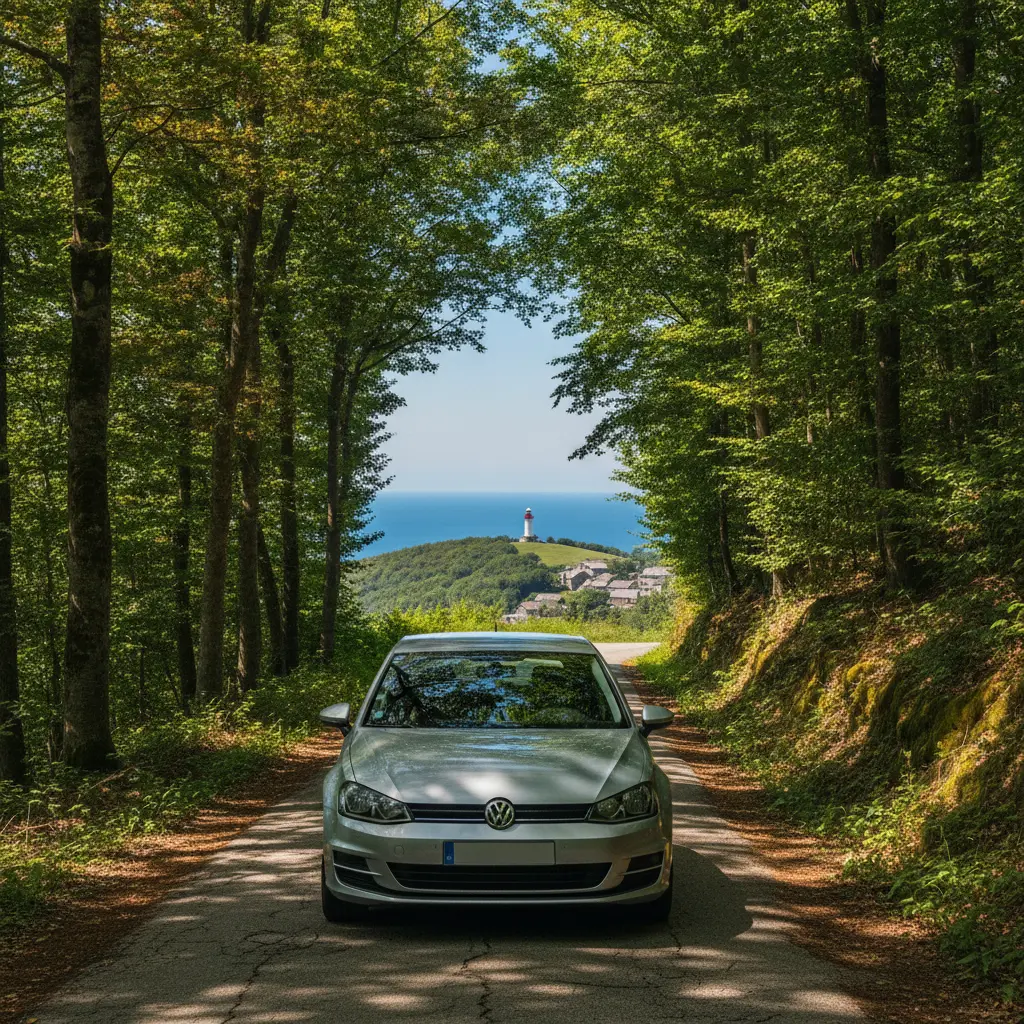
The more rewarding route leaves the city to the northwest, passes the Durusu (Terkos) lake basin and drops into Karacaköy from the north. The road is mostly two lanes, winding, and uneven in patches. The lake itself is a protected drinking-water catchment, so many tracks down to the shore are closed — you will be looking at it from the road, not walking its banks. Signage is sparse and mobile coverage drops in the valleys. Download the map in advance and leave the city with a full tank. You do not need to return the same way: the inland roads from the coast back down to Çatalca town are shorter and quieter.
Which Car Class Actually Earns Its Price Here
On this route the vehicle decision is a cost-balance question, not a comfort one. Daily rates shift with season, duration and fleet availability, so the useful comparison is the relative gap between classes rather than an absolute figure.
- Economy hatchback (B segment): The rational choice if your itinerary stays on asphalt. Real-world consumption sits around 5-6 litres per 100 kilometres, it manoeuvres easily on narrow village roads, and parking in Çatalca town stops being an event. The trade-off is suspension comfort on gravel and broken surfaces, plus a boot that runs out of space beyond two people.
- C segment saloon: Noticeably quieter and less tiring on the motorway leg. Consumption climbs by a litre or more per 100 kilometres compared with the hatchback, but rear-seat space and luggage capacity improve enough to matter for three or four travellers. Slightly more demanding to park in the older streets of the town.
- Compact SUV / crossover: The most comfortable option for the gravel approaches to Kalfaköy and Ormanlı and for the rougher stretches inland. The extra ground clearance genuinely reduces the risk of scraping the underside on unpaved tracks. Expect to pay roughly 40-60 per cent more per day than economy, with consumption in the 6.5-7.5 litre range.
- Seven-seat MPV: The single-vehicle answer for a larger family or a group of friends. Per person it usually beats renting two economy cars, but village lanes and the informal beach parking areas will slow you down.
A simple rule: if the plan is Çatalca town, İnceğiz and the main roads, the economy class is enough. If you intend to complete the Karacaköy-Ormanlı coastal stretch, moving up to a compact SUV is not an indulgence — it is a response to the road surface.
Where the Money Goes: Four Budget Lines
The advertised daily rate is only the first of four costs. Splitting them out makes the total predictable.
Do the Fuel Maths Yourself
A city-centre round trip that takes in Çatalca town and the coastal villages lands somewhere between 130 and 180 kilometres depending on how many detours you allow. The calculation is simple: divide total kilometres by 100, multiply by the realistic consumption for the class, then multiply by the current pump price. An economy car at 6 litres per 100 kilometres over 160 kilometres uses roughly 10 litres; a compact SUV on the same run uses 11-12. The gap looks trivial next to the daily rate difference, but it compounds across a week and across repeat visits.
One caveat: average speeds drop on village roads and in the valleys, and stop-start driving pushes consumption up. Use your own driving pattern, not the brochure figure. Descending the twisting coastal road in a low gear will visibly move the number.
Deposit, Additional Driver and One-Way Drop-Off
These three are the most commonly overlooked items. The deposit is a hold placed on your credit card for the duration of the rental — it is not spent, but it locks up part of your limit, so carrying a second card is worth the effort. Naming an additional driver is unavoidable if you plan to share the driving, and it usually carries a daily fee. A one-way drop-off looks convenient on this route, but most companies price it separately, and drop-off options in Çatalca itself are limited; collecting and returning at the same location is almost always cheaper. Confirm before you book, not at the counter.
Tolls and Small On-Road Costs
The motorway carries tolls; the D-100 does not. Smaller operations near the beaches may ask for cash for informal parking, so keep a few small notes handy. None of these are large amounts, but a realistic budget includes them.
One Day, Three Days or a Week: The Duration Maths
Longer rentals almost always lower the per-day rate. The real question is whether the route justifies the extra days. One day covers Çatalca town and the İnceğiz area comfortably and nothing more; add the coastal villages and you are rushing. Two days is the sweet spot: the inland water infrastructure on day one, the Black Sea shoreline on day two.
From three days upward, a weekly rate often becomes the better deal, because a seven-day booking frequently costs close to a five-day one. On longer rentals, check the mileage policy before signing. Unlimited mileage turns a route that covers 150 kilometres a day into a predictable cost. It is also worth confirming who is responsible for servicing and vehicle swaps during an extended rental, so there is no ambiguity later.
Route A: Çatalca Town, Kaleiçi and İnceğiz
Çatalca town is the logical start. The old core around Kaleiçi is a grid of narrow streets, stone walls and low houses. Park once and walk; these lanes were not designed for cars.
İnceğiz Canyon and the Rock-Cut Structures
The road south towards İnceğiz is short but demands attention. The rock-cut structures in the canyon walls are among the region's least-visited heritage sites, interpreted as the remains of monastic and chapel complexes dated to the Byzantine period. The final stretch is unpaved and turns muddy after rain, which is a good reason to put İnceğiz early in the day rather than at the end: better light, fewer people, better road conditions.
The Anastasian Wall and the Aqueducts
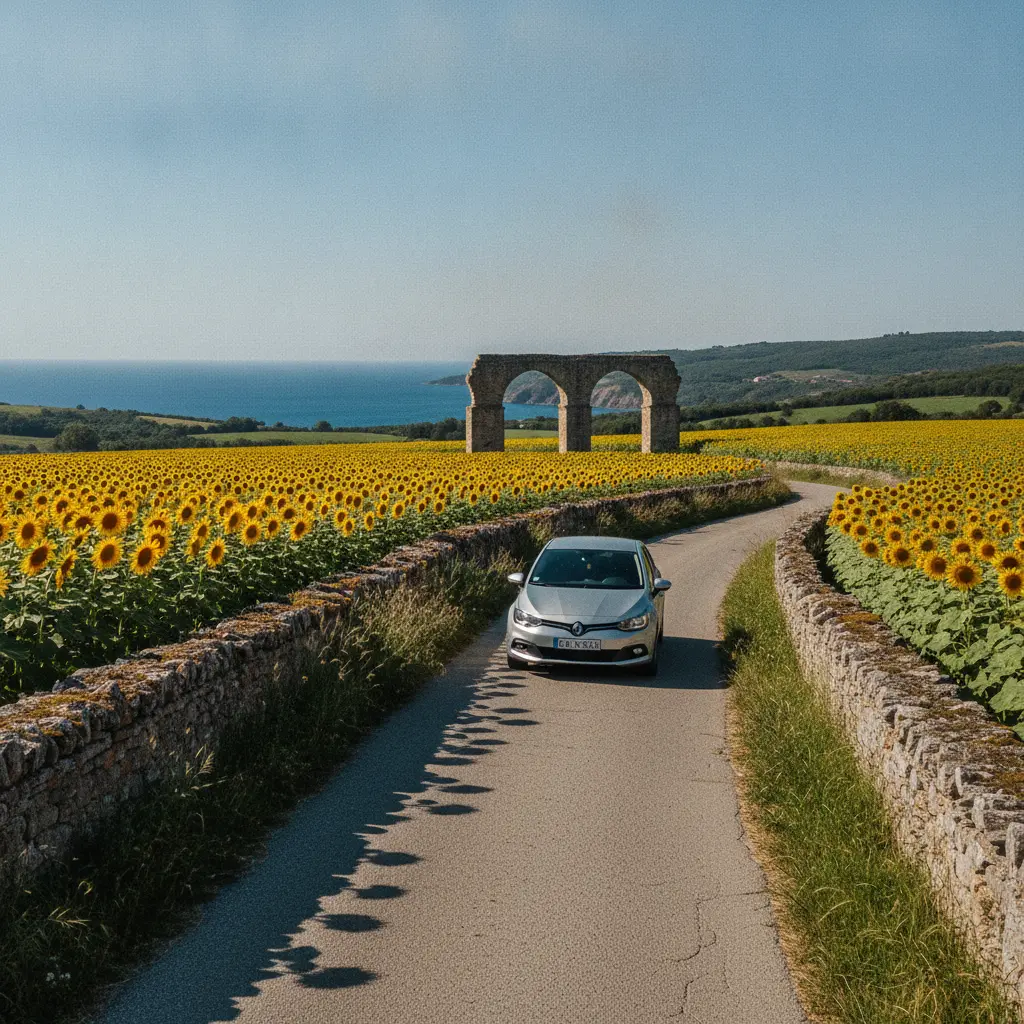
The most striking thing about rural Çatalca is how much ancient water engineering is still standing in the middle of farmland. The city's water was carried from northern springs through a system of channels and arches; today the remains — arches, cisterns and fountains — appear at the edge of country roads. Local sources point to the Kurşunlugerme arch and the surrounding channels as the best-known stops on this line, and the Anastasian Wall, the long defensive structure that once ran across the Thracian peninsula towards the Black Sea, leaves traces in the northern villages. Following that line is a route in itself.
Signage at these sites is minimal. Without an offline map and pre-marked coordinates you will lose time. The valley crossings narrow to a single vehicle width, and reversing for oncoming traffic is normal; a small hatchback has a clear advantage over an SUV here.
Route B: Karacaköy, Kalfaköy and Ormanlı
Çatalca's Black Sea shoreline is among the least crowded stretches of coast inside Istanbul's boundaries. From Karacaköy the road runs east through Kalfaköy, Ormanlı and Yalıköy: old stone houses, small fishing shelters and long beaches, with very little commercial development.
Road Surface and Ground Clearance
The road to Karacaköy is asphalt and straightforward. The linking roads down to the water, however, can be dirt or gravel. On those sections, a low-clearance car needs care — avoid the wheel ruts. Driving onto the sand is not advisable under any circumstances; a rental car bogged in soft sand turns into the most expensive memory of the trip. Most rental agreements also treat off-asphalt use separately, so read that clause before signing rather than after.
Timing the Coast and the Return
Weather on the Black Sea changes quickly, and the wind can turn hard in the afternoon. On a day trip, plan the return before dusk so you are not driving the coastal road in the dark. Fuel stations on the coastal villages are close to non-existent; fill up in Çatalca town before heading north. ATMs are equally scarce, so carry both cash and card.
Near the Durusu (Terkos) basin, catchment protection rules apply: approaching the lake shore by car or entering restricted areas is not permitted. That is a real constraint worth knowing before you plan the day.
Fuel, Tyres and Signal: Rural Logistics
The biggest difference between driving a rental in the city and driving one in rural Çatalca is how long it takes to solve a problem. Roadside assistance to a coastal village can be slow. Before you leave the counter, confirm that the spare wheel, jack and repair kit are actually in the car; without them a minor puncture can eat half a day. Checking tread depth and tyre pressure takes five minutes and saves hours.
Mobile coverage weakens in the valleys. Keep your route file and contact numbers available offline, and carry a charging cable — you will be running navigation continuously on this route.
Season and Traffic: When the Budget Shrinks
The most efficient window for Çatalca is when the sea is swimmable but city traffic has not yet peaked. July and August are ideal for the coast, but Saturday mornings on the D-100 and the motorway jam badly, which raises fuel consumption and eats the daylight you paid for. June and September are better balanced for both the coast and the inland route, and rental rates tend to be more flexible than at peak season.
In spring, rural roads can be muddy after rain; in autumn, field work occasionally closes side tracks. In winter the short daylight makes a full coastal circuit in one day unrealistic — the inland aqueduct route is the more sensible plan in that season.
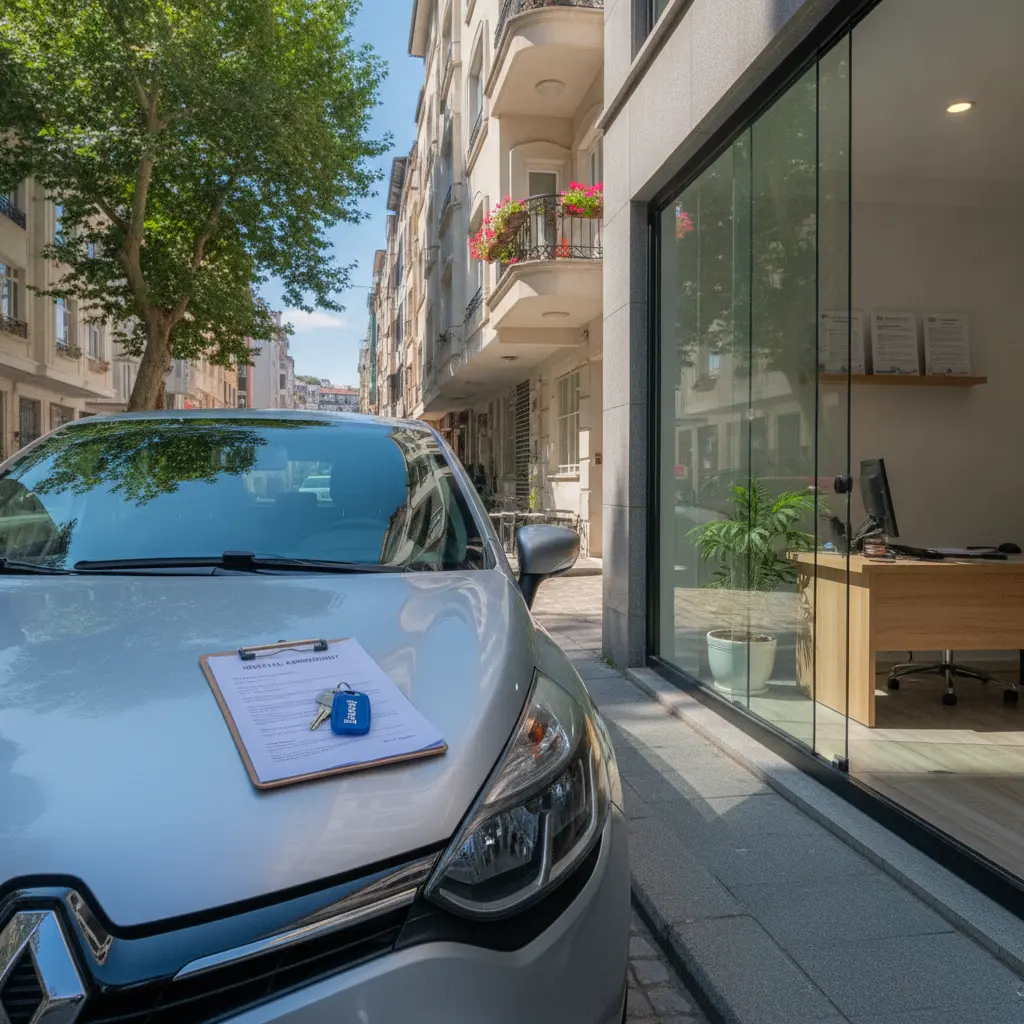
Fifteen Minutes at Pickup That Save the Trip
Before taking a rental car onto a long rural route, spend fifteen minutes on the following. It prevents most of the disputes that surface at return.
- Film all four sides and the wheels; capture existing scratches in close-up.
- Photograph the fuel gauge reading — returning at the same level is the standard rule.
- Confirm the spare wheel, jack and repair kit are present.
- Ask about the toll transponder; if you plan to use the motorway, this matters.
- Check tyre tread depth and pressure.
- Clarify which card will hold the deposit, and bring a second card.
- If there is a mileage cap, verify it is written in the contract.
- Ask about off-asphalt use — declare your intention to drive coastal tracks upfront.
- Save the emergency assistance number in your phone.
- In winter, keep a blanket and spare water in the boot.
Three Traveller Profiles, Three Budgets
A couple, one day, economy class: Rental dominates the total; fuel and tolls are marginal. Focusing on Çatalca town and İnceğiz keeps the per-person cost at its lowest. If the coast matters, extend to two days rather than compressing everything into one.
A family of four, two days, C segment or compact SUV: Fixed costs are spread across more people, so per-person spend drops below the couple scenario. Here the compact SUV's premium is usually justified by the coastal road surfaces.
A group of five or six, three days, MPV: One vehicle is both cheaper and simpler than two. This produces the lowest per-person figure of the three, provided you accept that village parking and narrow lanes will take longer.
Five Planning Mistakes Worth Avoiding
- Squeezing the coastal villages and the aqueduct route into the same day — they are different journeys and deserve separate mornings.
- Heading north without filling the tank in Çatalca town.
- Setting off without an offline map and pre-marked coordinates.
- Driving onto the sand, which breaks both the ground conditions and the rental terms.
- Not planning the return, and ending up on the coastal road after dark.
The Takeaway
Çatalca's coastline and its historic waterways offer the quickest way out of Istanbul into genuinely different terrain, and the budget for the trip depends less on the class of car than on how you sequence the route. Inland water infrastructure first, Black Sea villages second: that order means less fuel, less stress and more ground covered.
To compare vehicle groups, rental durations and pickup conditions in one place, start with Turlago premium car rental. The route itself repays a patient driver, the right class of car and an itinerary that fits inside the daylight.