Istanbul Car Rental Insurance and Damage Liability Guide
Why the insurance line swings between two offices for the same car
Same model, same number of days, same pick-up point. Yet the total comes out noticeably higher at one counter than another. The gap rarely comes from the car itself; it comes from the protection package bolted onto the daily rate. In Istanbul's rental market, insurance is the most elastic item on the invoice. It is the easiest cost to restructure and the hardest for a customer to compare at a glance. Reading only the daily rate is therefore close to meaningless.
Most local operators work with similar insurers but sell different coverage sets. One office includes basic collision cover in the headline price and keeps the excess high. Another sells a low excess as a paid add-on. A third pushes a mid-tier package that covers a narrow list of small damages for a modest daily uplift. All three are legitimate. The problem starts when the rezervasyon screen does not state clearly which structure you are actually buying.
The useful question is not which daily rate is lowest. It is this: what will the total cost become if something goes wrong? That is the question this guide answers. You can cross-check the package structures on Turlago's premium car rental options while keeping the criteria below beside you.
The excess figure: the number that actually sets the price
In rental insurance, the premium is driven by how much risk stays with you, not by how much sits with the insurer. That amount is the excess, sometimes labelled as a damage participation fee or a liability cap. Anything up to the excess is yours to settle; anything above it is handled by the policy. Raise the excess and the daily premium falls, because a bigger slice of the risk has moved to your side of the table.
So the phrase insurance included tells you nothing on its own. If the included policy carries a high excess, a small car park scrape can still produce a serious bill. When comparing offers, write the excess figure next to the daily price before you judge anything. Two quotes compared across both columns almost always produce a different winner than a single-column comparison.
When does a zero-excess package pay for itself?
Packages that wipe out the excess raise the daily cost in a visible way. On a short rental that uplift is a small share of the total; on a long rental it compounds fast. Three questions decide the case: where will the car be parked, how many hours will it spend in dense traffic, and who will be driving it. If the answer involves narrow streets, busy car parks and rush-hour corridors, buying down the excess is defensible. If the car will mostly sit in an enclosed garage and cover calm routes, a base package with a higher excess is the more rational budget choice.
How the deposit hold connects to the excess
The deposit taken on your credit card is usually tied to the excess. The operator blocks the amount it might need to charge in the event of damage. That block is not a payment, but it occupies your card limit for the whole rental period. Forgetting this is one of the most common reasons travellers hit a limit problem mid-holiday. Note also that packages which reduce the excess usually reduce the blocked amount too, so the add-on buys you liquidity as well as protection.
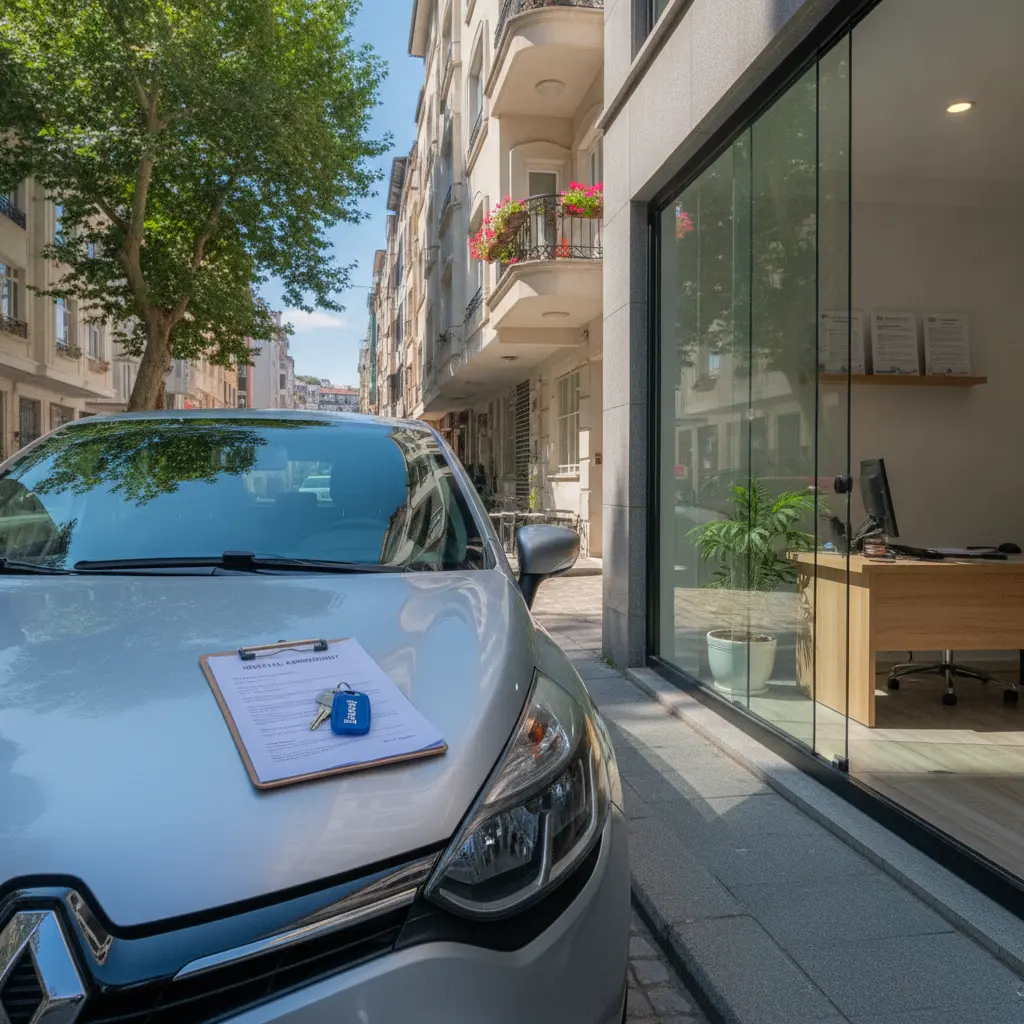
Suggested image: close-up of a rental agreement and policy paperwork on a car bonnet — alt text: checking the excess figure and insurance coverage in an Istanbul car rental contract.
Coverage map: which damage lands in which package
Price differences usually come from what has been removed rather than what has been added. The items below are the recurring flashpoints in rental disputes. Ask about each one before booking. The answer basic collision cover is included answers none of them.
- Collision and impact damage: Normally the core of the policy, but capped by the excess.
- Tyres and wheels: The most frequently excluded item in the sector. A kerbed alloy can turn into an unexpected invoice.
- Glass and windscreen chips: Sometimes covered under a separate sub-limit, sometimes not covered at all.
- Underbody damage: Kerbs, speed bumps and potholes often sit outside the cover.
- Interior damage: Cigarette burns, seat stains or pet hair can trigger a separate cleaning or misuse charge.
- Wrong fuel: A user error such as petrol in a diesel car is excluded almost everywhere.
- Lost keys and recovery: Replacement keys, reprogramming and towing may be billed separately.
- Theft: Usually covered, but not if the keys were left in the vehicle or negligence can be shown.
- Third-party liability: The limit for damage you cause to others, and often the largest financial exposure of all.
- Loss of use and diminished value: Rental income lost during repairs and the drop in the vehicle's market value can be passed to the renter in some contracts.
The length of that list drives the price. A package that costs more almost always absorbs several of those items. Read the difference as a question of which risk you are buying, not as an unnecessary markup.
Three layers of protection that get confused constantly
Compulsory traffic insurance, collision cover and voluntary third-party liability are different instruments, yet contracts often mention them as if they were one thing. Compulsory traffic insurance pays for damage you cause to others within statutory limits. It does not repair the rental car. Collision cover protects the operator's vehicle and limits your liability up to the excess. Voluntary third-party liability steps in above the statutory limit.
The budget point matters here. Statutory limits are frequently insufficient in a serious incident involving another vehicle and medical costs. Anything above the limit can be recovered from you by the operator. Asking for the third-party liability limit therefore manages a far larger risk than haggling over a few units of daily rate. It is the least asked and most valuable question at the counter.
What a damaged day actually costs: three scenarios
Policy wording stays abstract until you run it against a real situation.
Scenario one: an unnoticed scrape in an underground car park
You leave the car in a garage and return to find paint loss on a rear wing. No third party, no camera footage. The operator records the damage and charges up to the excess. Your deposit absorbs it. In this scenario a low-excess package repays its premium immediately.
Scenario two: a wheel meets a kerb
While manoeuvring in a narrow street the alloy is scuffed and the tyre sidewall is marked. In many packages wheels and tyres sit outside the cover, so the entire cost stays with you even though the damage is minor. That exposure is governed by driving habits rather than by any package. Choosing a smaller car for a city you do not know well is often a bigger saving than any insurance upgrade.
Scenario three: a scooter hits a parked car and leaves
The car is stationary when a scooter strikes the door and rides off. With no plate to pursue, the damage falls entirely on your side of the policy. Because no accident report can be drawn up, photographs showing the car parked and the garage entry log can become decisive in how liability is shared.
All three scenarios share one feature: what matters is not the size of the damage but which coverage line it falls under. Compare packages item by item rather than estimating how likely a crash is.
Eight items to settle before you sign
- Excess amount and currency: An excess denominated in foreign currency can move against your budget with the exchange rate.
- Deposit hold: How much, with which card type, and when is it released?
- Fuel policy: Same-level return, and the unit price charged for missing fuel.
- Mileage limit: Any intercity plan needs the daily cap and the overage rate in writing.
- Additional drivers: Cover can be voided entirely if someone outside the contract drives.
- Licence and driver age: Young-driver surcharges and minimum licence tenure.
- Geographic scope: Cross-border trips, ferry use or one-way returns carry extra conditions.
- Return terms: Drop-off time, late fees, cancellation and early-return rules.
These eight lines are the only reliable way to see the real gap between two quotes. Two offers can look almost identical on the daily rate and still differ substantially once three of these items diverge.
The first hour after damage: steps that establish liability
Most insurance arguments begin with documentation, not with the damage. A handful of correct moves at the scene limits your exposure considerably.
- Move the car to a safe spot and photograph it from four sides, plus close-ups of the damage.
- If another party is involved, record the plate, licence and a signed accident statement.
- Call the rental office the same day; many contracts require it and delay can shift liability.
- Where police or gendarmerie attendance is required, insist on an official report.
- Request any car park, building or workplace camera footage quickly, as recordings are usually overwritten within days.
- Follow the repair quote or assessment and ask in writing which items are being charged to which coverage line.
Do not settle for verbal reassurance. Confirming by email which damage falls under which package is the single most effective defence against a later dispute.
Istanbul-specific risks and what they do to the budget
The city's traffic shapes insurance needs differently from other destinations. Stop-and-go congestion at peak hours encourages short following distances. Narrow streets around the historic peninsula and Beyoğlu make parking manoeuvres tight. Covered car parks are plentiful, yet low ceiling heights and steep ramp angles add risk for larger or lower vehicles.
Automatic toll systems on the bridges and tunnels are another budget line. Crossing charges are generally not in the rental price and are billed after return. Airport desks may add a premium service fee, so collecting from a city office can lower the total. One-way rentals, such as picking up on the Asian side and returning on the European side, introduce a separate charge.
Seasonality moves prices directly. In summer and around long public holidays fleet occupancy rises, and both daily rates and low-excess packages cost more. Booking several weeks ahead secures a more predictable insurance cost as well as a better vehicle. Last-minute bookings tend to draw on whatever remains in the fleet along with standard packages.
Suggested image: a rental car parked along a busy street with apartment facades behind — alt text: narrow street and parking risks affecting car rental insurance packages in Istanbul.
How chauffeured and long-term rentals shift the liability
With a chauffeured rental the vehicle is normally operated by a professional driver supplied by the operator. Insurance responsibility sits largely with the provider; your obligation is limited to complying with the usage terms in the contract. The budget advantage is that a separate protection package is unnecessary. The disadvantage is a higher total daily cost that grows with the length of use. It is a common choice for short city programmes with dense meeting schedules, where parking and traffic are simply not worth the attention.
Long-term rentals change the picture. Beyond roughly a month, operators typically fold maintenance, tyres and scheduled servicing into the package and restructure the insurance accordingly. The detail to pin down is whether the excess applies per incident or per contract period. On a vehicle used all year, that distinction decides whether a single event can reset the whole year's budget.
One car, three packages: building the comparison properly
A budget-led comparison needs three axes: the daily uplift, the excess amount and the number of excluded items. Put all three on one page and the genuinely economical option becomes visible.
- Base package: Lowest daily cost, highest excess. Cheapest overall when the route is calm, distances are short and parking is secure.
- Mid package: Covers small damage and offers a moderate excess. A reasonable daily-city compromise, provided you confirm whether tyres and glass are inside or outside the cover.
- Full package: Pushes the excess close to zero and absorbs extra items. Worth the uplift for long drives, frequent parking, heavy traffic and multiple drivers.
The decision rule is simple. If your expected damage cost is below the package uplift, take the base option; if it is above, take the wider one. When estimating expected damage, weigh your own driving habits, your parking conditions and the length of the rental. Over a one-week rental the full-package uplift often sits in the same range as a single wheel repair, which lowers the decision threshold considerably.
A ten-minute transparency test for any quote
You do not need a long checklist to judge how transparent an offer is. Before booking, ask three things: the excess amount, the deposit hold, and the list of exclusions. An office that answers all three without hesitation and in writing is the least likely to produce surprise charges. If the reply is a general everything is included, don't worry, reading the contract becomes considerably more important.
Be realistic about discounts too. Reductions on the daily rate are common. Reductions on the protection package are usually offset by a higher excess, meaning what looks like a discount is often risk handed back to you. Compare final payable totals rather than discounted headline rates.
Five line items that break the budget, and the fix for each
- High excess: Turns a minor scrape into a serious invoice. Fix: judge the excess against the total cost of the whole rental, not the daily rate.
- Deposit hold: Locks up card limit. Fix: check available limit in advance and do not travel with a single card.
- Excluded items: Tyres, glass and underbody produce surprise bills. Fix: ask for a package that includes them, or adjust your driving and parking habits accordingly.
- Additional and young-driver surcharges: An undeclared driver can void the policy entirely. Fix: add every intended driver to the contract.
- Mileage overage and automatic tolls: Both are billed after return. Fix: plan the route and confirm the mileage cap and how crossings are charged.
These five items form the invisible side of a rental budget. Add them to the headline total and the genuine difference between offers appears. A package that looks more expensive on day one frequently turns out cheaper on this calculation.
Conclusion: ask the right question, buy the right package
When renting a car in Istanbul, insurance is not paperwork; it is the most decisive part of the budget. Any comparison made without knowing the excess amount, the deposit hold and the exclusions remains incomplete. Once those three are clear, the price gap between packages stops being an abstract number and becomes the price of a specific level of protection.
Build the decision around how you will actually use the car: where it will be parked, how many days and on which routes it will run, and how many people will drive it. Those four answers determine the right package almost by themselves. You can compare package structures side by side on Turlago's premium car rental options and confirm excess and deposit details directly before booking. A rental built on the right questions makes the rest of the trip considerably lighter.