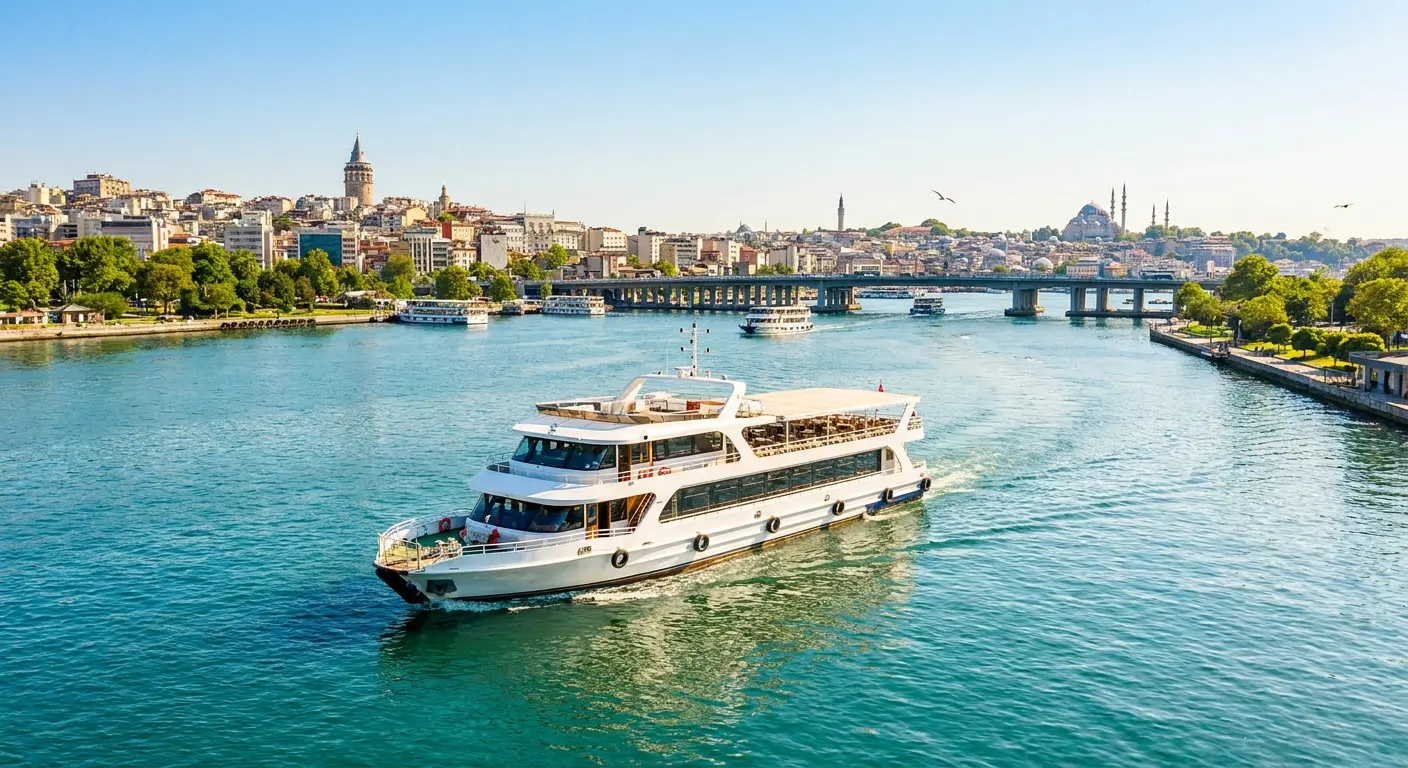
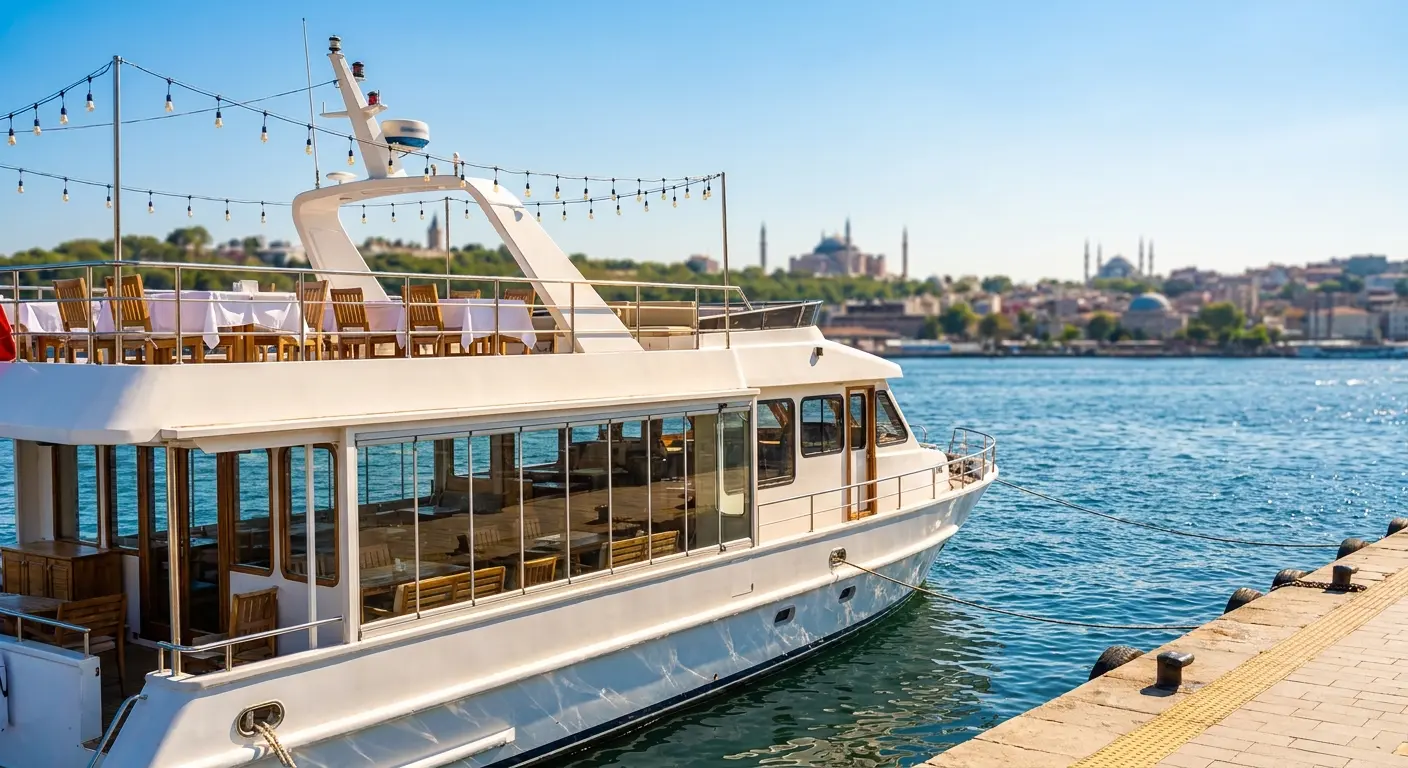
Istanbul Yacht Charter 2026: Which Boat Fits Your Group?
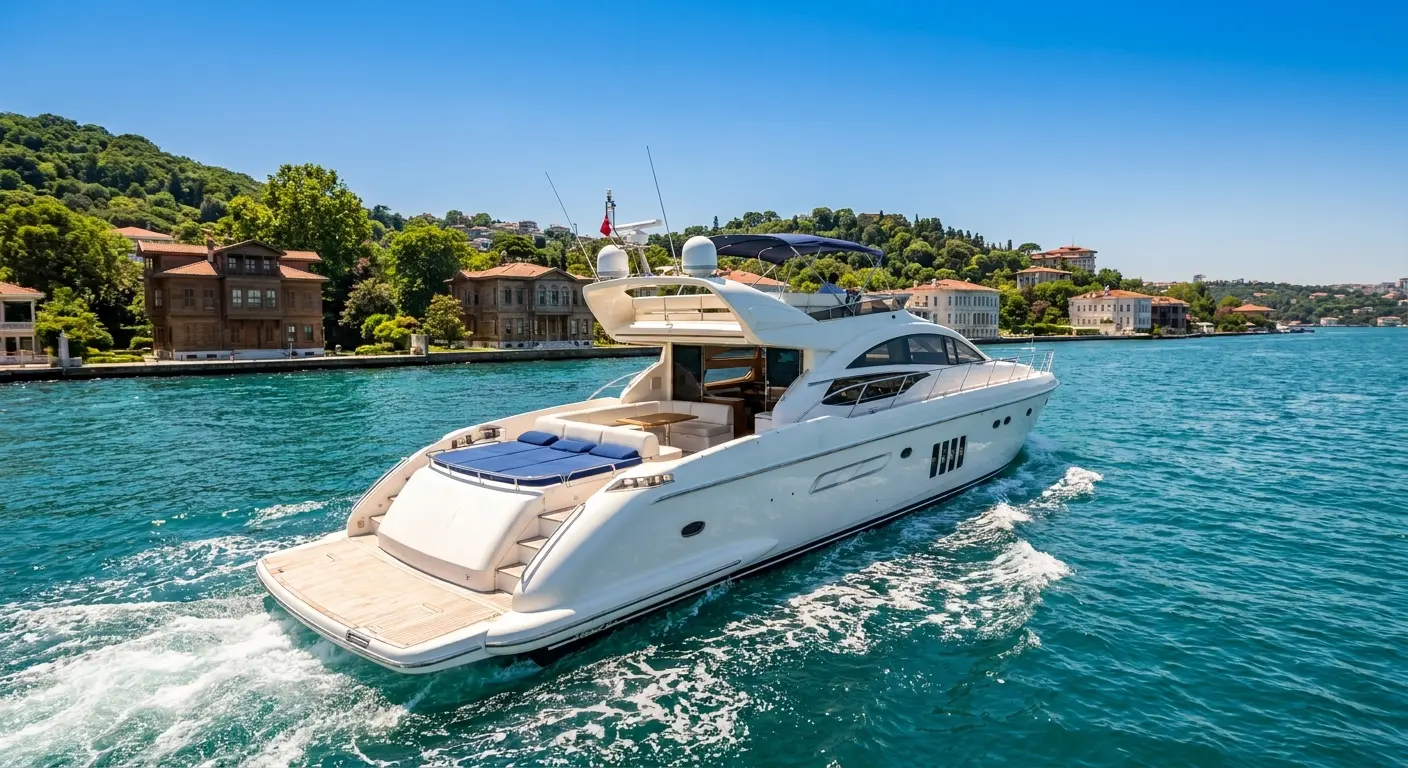
Almost every yacht charter search starts with the same question, and it is the wrong one: which boat is the best? The honest answer is that there is no best boat, only a best match. A family with two small children and a crew of twelve friends can leave the same pier at the same hour with completely opposite needs on board. One is hunting for shade and a second bathroom; the other wants open deck space and a sound system. This guide builds the decision the other way round, starting from who is travelling with you: families, couples, friend groups and corporate guests. We look at which boat class, which time slot and which route genuinely works for each, and where the money is worth spending. You can compare current options on Turlago's yacht and boat charter page.
Three things to settle before you look at a single boat
The most common mistake in the booking process is choosing from photographs. A wide-angle shot makes a small aft deck look generous and a compact saloon look spacious. The details that actually matter for your group rarely show up in the image. Answer these three questions in writing first.
- Exact headcount and age spread. Are there infants, toddlers, elderly guests or anyone with limited mobility? A licensed capacity of twenty is not the same as a comfortable capacity of twenty. As a rough working rule, aim for at least 1.2 to 1.5 square metres of open deck per guest for a relaxed group.
- Time slot. Morning departures mean calmer water, cooler air and far more route flexibility. In the afternoon, wind builds from the north and commercial traffic thickens. Late afternoon and sunset are the most requested slots of the entire season and fill up weeks ahead.
- Food, drink and alcohol policy. Does the boat run its own galley, does it accept outside catering, and is there a corkage fee if you bring your own wine? The answers can affect your total budget more than the charter fee itself.
Once those three are locked, a list of dozens of boats usually collapses into three or four sensible shortlisted options.
Matching the boat to the group: four profiles, four priorities
1. Families: shade, bathrooms and easy boarding
For families with children, the deciding factors are not speed or luxury. They are shaded, safe outdoor space and how easily people move around the boat. A hardtop or a generously shaded flybridge matters far more in July than a jacuzzi nobody uses before lunch.
- Number of bathrooms: For groups larger than six, one head becomes a bottleneck. Two bathrooms change the whole rhythm of the day.
- Life jacket sizes: Ask specifically whether infant and child sizes are on board. An adult jacket on a four-year-old is not a safety measure.
- Cabins and shade: A cool cabin gives you somewhere for naps and a retreat from the midday sun. It is cheap insurance against a ruined afternoon.
- Boarding access: Check gangway width and whether there is a ramp or passerelle. If you are bringing a stroller or a wheelchair, say so at the booking stage, not on the day.
The pattern that works best for families is a 10:00 or 11:00 departure, three to four hours on the water, lunch served on board, and a return by early afternoon. You avoid the steepest sun and you get the children home before the late-afternoon meltdown.
2. Couples: privacy, quiet and a slower service tempo
What couples are usually looking for comes down to three words: uncrowded, quiet, unhurried. On a shared departure, the surprise is often that there are thirty other guests on deck and the music level has nothing to do with the evening you imagined.
- Private charter: You can book an entire boat for two people. It costs more on paper, but you control the route, the music and the pace.
- Smaller is often better: A boat in the 8 to 12 metre range can feel far more intimate than a large yacht with a crowded saloon.
- Timing: Sunset is the headline slot, but a morning departure gives you a calmer strait and softer light for photographs. Weekday evenings are noticeably quieter than weekends.
- Dinner on board: Confirm the menu and the serving time, and ask whether dinner is served while underway or at anchor. It makes a bigger difference to the experience than the menu itself.
If you are planning a proposal or an anniversary, share it with the crew in advance, but be precise about timing. A surprise that lands at the wrong moment can turn a good evening into an awkward one.
3. Friend groups: capacity, sound and flexible catering
With a group of friends, the priority list changes completely: open deck, a decent sound system, and a flexible food and drink policy. These groups usually sit between eight and fifteen people, and the most common disappointment is a seating layout that splits the conversation.
- Seating layout: A single U-shaped or continuous bench keeps a group together. Decks divided into several small clusters scatter the energy.
- Music: Ask whether you can connect your own playlist. Be aware that anchoring near residential stretches of the strait may come with noise limits. That is a legal constraint, not a crew preference.
- Drinks and catering: Bringing your own alcohol, ice and glassware arrangements, and whether outside food is allowed are the three items that swing a group budget the most. Get all three in writing.
- Return time: The most frequent cause of friction is disagreement over when to head back. Agree the return time as clearly as the departure time. Extra hours are often possible, but only if requested in advance.
For friend groups, a four-hour late-afternoon departure is usually the sweet spot: you see the strait in daylight and you catch the light change on the way home.
4. Corporate groups: invoicing, timing and brand visibility
For a corporate event, the boat is not transport. It is a stage for the programme. The priorities are punctuality, paperwork and technical capability.
- Contracts and invoicing: Company-name contracts, e-invoicing, payment terms and VAT should be settled in the first conversation. Private charters can skip this. Corporate bookings cannot.
- Guest reception: A welcome desk at the pier, name badges and clear signage to the boarding point prevent a sixty-person guest list from scattering along the waterfront.
- Technical requirements: Microphones, speakers, screens or projection need to be listed in advance. If there is a speech, check the acoustics of the indoor space and the power supply separately.
- Run of show: Opening remarks, dinner service, awards and closing should sit on one shared timeline so the crew can plan preparation around it.
- Transfers: Moving guests from hotel or office to the pier is a separate operation. Leaving it to the final week is the single most reliable way to start a programme twenty minutes late.
Which boat class suits which group?
- Motor yacht (10-30 m): Fast, generous deck space, usually two or three cabins. The most flexible option for families and corporate events. Fuel consumption is high, so long routes push the total cost up quickly.
- Gulet: Wooden, slow, the classic of multi-day cruising. Often oversized for a short city trip, but unbeatable for week-long cove itineraries and large groups.
- Catamaran: Extremely stable thanks to its twin hull. The best choice when someone in your group is prone to seasickness, and it offers a wide, single-level living area.
- Classic wooden boat: Nostalgic atmosphere, narrow passages, limited headroom. Charming for photo-focused couples, but genuinely difficult for guests with mobility limits.
- Speedboat: Fast and exciting for small groups. Comfort is secondary, so it is a poor fit for a quiet dinner plan.
- Sailing yacht: Almost silent when under sail. Because it depends on wind, the route cannot be guaranteed. Ideal for couples and small groups with a flexible schedule.
Charter formats: two hours, a full day, or overnight?
- Short city cruise (2-3 hours): The historic peninsula, the Maiden's Tower and the mouth of the strait. Good for corporate receptions, quick introductions and families with young children. Note that two hours will not get you to the northern stretches of the Bosphorus.
- Sunset cruise (2.5-3.5 hours): The most in-demand slot of the season. It can sell out weeks ahead even on weekdays. For larger groups, prioritise a boat with genuinely open deck space.
- Full day (6-8 hours): The Princes' Islands, sheltered bays and swimming stops. Catering, shade and bathroom capacity matter far more on this format.
- Overnight or multi-day (2-7 days): Gulets and larger motor yachts running cove itineraries from Istanbul. Suited to corporate incentive programmes and big groups, with extra procedures such as passenger lists, port permissions and crew ratios.
A useful rule when choosing duration: if less than a quarter of the trip is spent at anchor, it will feel like a commute rather than a day out. A boat that never stops moving leaves no room for the actual point of the trip.
Route options: three main lines
The historic peninsula and the strait entrance
From the old city waterfront past the Maiden's Tower and up to the first bridge. Ideal for corporate receptions and first-time guests, and it delivers the strongest skyline photography. If you are hosting international visitors, this line shows the most Istanbul in the shortest time.
The northern strait and the Black Sea mouth
Up past Bebek, Tarabya, Sarıyer and Anadolu Kavağı. Green hillsides, historic waterfront mansions and lighter marine traffic. Well suited to couples and families who want a calmer day. If you plan to swim, sheltered bays on the northern stretch are the appropriate choice rather than the main channel.
The Princes' Islands
Kınalıada, Burgazada, Heybeliada and Büyükada. The best area for a full-day itinerary with a swimming and lunch stop, and the first choice for friend groups and extended families. Plan the return before sunset to avoid the late-afternoon wind that builds across the open water.
Season, day and hour: what actually drives the price
- Season: Late April to mid-October is the main window, with July and August at peak. May, June and September usually offer the best balance of weather and availability.
- Day of week: Weekday daytime slots are the most competitive. Friday and Saturday evenings and public holidays carry the highest demand.
- Time of day: Sunset is the most expensive slot per hour. A morning departure is both cheaper and calmer on the water.
- Fuel and distance: On some boats fuel is included; on others it is metered by consumption. On long routes this line item changes the total significantly, so read the fuel clause carefully.
- Catering: Galley menus are usually priced per person. Alcohol service, live music and custom menus are added on top.
- Extras: Pier service fees, waiting time at public docks, transfers and decorations tend to appear late. Ask for the full list in writing before you compare offers.
There is usually some negotiation room, but the most reliable way to improve the price is not haggling. It is date flexibility. A group that can move a day either side often gets a materially better deal on the same boat.
Pre-booking checklist
- Is licensed capacity and comfortable seating capacity stated separately?
- How many crew members, and is the captain's certification documented?
- Are fuel, pier fees and cleaning included or excluded?
- Catering policy: own food, own alcohol, corkage fee.
- Cancellation and rescheduling terms, particularly in bad weather.
- Deposit and damage liability: what triggers a deduction?
- Life jackets, first aid kit and fire extinguishers on board?
- Payment schedule: deposit amount, balance due date and invoicing.
Safety: the invisible part of a comfortable trip
- You cannot swim in the main shipping channel. Currents and vessel traffic make it unsafe and it is not permitted. Swimming stops happen in sheltered northern bays and around the Princes' Islands.
- Traffic rules: The Bosphorus is a busy international waterway. A good captain constantly adjusts speed and route around commercial traffic, which can create small schedule shifts. Treat that as normal operation, not a fault.
- Weather: In strong wind, a captain may shorten or cancel a route. That decision is about safety, not convenience. Make sure the weather clause in your contract is clear.
- Mobility and medical conditions: Stair counts, deck level changes and boat movement can be a real problem for some guests. Tell the crew in advance so an appropriate alternative can be found.
- Seasickness: Catamarans and larger motor yachts are noticeably more stable than small, light boats. Choose the class around the most sensitive person in your group.
Seven mistakes to avoid
- Filling the boat to its licensed maximum. Nobody sits comfortably and service suffers.
- Trusting the wide-angle photo and never asking about shaded areas.
- Discovering the alcohol and catering policy after booking.
- Leaving the sunset slot to the final week.
- Not planning the pier transfer, so the group starts thirty minutes late.
- Assuming there is no weather flexibility and never setting an alternative date.
- Signing without reading the fuel and extras clauses.
Frequently asked questions
What is the minimum group size for a yacht charter in Istanbul?
There is no minimum. Private charters for two people are common. The maximum is the boat's licensed passenger capacity, and that number is not negotiable.
Can I charter a boat without a captain?
On a busy waterway like the Bosphorus, licensed boats operate with a captain as standard. Even on small boats, amateur experience is not considered sufficient; traffic rules and commercial shipping demand real expertise.
Can you do a boat trip in winter?
Yes, but winter requires schedule flexibility. Heated indoor saloons and hardtop boats work well. Between December and February, route shortening due to wind is common.
Is there an age limit for children?
There is no general age limit, but correctly sized life jackets and shaded space must be available for infants. Ask about this at the booking stage.
Can we bring our own food and drinks?
It varies. Some boats accept outside catering free of charge, some charge a service fee, and some do not allow it at all. Get the answer in writing with your quote.
What affects the price most?
In order: date and time slot, boat class and size, duration, whether fuel is included, and the catering package. The same boat can be priced very differently on a different date.
How far in advance should I book?
One to two weeks is usually enough in normal season. For sunset slots and public holidays, three to four weeks. For corporate events above fifty guests, start planning one to two months out.
The bottom line
Chartering a yacht in Istanbul is a matching exercise, not a comparison exercise. Two trips at the same budget can produce one unforgettable day and one exhausting one, and the difference is rarely the brand of the boat. It is how well the boat fits your group. Start with who is travelling, then write down the three things that profile genuinely needs: shade, quiet, capacity, technical setup, service tempo. Groups that share that list when requesting quotes almost always end up with a better outcome.
Plan your dates early, prioritise options with weather flexibility, and do not sign before reading the fuel, catering and cancellation clauses. You can compare current boats, capacities and availability on Turlago's yacht and boat charter page and book the one that fits your group directly.