Istanbul Yacht Charter Booking Checklist: Prep Before You Book
Booking a yacht in Istanbul takes about twenty minutes. Realising you picked the wrong one takes about five seconds, and it usually happens the moment you step onto the pontoon. I have read through hundreds of charter reviews and spoken to enough groups to know that the complaint is rarely about price. It is about a mismatch: a family that assumed there would be shade, a company team that thought the aft deck had a proper table, six friends who pictured a spacious gulet and got a compact motorboat with two benches.
This guide is built as a working checklist rather than a brochure. It covers what to decide before you request quotes, what to verify while you are confirming the reservation, and what to prepare afterwards. It starts with the filter that matters more than any other: who is this boat actually for? Two boats at the same price can produce a perfect day for one group and a long afternoon for another. Travel logistics belong on the same list — for larger groups, chauffeur-driven private car rental keeps ten people from splitting across three taxis on the way to the marina.
Filter one: match the boat to the group
Boat selection feels like a matter of taste. In practice it is a matter of fit. When you send an enquiry, describe your group in the message. It changes the options you get back far more than any budget range does.
Families with children
With kids aboard, the priority order changes completely. Shade, safe deck edges, stair access, a clean toilet and an easy swim ladder come before aesthetics. Ask about all of them before paying anything. Tell the operator the ages of the children in advance, because life jackets and their sizes are prepared accordingly. Motion matters too: smaller boats roll more when the Bosphorus traffic sends a wake across your path, and that wakes sleeping toddlers.
Couples and celebrations
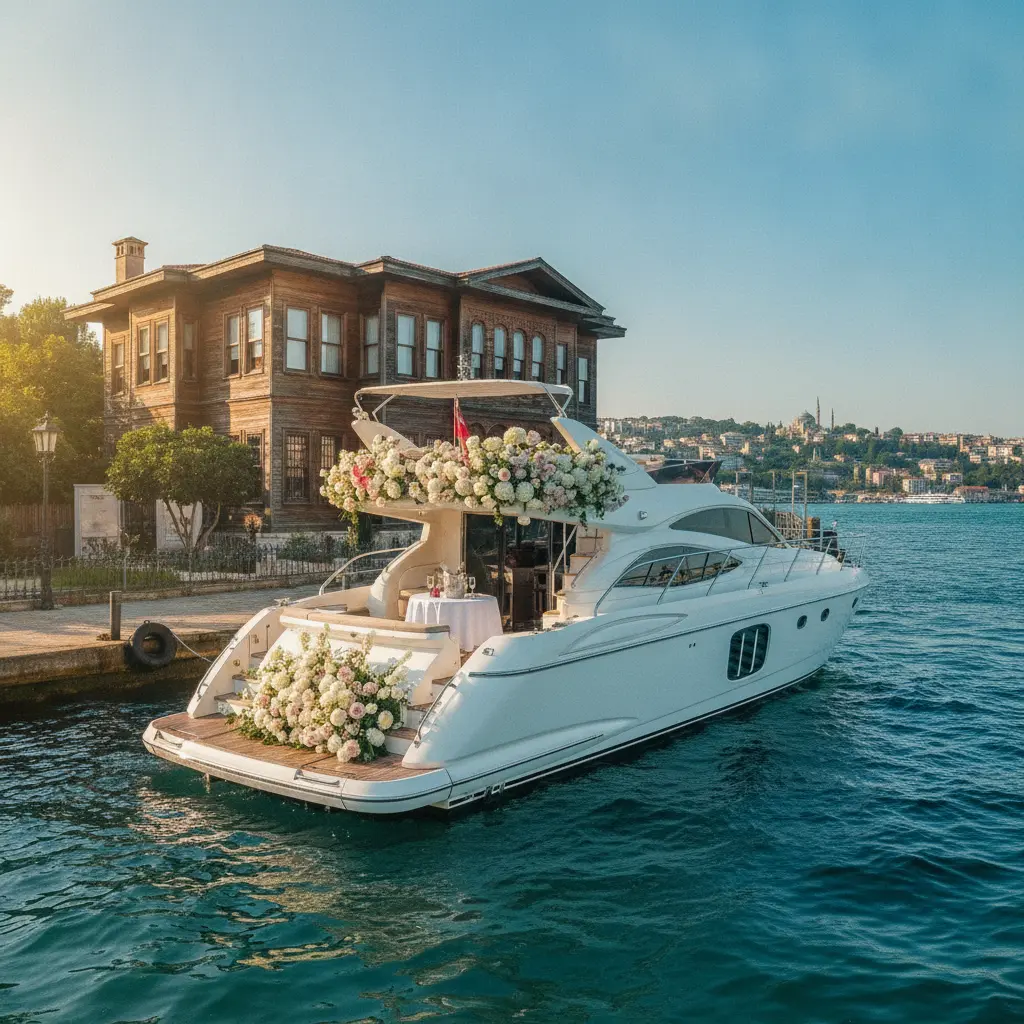
For two people, a large yacht is mostly unnecessary cost. The better question is privacy. A small boutique boat booked exclusively for your party usually beats a bigger vessel with shared spaces. If you are planning a proposal, an anniversary or a milestone birthday, say so openly — table layout, music levels and timing can be adjusted, and a surprise is far easier to stage when the crew is in on it from the start.
Corporate groups and company events
For corporate charters, infrastructure beats scenery. Checklist items are power, a space where a short presentation can happen, sound, connectivity, seating layout and time discipline. Confirm what time the boat departs and returns, and how participants get back to work afterwards. Ask early whether the operator issues an invoice and how payment is handled, since corporate accounting requirements are the most common source of delay after the trip, not during it.
Friends' groups
The most common mistake here is requesting prices without a firm headcount. "Around fifteen of us" breaks both the capacity calculation and the cost split. Fix a number before you shop, add a two-person buffer, and choose a boat that works at the upper limit rather than the optimistic one. Also raise the practical questions: who cannot swim, who needs to stay out of direct sun, who has mobility limits. These answers determine the boat type, not just the seating chart.
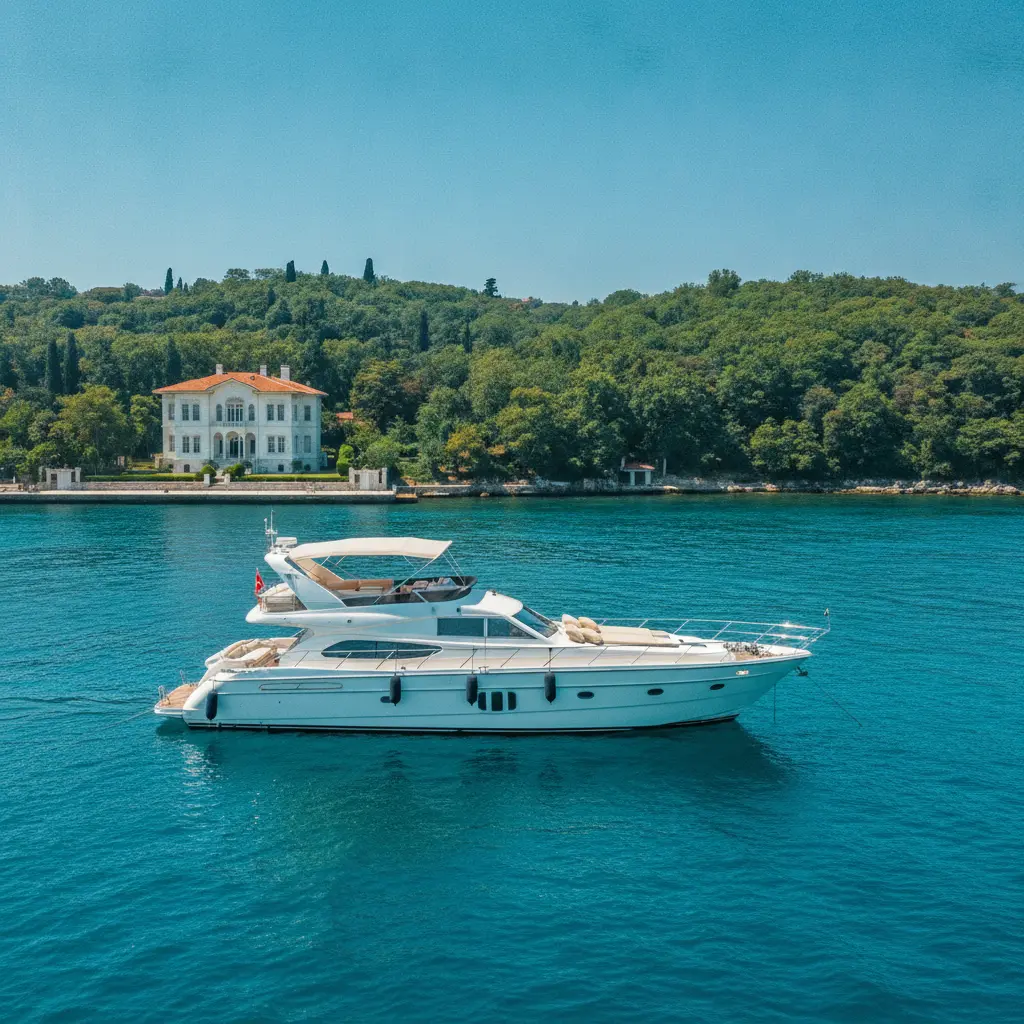
Suggested alt text: A white motor yacht with shaded aft deck and sun cushions anchored in a quiet bay under a clear summer sky.
The ten-day pre-booking checklist
You do not have to complete all of this in one sitting. You should complete all of it before you send a deposit.
- Write down the group profile: headcount, age range, number of children, swimming ability, mobility needs.
- Narrow the date and time window: one fixed date or two alternatives? Morning or afternoon departure? Late-afternoon slots are the most requested in Istanbul and need earlier planning.
- Decide the duration: two hours, four hours, a full day or an overnight charter. This single decision drives boat type more than anything else.
- Define the route expectation: Bosphorus, the Princes' Islands side, or the northern bays? "Just out on the water" can mean spending half the day in transit.
- Set a total budget ceiling: not just the rental figure, but fuel, crew, food and drink, marina or entry fees and gratuity.
- Get at least three quotes: compare them line by line, not by the headline number.
- Ask for current photos: recent shots from several angles, ideally a short video, not a catalogue image.
- Confirm crew and galley arrangements: is the captain included, is there a host, can the kitchen be used, is catering part of the package?
- Learn the weather policy: if wind or rain cancels the trip, is it a refund, a reschedule or a credit?
- Request a written summary: times, address, capacity, inclusions and cancellation terms in one message. This prevents almost every dispute that starts with "that is not what I understood".
Boat type and capacity: the technical check
Istanbul charters generally fall into three families: motor yachts, gulets and smaller motorboats, with catamarans becoming more common, particularly with families. Knowing the trade-offs helps you spend the budget where it actually improves the day.
Motor yachts: pace and comfort
If you want to cover more ground in less time, a motor yacht makes sense. Deck space is generous, shade is standard on most models, and there is usually an indoor saloon as a fallback. Fuel consumption is higher, so ask directly whether fuel is included in the quoted price or metered. On longer routes this line item can change the total meaningfully.
Gulets: slow, wide, built for bigger groups
Gulets are slower but far more spacious. They suit large families, big groups of friends and multi-day programmes. Their weakness is short charters: a gulet's pleasure unfolds over time, and a two-hour slot does not do it justice. For full days or overnight trips, they are excellent value per person.
Smaller boats: intimacy and flexibility
Boats in the six-to-eight-person range work well for short Bosphorus trips and for couples. Shade may be limited and the toilet arrangement varies by model, so ask before you assume. These are the details that turn into a mid-afternoon surprise if nobody checks them in advance.
How to read a capacity figure
A "20 guests" figure is a legal maximum, not a comfort rating. As a working rule, aim for roughly seventy percent of the stated capacity. If a meal is served, reserve space for the service area and table layout. And if some of your group will sunbathe while others seek shade while a third set moves around constantly, seating layout becomes a real planning item, not a detail.
Route and duration planning
A realistic boat day is built from four blocks: departure, first swim stop, second stop, return. On shorter charters, doing two stops properly beats squeezing in four.
- Two hours: one route, one stop. Typically a city departure with a short Bosphorus run. Photography and skyline focused.
- Four hours: one swim stop and one scenic stop fit comfortably. Ideal for midday or late-afternoon departures.
- Full day (six to eight hours): the Princes' Islands area or the northern bays become realistic. Catering is close to essential at this length.
- Overnight: gulet or larger motor yacht over several days. The captain's proposed route, fuel policy and harbour fees should all be in writing.
Match duration to the group's energy, not just to the budget. Four hours is usually the sweet spot for families with young children. Corporate groups need at least four hours to fit a presentation and a meal without rushing. Friends' groups tend to prefer the longer day. Whatever you choose, plan to arrive at the marina at least thirty minutes before departure: introductions, settling in and the safety briefing take longer than people expect.
Budget lines: what is actually in the quote?
Treating a yacht charter as a single number is one of the more expensive habits in this market. Ask about each of these separately:
- Charter fee: varies with duration and boat type, and rises in high season and at weekends.
- Fuel: included or metered? On long routes this is a significant line.
- Crew: captain, host, cook. Some quotes include the captain, some do not.
- Food and drink: is catering included, can you bring your own, is there a service charge?
- Marina and entry fees: some stops charge per boat.
- Cleaning: often listed separately on overnight charters.
- Security deposit: how much, when is it returned, what triggers a deduction?
Ask for an all-in figure so you can compare quotes on equal terms. If you are calculating per person, check whether children and service staff are priced differently.
While booking: eight contract points to verify
The booking stage is the least glamorous part of the process and the most decisive. If any of the following is verbal only, get it in writing.
- Date, time and duration: are departure and return times explicit, and what happens if the boat is delayed?
- Meeting point: marina name, pier or pontoon number, contact person and phone number.
- Boat identity: model, name, capacity and photos referenced in the confirmation. If the wording allows a "similar boat", the substitute's capacity and features must be specified too.
- Inclusions list: crew, fuel, catering, equipment, towels, life jackets — what is in and what is not.
- Payment schedule: deposit amount, balance due date, accepted methods, and whether a receipt or invoice is issued.
- Cancellation and change terms: how many days ahead for a refund, and what percentage is deducted.
- Weather clause: if the trip is cancelled for conditions, is the remedy a refund, a reschedule or a credit note?
- Liability and insurance: is the vessel insured, and what is the process if a guest is injured?
Keeping these eight points in a single email thread eliminates nearly all of the "I thought it included that" conversations later. A friendly verbal reassurance is not a contract term.
After booking: packing and preparation
Once the reservation is confirmed, the most useful thing you can do is make the day logistically light. Being on the water means replacing a forgotten item is difficult.
Bring
- High-factor sunscreen, lip balm and a hat — deck reflection is stronger than most people expect
- Non-slip shoes; bare feet or heels on a moving deck are a genuine risk
- Towel and swimwear, unless confirmed as provided
- A light layer or windbreaker for late-afternoon departures
- Personal medication, motion sickness precautions and a small first-aid kit
- Waterproof phone pouch and a power bank
- Spare clothes and snacks for children, plus their preferred life jacket if they have one
- Small notes in cash; card acceptance at some piers and bays is unreliable
Leave behind
Heels, hard suitcases, smooth-soled shoes and expensive jewellery. Storing these at the marina or in the car makes the day noticeably more comfortable. If you are bringing camera gear, plan for salt spray and wind protection.
Food and drink
Whether catering is included should be settled at booking. If you are allowed to bring your own food, choose items that travel well and tolerate heat. Ask about alcohol service rules and age checks in advance. Ice and refrigeration capacity are limited on most boats, and in larger groups this detail is the reason drinks go warm by early afternoon.
Departure day: the first thirty minutes
The tone of the whole day is set before you leave the pier. Follow this order:
- Check in: let the operator know you have arrived; the pontoon may have changed.
- Look at the boat: is it the one in the confirmation? Does capacity and shade match what you expected?
- Listen to the safety briefing: where the life jackets are, how the toilet works, who to contact in an emergency.
- Confirm the inclusions: crew count, catering, duration and return time. No surprises.
- Agree the plan: knowing where you will stop and roughly when makes the pace calmer for everyone.
Confirm the return time out loud, and share it with whoever is driving you afterwards. That single step saves the half hour that otherwise disappears while the group reassembles on shore.
Seven common mistakes
- Choosing on price alone: the cheapest quote often excludes fuel, crew or cleaning.
- Treating maximum capacity as comfort: the legal number and the pleasant number are different.
- Not asking about shade: three hours in direct sun can define the whole day.
- Ignoring route versus duration: planning three stops on a two-hour charter means staying on the boat.
- Skipping the weather policy: recovering money for a wind-cancelled trip is much harder if it was never discussed.
- No written summary: verbal agreements fail the moment two people remember them differently.
- Leaving transport to the last minute: scattering a large group across the city on departure morning is the most avoidable stress of the day.
Season and timing notes
Istanbul's charter season is long, but demand is uneven. Weekends and public holidays reduce availability and raise prices. A weekday departure can buy you a better boat for the same budget. Late-afternoon slots are the most requested, so plan two to three weeks ahead for those. Late spring and early autumn are practical windows if you want the water without the crowds, provided you build in some flexibility for changing conditions.
The bottom line
You do not need to memorise this list. Assign one person in your group as the planner, share the ten-point pre-booking checklist with them, and compare every quote against the same criteria. That is where the biggest difference in both price and experience is made.
When you browse yacht and boat charter options on Turlago, enter your dates and headcount precisely, then compare each proposal against the sections above. Settle your transport plan on the same day: chauffeur-driven private car rental lets the whole group arrive at the marina together and keeps the return just as simple. The reservation itself takes twenty minutes — just make sure those twenty minutes are spent asking the right questions.