Lisbon and Porto 5-Day Tour: Best Time to Go
On this route, the calendar decides more than the price tag
Most travellers planning a five-day Portugal trip start with the price and pick a date afterwards. On the Lisbon-to-Porto corridor, that order is backwards. The same itinerary behaves like two completely different holidays depending on the month: Lisbon in late spring is a city you can walk end to end, while the same streets in mid-August turn into a heat-and-queue endurance test. Porto adds its own variable, because the Atlantic gives it noticeably more rain than the capital, especially from late autumn onward.
This guide answers one question only: when is the genuinely ideal time to take the Lisbon and Porto 5-day tour, and when are you simply buying a cheaper version of it? If you want to see the full programme, inclusions and current pricing first, view the Lisbon and Porto 5-Day Tour on Turlago. Here, we are talking about timing.
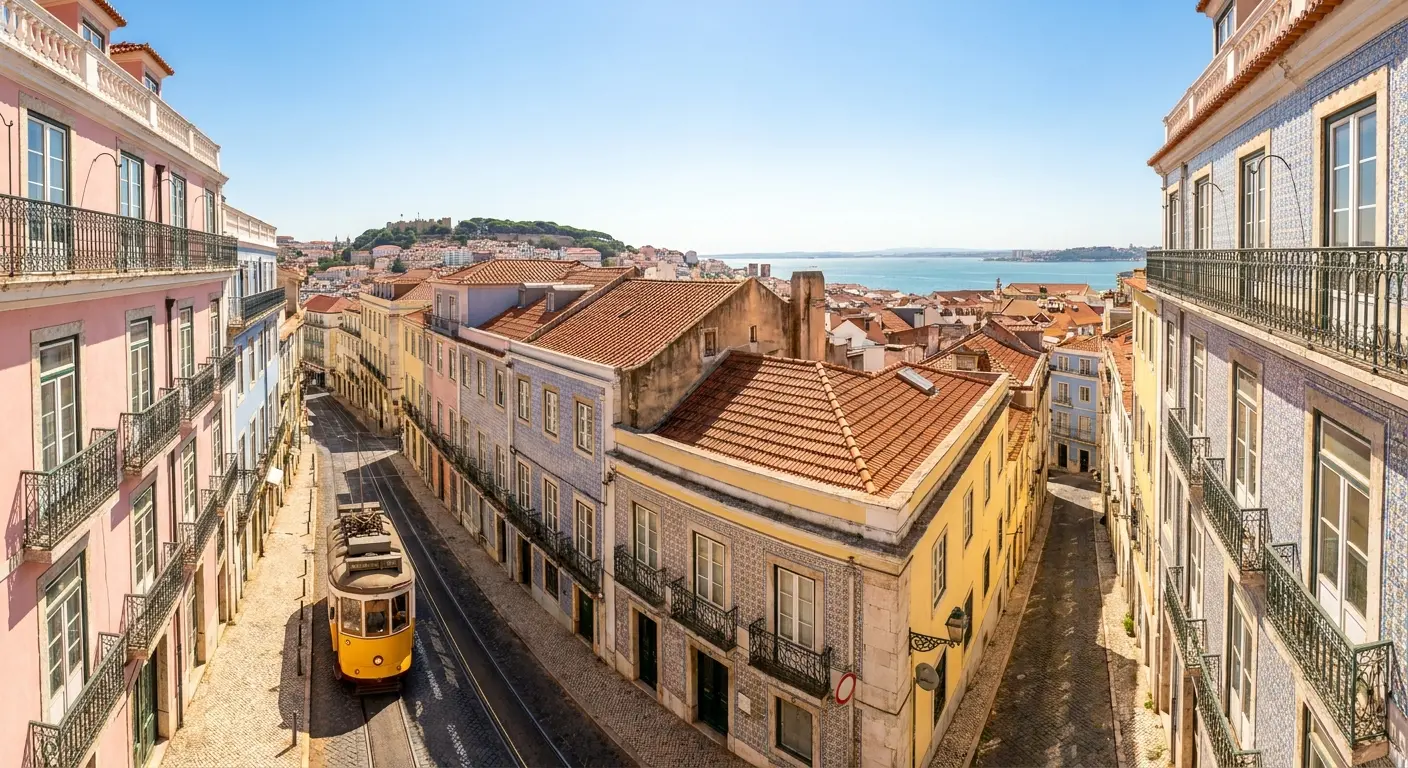
Image note: suggested alt text for the Alfama shot — historic yellow tram on a narrow cobbled street between tiled facades in Lisbon's Alfama district.
What stays fixed: five days, four nights, Istanbul departure
Before discussing seasons, it helps to lock down the parts that never change. The tour meets at Istanbul Airport's international departures terminal at 05:30, three hours before the flight. Outbound travel is a Turkish Airlines scheduled economy flight from Istanbul (IST) to Lisbon (LIS), and the return leg runs Porto (OPO) to Istanbul (IST). In other words, the route has two fixed ends: you enter through Lisbon and exit through Porto. Your suitcase gets opened once and closed once, with all intercity and airport-to-hotel transfers included.
Accommodation is four nights in three-star hotels on a bed-and-breakfast basis. City taxes (25 EUR) are included in the price. Not included: the visa fee, travel health insurance (20 EUR), the Turkish overseas exit fee, lunch and dinner plus other meals, hotel extras and personal spending, optional excursions, museum and site entrance fees, and any service not explicitly listed as included. That split matters for timing. Flights and hotels move with the season, while the visa, insurance and exit fee stay roughly constant. The cheaper shoulder seasons therefore deliver a proportionally bigger saving on the total.
Capacity is listed at 100 travellers, so this is a large-coach group departure rather than a small-group trip. The listing also has no reviews or rating accumulated yet, which tells you it is a new product. When that is the case, judge it on the itinerary and the inclusions list rather than on social proof.
Month by month: how Lisbon and Porto actually change
These two cities sit in the same country but behave like different climates. Lisbon is Mediterranean: dry, hot summers and mild winters. Porto is Atlantic: cooler summers, far more rainfall, and a persistent ocean breeze. That is why a single date rarely gives you both cities at their absolute best.
April and May: walkable Lisbon, greenest Sintra
This is the most balanced window of the year. Daytime temperatures in Lisbon are ideal for walking, evenings are still cool enough to need a light jacket, and the Sintra hills are at their most vivid green rather than hazy or washed out. The Cascais and Estoril coastline is pleasant for a seaside stop, and although Cabo da Roca stays windy all year, visibility is usually excellent, which is exactly what you want at Europe's westernmost point.
In the north, May is a superb month for Porto's Ribeira district overlooking the Douro. Rain is still possible, so pack a foldable umbrella. Crowds have not peaked and hotel rates have not yet climbed to July and August levels. One caution: the major Fátima pilgrimage on 12–13 May fills the region, so coach parking and pedestrian flow along the route get noticeably heavier on those dates.
June: festival season and the longest days
June is when Lisbon shows off. Santo António celebrations decorate the streets and keep the evenings lively well past midnight. In Porto, the São João night of 23–24 June is celebrated along the Douro with fireworks and parades. If you want local atmosphere to be part of the trip, this is a bonus. The trade-off is that central hotels book up early and a night of celebrations can make the following early-start day feel heavy.
June also delivers the longest daylight of the year, with light until around 21:00. For a programme built on a panoramic city tour plus free time, that is effectively a free extra hour or two every evening.
July and August: full summer, full crowds
These two months can be genuinely oppressive in Lisbon, where walking across open squares at midday becomes a chore. The itinerary includes open-air stops such as Eduardo VII Park, Rossio, Libardede Square and the Belém waterfront, so a hat, water and a shade strategy are essential. Porto stays cooler and breezier, which makes the northern half of the trip more comfortable in high summer.
Crowds peak accordingly: the Belém area and the Jerónimos Monastery fill with queues, and hotel rates hit their yearly high. On the other hand, the religious calendar is quiet outside the two Fátima pilgrimage weeks, so a shrine visit is easier to enjoy in July or August than in May or October.
Late September and early October: the sweet spot
For my money, this is the best window for this particular itinerary. Lisbon has cooled down while the sea is still warm, crowds have thinned and prices have softened. The Douro Valley is in harvest mode, which gives the Porto section a distinct character: the riverside and the wine lodges feel alive without being overrun.
From mid-October, rainfall picks up, particularly in Porto. The 12–13 October Fátima pilgrimage fills the region again, and since day three of this tour covers Óbidos, Nazaré and Fátima, those dates are worth either targeting deliberately or deliberately avoiding.
November to March: lower prices, shorter days
Lisbon stays mild in winter, with rain that tends to arrive in short bursts rather than all-day drizzle. Porto is a different story and can be properly wet; walking Ribeira's slick stone pavement in the rain takes the edge off the sightseeing. Christmas lights make Lisbon attractive in December, but because the days are short, much of the panoramic city tour can end up happening at dusk, and stops such as Belém Tower and the Monument to the Discoveries may be visited after dark.
The upside is budget: flights and hotels relax considerably and museum queues disappear. The downside is rain risk on an itinerary that is largely outdoors, plus limited daylight. Winter is how you do this tour cheaply, not how you do it most comfortably.
Day by day: how the season reshapes each stop
Day 1 — Istanbul departure and panoramic Lisbon
The trip opens with a 05:30 meeting at Istanbul Airport, followed by baggage, ticketing and boarding formalities before the Turkish Airlines flight to Lisbon. On arrival, private coaches waiting at the airport take the group on a panoramic city tour covering Eduardo VII Park, Rossio, the heart of the city, Libardede Square, the Tagus River, São Jorge Castle, the Alfama and Alcantara quarters, the Belém Tower where explorers were seen off, the Monument to the Discoveries and the Jerónimos Monastery.
How pleasant this first day feels depends almost entirely on the weather. In mild months, strolling through parks and squares is a pleasure; in an August midday, you spend the whole time hunting shade. Combine flight fatigue with heat and the day drags, so in summer carry water and wear light clothing. In the evening, an optional Fado Night is offered (70 EUR without dinner, 95 EUR with dinner). Because it takes place indoors, it is tailor-made for cool or rainy evenings; in summer, open-air city life that runs late into the night is a serious alternative.
Day 2 — Free time in Lisbon and Sintra, Cascais, Estoril and Cabo da Roca
After breakfast, free time, with an optional excursion at 85 EUR to Sintra, Cascais, Estoril and Cabo da Roca. Sintra Royal Palace, the Portuguese monarchy's most important summer residence, is viewed panoramically, followed by the old fishing neighbourhoods and holiday villas of the Cascais and Estoril coast. The final stop is Cabo da Roca, the westernmost point of mainland Europe.
Cabo da Roca is the critical piece. The cliff facing the open Atlantic is windy all year, and in winter fog and rain can wipe out the view entirely. Between April and October, the same spot becomes the most photographed stop of the day. Remember that Sintra has its own cool, damp microclimate: even in midsummer, keep a light layer with you.
Day 3 — Óbidos, Nazaré, Fátima and the transfer to Porto
After breakfast, the coach heads north toward Porto, with an optional Óbidos, Nazaré and Fátima excursion at 60 EUR along the way. Óbidos is a medieval walled town whose twelfth-century walls still stand and whose historic fabric is intact. Next comes Nazaré, the fishing town famous for its beach, where you see the cliffs that explorer Vasco da Gama is said to have visited to pray before setting out on his long sea voyages. From Nazaré the group continues to Fátima, the site where the Virgin Mary is believed to have appeared to three shepherd children in 1917 and entrusted them with three secrets, now one of Christianity's largest pilgrimage and worship centres. Afterwards, on to Porto, where a panoramic city tour is arranged on arrival.
This is the longest travel day of the tour. In summer, the long daylight works in your favour: all three stops are seen in daylight and you reach Porto well before dark. In winter, the early sunset means the Porto panoramic tour can tilt toward a night-time city view. A lit-up Porto is beautiful, but it is harder to appreciate the detail of stops such as the Bolsa Palace and Porto Cathedral.
Day 4 — Free time in Porto plus Braga and Guimarães
After breakfast, free time, with an optional Braga and Guimarães excursion at 80 EUR. Braga is the first stop, home to the Sanctuary of Bom Jesus do Monte, one of Portugal's most important sacred sites. Reached by 650 steps, it is described as the finest example of northern Portugal's granite architecture, and devout visitors are said to climb those steps on their knees on holy days. From Braga the group moves on to Guimarães, Portugal's former capital, a UNESCO-protected town that is charming for its traditional houses and squares.
Porto's own panoramic tour highlights the Ribeira quarter overlooking the Douro, the Bolsa Palace, Porto Cathedral, São Francisco Church, São Bento railway station and the Dom Luís I Bridge. Day four involves a lot of walking, so in hot months start early, carry water and wear shoes with proper support.
Day 5 — Return from Porto
After breakfast, transfer to the airport, then customs and ticketing formalities before the Turkish Airlines flight back to Istanbul, where the tour ends. In winter, Atlantic weather systems can make flight delays more likely, so avoid tight onward plans on your return day.
Matching each optional excursion to the right season
The smartest feature of this itinerary is that the extras are left to you. Each one, however, has a season where it performs best:
- Fado Night (70 EUR without dinner, 95 EUR with dinner): indoor, so ideal for autumn and winter evenings. In summer it competes with the city's open-air nightlife.
- Sintra, Cascais, Estoril and Cabo da Roca (85 EUR): peaks between April and October. In winter, fog and rain risk at Cabo da Roca is high.
- Óbidos, Nazaré and Fátima (60 EUR): works year-round; the only thing to plan around is avoiding the 12–13 May and 12–13 October pilgrimage dates.
- Braga and Guimarães (80 EUR): most comfortable in spring and autumn; in midsummer those 650 steps become a genuine workout.
Take every option and your excursion budget reaches 320 EUR (95 + 85 + 60 + 80). Working that out in advance helps you build an accurate total before choosing a date. Redirecting the savings from a shoulder-season flight and hotel into the optional tours is usually the best trade-off.
The Fátima calendar: two weeks worth planning around
Fátima is one of Portugal's most visited religious sites and is calm for most of the year. But the major pilgrimages held on 12–13 May and 12–13 October draw tens of thousands of visitors at once. Because day three of this tour covers that route, travelling in those weeks means slower coach parking, denser walking routes and heavier movement around the sanctuary. Equally, if witnessing that atmosphere is the point of your trip, nothing else compares. It comes down to your priority: avoiding the crowds, or standing inside the ceremony.
Outside pilgrimage periods, a Fátima visit is generally relaxed, which is a real advantage for travellers with flexible dates.
Budget: what the 42,430 TRY price covers and what it does not
The listed price is 42,430 TRY and it can shift depending on your travel date. Included: economy-class Turkish Airlines tickets on the Istanbul–Lisbon and Porto–Istanbul legs, airport taxes, four nights in three-star hotels on a bed-and-breakfast basis, airport-to-hotel-to-airport transfers, all intercity transfers, the panoramic Lisbon and Porto city tours, city taxes (25 EUR) and professional Turkish-speaking guiding services.
Not included: the mandatory visa fee, travel health insurance (20 EUR), the Turkish overseas exit fee, lunch, dinner and other meals, hotel extras and personal spending, optional excursions and experiences, museum and site entrance fees, and any service not listed as included.
Here is the key point for planning. The visa, insurance and exit fee stay the same no matter which date you choose, while flights and hotels move with the season. That makes low-season savings disproportionately visible in the total. If you plan to arrange your own meals, a realistic food budget is roughly 30–50 EUR per day; Portugal's bakery and supermarket culture makes it easy to keep that number down.
Packing and preparation by season
- April–May: layers, a light rain jacket and a windproof shell. Mornings are cool, middays mild, evenings need a layer.
- June: breathable fabrics, comfortable walking shoes and sunglasses. With such long days, a spare shirt is genuinely useful.
- July–August: a wide-brimmed hat, high-factor sunscreen, a refillable water bottle and non-slip soles for the stone streets. Porto can still be cool, so pack a thin cardigan.
- September–October: layers, a light jacket for evenings and a foldable umbrella. Comfortable walking shoes for the Douro harvest season.
- November–March: waterproof shoes, a real rain jacket, an umbrella and a warm base layer. Grippy soles matter on wet stone.
Three rules apply in every season: Lisbon and Porto are hilly, so pick supportive rather than flat-soled shoes; carry some cash, because card readers in small cafés do not always cooperate; and given the 05:30 meeting time, consider staying near Istanbul Airport the night before departure.
Which month suits which traveller?
- First trip to Portugal: May, or late September to early October. Neither extreme heat nor extreme crowds.
- Photography focused: May and October. Clear views at Cabo da Roca, vivid green Sintra and soft light in Porto.
- Heat-averse: April–May or October, when a midday walk in Lisbon stays pleasant.
- Festival chaser: June, for Santo António in Lisbon and São João in Porto.
- Budget driven: November to March, when flights and hotels relax, accepting the rain risk.
- Crowd averse: November, February, March, and any Fátima week outside the two pilgrimage dates.
Quick answers: duration, visa, meals and group size
How long is the tour?
Five days and four nights, with accommodation in three-star hotels on a bed-and-breakfast basis.
Do I need a visa?
Yes. The visa fee is mandatory and not included in the tour price. Travel health insurance (20 EUR) and the Turkish overseas exit fee are also excluded and must be budgeted separately.
Are meals included?
Only breakfast. Lunch, dinner and other meals, plus hotel extras, fall outside the price, so add a daily meal allowance to your budget.
How big is the group?
Capacity is listed at 100 travellers, making this a large group departure. Agree on clear meeting points before free time in busy areas.
Is the guiding in English?
The included guiding service is described as professional Turkish-speaking guiding, covering both the city tours and the intercity transfers.
Are there any ratings yet?
The listing currently has no reviews or score, which suggests it is newly published. Judge it on the day-by-day programme and the inclusions list instead.
Final thoughts: the right five days are worth double
Seeing Lisbon and Porto in five days is really a logistics exercise. You fly out of Istanbul, land in Lisbon, learn the city on a panoramic tour, spend an extra day toward Sintra and Cascais, then move north through Óbidos, Nazaré and Fátima into Porto, finishing with Braga and Guimarães. That framework is fixed. What changes with the calendar is how much of each stop you actually get to experience.
My verdict is straightforward. If you want maximum return from the whole programme, May and late September to early October are the right windows. Summer is livelier but more exhausting; winter is cheaper but riskier. Whichever date you choose, budget the optional excursions up front, mark the Fátima pilgrimage days in your calendar, and invest in good shoes.
To see the full itinerary, the included services and current pricing, view the Lisbon and Porto 5-Day Tour on Turlago. Get the timing right, and these five days will feel like a week away.