Morocco Sahara Desert Tour: 7-Night Camping Guide 2026
Spending a night in the Sahara, sleeping under a blanket of stars and watching the sunrise over sand dunes – choosing the right time of year affects your comfort and enjoyment as much as the tour itself. The Morocco & Sahara Desert Adventure Tour is a comprehensive 7-night route stretching from Casablanca to Marrakech, taking in desert camps, oases and historic medinas. But which month is best for this journey? In this detailed guide, we evaluate the 2026 departure dates from a seasonal perspective, exploring the advantages and things to consider for each period. For the full itinerary, view the Morocco & Sahara Desert Tour on Turlago.
Morocco’s Climate: Seasonal Realities for a Sahara Tour
Morocco is a land of multiple climates at once: a temperate oceanic climate along the Atlantic coast, a continental climate in the Atlas Mountains, and desert climate in the Sahara. Since this tour covers cities such as Casablanca, Rabat, Fez, Ifrane, the Sahara Desert, Ouarzazate and Marrakech, the weather varies dramatically along the route. You might feel the ocean breeze one day and desert heat the next. So, when you go shapes not just your packing list but your whole experience. Looking at the tour’s departure calendar, we see a schedule stretching from April to December. This range largely covers the ideal seasons for visiting Morocco – spring and autumn – but the blazing summer desert and December’s cold nights offer their own unique charm. Let’s take a closer look at how each season impacts the tour.
Spring Tours: 12–26 April, 3–24 May 2026
Spring is Morocco’s most balanced season. In late April and early May, days are pleasantly warm rather than hot; the Atlas may still hold snow, but valleys have turned green. In the desert, daytime temperatures hover around 25–30°C, with cool nights around 10–15°C. This balance makes desert camping and medina walks extremely comfortable. In particular, the narrow alleyways of Fez and Marrakech are not yet sweltering at midday.
Another advantage of spring is that the country’s natural beauty is at its peak. In May, the M’gouna region is famous for its rose harvest; the “rose city” along the route becomes especially colourful. On day 4, as you travel through Tinghir and M’gouna towards Ouarzazate, you’ll experience this spring scenery first-hand. Spring is also ideal for photography: the dunes glow in reddish tones, and the sky is clear and blue.
Summer Tours: 21 June, 12–19 July, 9–23 August 2026
Summer is the extreme side of the Sahara experience. In July and August, desert temperatures can reach 45°C; the dunes become a furnace during the day. This means midday tours and medina strolls can be quite challenging. Yet the itinerary is wisely structured, with activities concentrated in the early morning and late afternoon. In the desert camp, night temperatures drop to around 25°C, making the stars crisp and brilliant. The biggest advantage of summer is the vibrant nationwide tourist energy and open-air squares that stay alive late into the night. Jemaa el-Fna square, with its street performers and food stalls, turns into a true festival ground on summer evenings.
The downside is the risk of heatstroke. You should avoid being outdoors between 11:00 and 16:00. The hotels and air-conditioned transfer vehicles provided by the tour are essential here. If you can handle heat and love a lively atmosphere, late June or early September are more reasonable alternatives; but August dates are for those who want to experience the desert at its most intense.
Autumn Tours: 27 September, 11–25 October, 8–29 November 2026
Autumn, along with spring, is the most rewarding season for Morocco. From late September through October, the summer heat gradually gives way to warm, dry weather. In the desert, daytime highs are around 30°C, dropping to 15–18°C at night – perfect for desert camping and sunrise watching. By November, temperatures cool considerably; nights can fall to 5°C, though days remain around 20–25°C. You’ll definitely need warm layers then.
Autumn is also harvest time. Date palm harvests in the oases of Marrakech and Ouarzazate happen in October–November. The palm groves and oases along the tour route turn golden. For the extra film studios tour, autumn sunlight offers better colours on open-air sets. If you want to avoid crowds and catch ideal photographic light, October and November are your best picks.
Winter Tours: 6–13 December 2026
In December, Morocco’s coastal cities are mild, but inland areas and desert nights turn seriously cold. Casablanca and Rabat see daytime highs of 17–20°C, while Fez drops to 10°C and the desert can fall below freezing at night. This may be the tour’s coldest period, yet it’s equally magical. Desert camps usually provide small heaters and warm blankets, but you should bring thermal underwear and a proper coat.
December’s biggest advantage is the festive atmosphere and relatively few tourists. Marrakech’s medina and Jemaa el-Fna square can be explored more comfortably. Winter days are short, so sunrise and sunset happen earlier, increasing your chances of catching golden light. However, don’t forget the rain factor – Fez and Rabat can see winter showers.
Season Comparison: Which Period Suits You?
Let’s briefly compare the available tour dates:
- April–May: Most balanced climate, green nature, easy medina walks. Cool desert nights, warm days.
- June–July–August: High heat, desert furnace, lively evenings. For heat lovers.
- September–November: Harvest season, golden light, ideal desert camping. Best for photography and comfort.
- December: Cold nights, few tourists, mild coasts. A winter experience.
Day-by-Day Route: Where Each Season Shines
The tour’s itinerary offers a different feeling every day. As you choose your season, keep these stops in mind.
Casablanca – Rabat: Coastal Climate
The first two days are spent in Casablanca and Rabat. These cities benefit from Atlantic influences, remaining comfortable even in summer; temperatures rarely exceed 30°C. In winter, they hover around 20°C. So season isn’t a major factor here. Visiting open-air sites like the Hassan Tower and Kasbah Oudaya in the morning is wise in any season.
Fez and Chefchaouen: Inland Coolness
Fez can be hot in summer, with afternoon highs around 40°C. April–May and September–October are therefore the best times to walk through Fez’s medina. Chefchaouen, being in the mountains, is cooler in summer; its blue streets are photogenic in every season. Winter rains may cast shadows on the blue walls but won’t spoil their charm.
Ifrane and Midelt: Atlas Mountain Crossing
Ifrane, nicknamed “Morocco’s Little Switzerland”, lives up to its title. In December, you can see snow-covered houses and forests. In summer, it’s a cool retreat. This region, along with Midelt, is where seasonal differences are most noticeable on this tour. Spring wildflowers and autumn gold make both seasons spectacular.
Erfoud and the Sahara Desert Camp: Heart of the Season
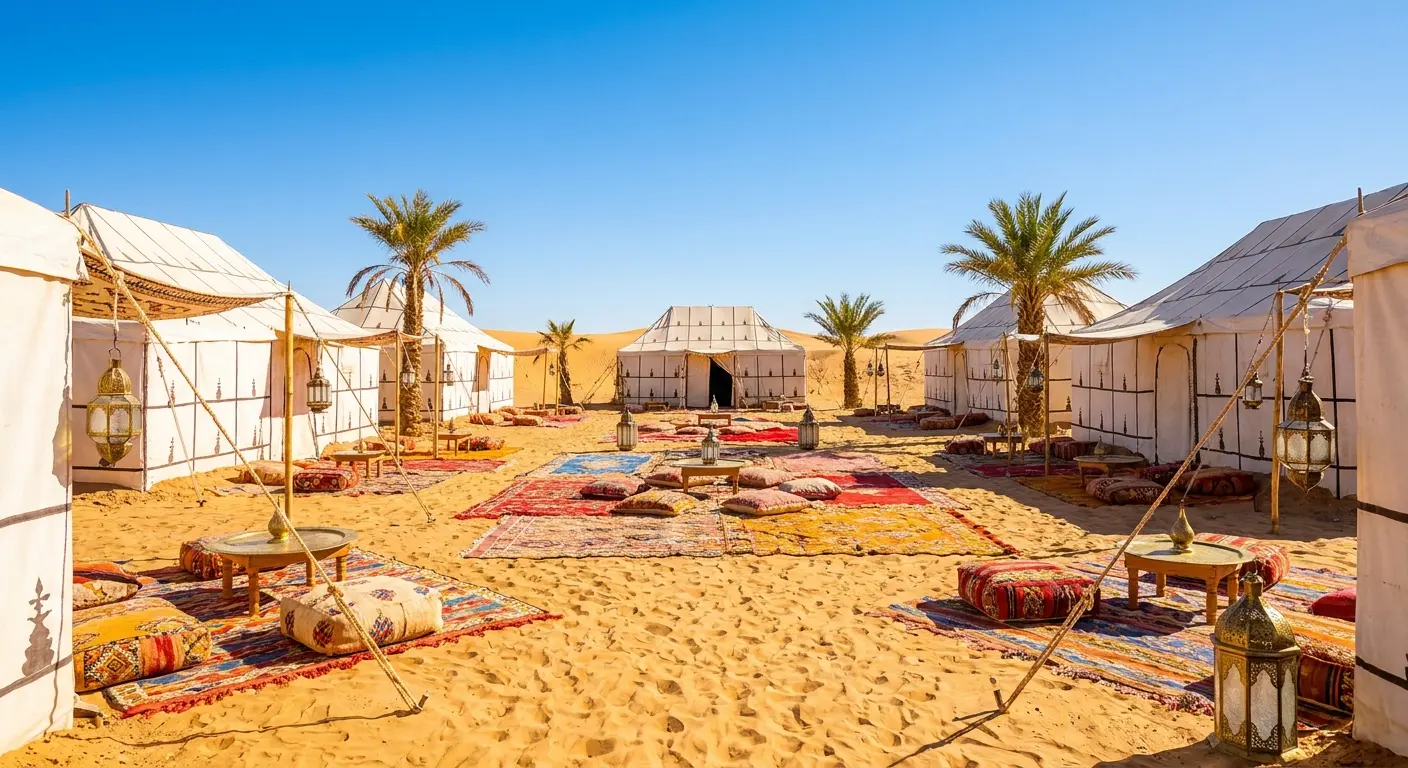
The desert camp is the tour’s central highlight. In summer, even at night the tent stays around 20°C, so no extra layers are needed. Spring and autumn are considered “ideal” – warm days, cool nights. In winter, night temperatures can drop below freezing. If comfort is your priority, book a May or September–October departure. For sunrise lovers, remember that summer sunrises are very early (around 05:00) while winter ones are around 07:30 – plan your wake-up accordingly.
Ouarzazate, Ait Ben Haddou and Film Studios
This region has a desert climate – dry and sunny. Summer midday heat can be oppressive, which is why the optional film studios tour is scheduled for the morning. Spring and autumn are perfect for walking. The earthen homes of Ait Ben Haddou glow golden and turn crimson at sunset; that vista is impressive in any season, but you’ll find the clearest skies in summer and autumn.
Marrakech and Essaouira: Contrasting Climates
Marrakech feels full-on African heat in summer, reaching 45°C. The optional Essaouira tour is cooled by ocean breezes. In summer, explore Marrakech early morning and late evening. Winter Marrakech is quite mild – about 20°C by day and 10°C at night. For the Majorelle Garden and Koutoubia Mosque, autumn light and winter coolness are my favourites.
The Desert Camp Experience: Seasonal Effects on Stars and Comfort
The night spent in the desert camp is the tour’s most memorable moment. In summer, the sky is always clear and stars shine brightly; but heat can cause sleeplessness. In spring and autumn, night temperatures are ideal – a light blanket suffices under the stars. In winter, the stars appear razor-sharp, but you’ll need thermal layers and a warm bed. Tours usually organise a dune climb for sunrise; this activity is most comfortable in spring and autumn. Remember, desert ecosystems are fragile – every season offers a different beauty, but comfort-wise the shoulder seasons are unmatched.
Departure Dates and Early Booking
The tour has multiple departures in 2026: April 12, 19, 26; May 3, 10, 24; June 21; July 12, 19; August 9, 23; September 27; October 11, 18, 25; November 8, 15, 29; and December 6, 13. With a capacity of just 100 people per departure, May and October dates tend to fill quickly. Booking early through Turlago can secure more favourable prices. The current listed price is 52,421 TRY, which includes flights, hotel accommodation, evening meals and guiding services. When planning your budget and leave days, consider these dates alongside this seasonal guide.
What’s Included in the 7 Nights?
The package includes Pegasus Airlines direct flights from Istanbul Sabiha Gökçen to Casablanca, airport-hotel transfers, Turkish-speaking guide, 7 breakfasts and 7 dinners. Accommodations are as follows: 1 night in Casablanca (Suisse Hotel etc.), 2 nights in Fez (Riad Menzeh etc.), 1 night in the Sahara desert camp, 1 night in Ouarzazate (Riad Maktoub Hotel etc.), and 2 nights in Marrakech (Ayoub Hotel or Blue Sea Hotel etc.). Not included are lunches, travel health insurance, Turkey’s international departure fee, tourist city taxes, optional tours, drinks with meals, and a driver tip of €5 per person. Knowing these details helps you budget accurately.
Practical Planning: Visa, Health, Money and Packing
This tour is visa-free for Turkish passport holders – a huge advantage. You can travel to Morocco without a visa. Flights are operated by Pegasus Airlines from Istanbul. Travel health insurance is not included, so we recommend purchasing it before departure. Morocco’s official currency is the Moroccan Dirham (MAD); euros are widely accepted in tourist areas. Credit cards are common in cities, but make sure to carry cash for the desert region and small shops. When packing, remember seasonal differences: light linen clothing for summer, a light jacket for air-conditioned places; for winter, bring a warm coat, hat, gloves and thermal underwear. Between May and October, a raincoat and thin sweater should suffice.
Conclusion: Choose the Right Time and Experience the Sahara’s Magic
The Morocco & Sahara Desert Adventure runs for most of the year, giving you the freedom to pick your season. Fresh green spring, scorching summer energy, golden autumn light, or quiet winter – each season has its own desert story. Think about your comfort level and photography expectations. If desert camping comfort matters most, the April–May and September–November windows are the smartest choice. If you don’t mind crowds and are ready to walk in hot weather, summer dates offer a different energy. And remember: this tour combines Morocco’s medina labyrinths, Atlas Mountains and Sahara sands into a single 7-night programme. Visit the tour page on Turlago for up-to-date dates and prices, and secure your spot with early booking advantages.