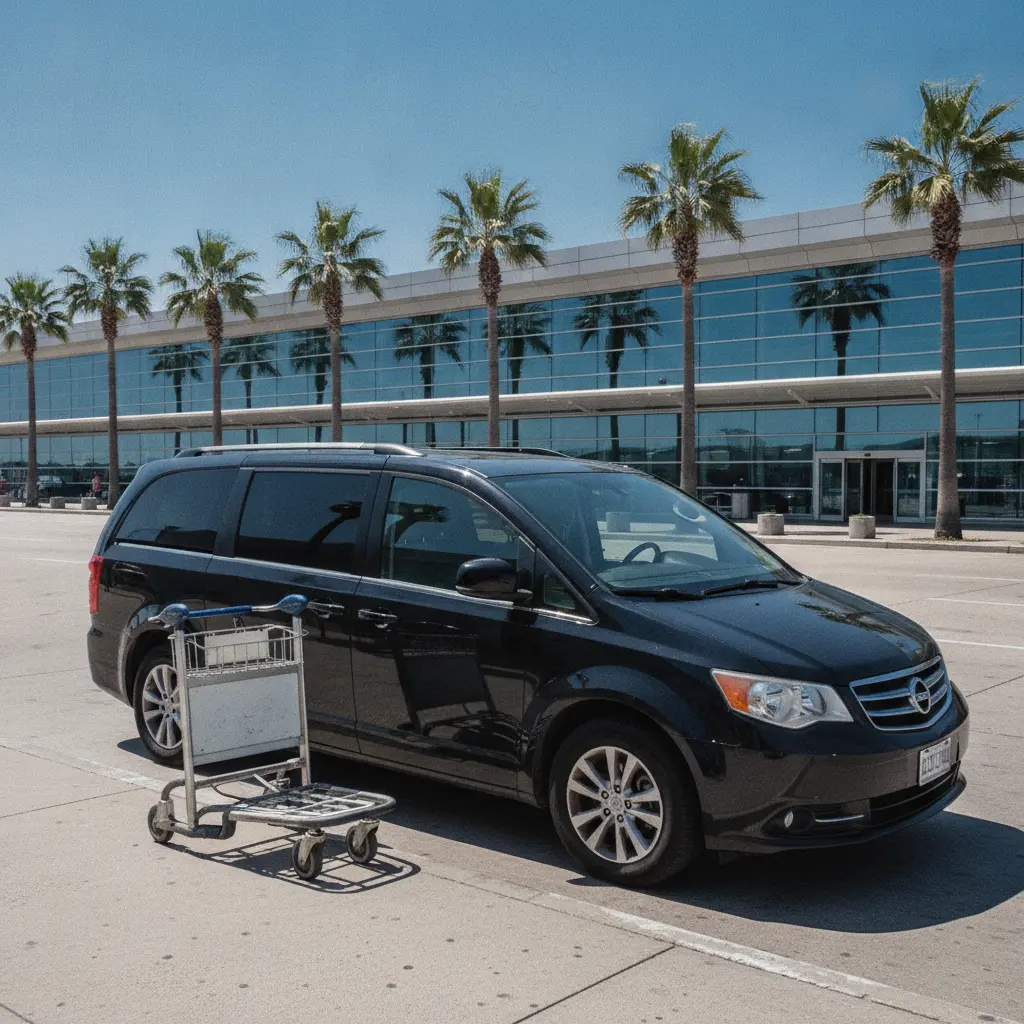
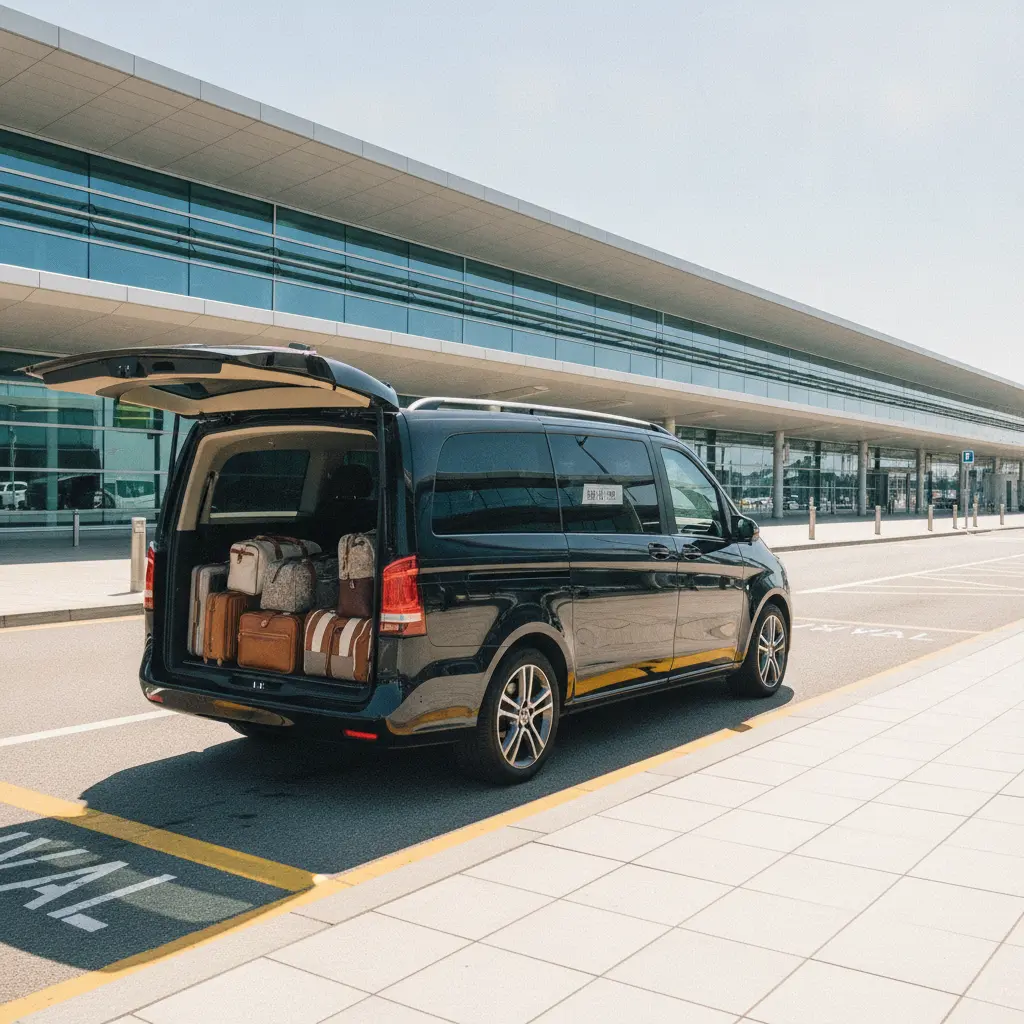
Night Hotel Transfer Safety Checklist for Solo Travelers

Your flight lands at 02:40. You collect your bag, walk through the sliding doors, and the arrivals hall is suddenly full of people holding name cards. None of them are yours. For a solo traveler, the real difficulty of a night transfer is not finding a ride — it is choosing the right ride over the wrong one while tired, in an unfamiliar city, with limited options. This guide does not make that decision for you. It gives you a step-by-step checklist covering what to verify before you book, what to confirm on the day, and what to check from the terminal kerb to your hotel room door. Even if you start planning from Turlago’s VIP vehicle rental page, run through this list once more before you fly.
This is not a fear piece. With proper preparation, a night transfer is not inherently more dangerous than a daytime one — it simply has less room for error. In daylight, if you get into the wrong car, you get out and take another taxi. At 3 a.m., outside a quiet hotel entrance in a city you do not know, correcting the same mistake is far more difficult. The checklist below exists to close that gap.
Why a night transfer needs a different kind of planning
There are five specific failure points in any late-night journey. Understanding them explains why the list is as long as it is.
- Visual verification drops. Reading a plate, confirming a vehicle colour or recognising a driver’s face is harder in the dark. Written confirmation is more reliable than visual memory at night.
- Alternatives shrink. During the day you have taxis, buses, ride-hailing apps and shared shuttles. Late at night that pool gets smaller. If you have one option, you need to be sure that option is right.
- Airport crowds are misleading. Several flights landing at once create a crowd at the exit, which feels reassuring but is completely unverified.
- Hotels operate differently at night. Closed receptions, locked main doors and a single staff member on the night shift change what arrival actually looks like. If you do not know the procedure, the most stressful part of your transfer moves to the hotel door.
- Fatigue degrades judgement. After a long flight, people accept the first offer without questioning it. The checklist exists precisely to override that instinct.
Step zero: five questions before you open a booking form
- Is my arrival actually at night? In transfer pricing, anything between roughly 23:00 and 06:00 usually counts. Some operators start their night tariff at 22:00 — ask, do not assume.
- Is there a direct route from the airport to my hotel? If the airport shuttle or metro is not running, a transfer is the only realistic option. If it is running, weigh door-to-door delivery against the cost.
- What time will I actually reach the hotel? Your arrival time affects both the transfer and the hotel’s night staffing.
- How much luggage am I carrying? Luggage determines vehicle class. A large suitcase plus hand luggage changes what you should book.
- Am I travelling alone? If yes, book a private transfer rather than a shared shuttle. Sharing a vehicle at night with people you have not met introduces a variable you cannot manage.
Before you book: the verification checklist
A. Verify the company and the vehicle (6 checks)
- Company identity: Look for a real registered address, a landline, and business registration details on the website — not just a messaging app number. A company that exists only inside WhatsApp is not a night-transfer company.
- Licence and insurance: Ask in writing whether the vehicle holds a commercial passenger licence and passenger insurance. No answer is itself an answer.
- Vehicle class: Ask for make, model and model year instead of vague labels like “VIP car”. Interior lighting and the number of working seatbelts matter more at night.
- Driver profile: Ask about licence class, experience and language. Being able to communicate is part of safety.
- Female driver requests: Some operators can assign a female driver on request. It is a preference, not a guarantee — state it at booking, because changing it later is often impossible.
- Reference check: Search the company name on independent review platforms. Look specifically for reviews mentioning late arrivals, delays and communication. Those tell you far more than five-star summaries.
B. Price, payment and cancellation (5 checks)
- Itemised pricing: Meet-and-greet, waiting time, luggage, tolls, night surcharge and gratuity should each be visible. “All inclusive” on its own is not an itemised price.
- Where you pay: Avoid entering card details on a link you cannot verify. Paying through the platform or in the vehicle is safer. If you plan to pay cash, carry small notes — change is hard to find at 3 a.m.
- Flight delay policy: Does the price change if your flight is late? How many minutes of free waiting are included? Get this in writing.
- Cancellation terms: What happens if you cancel late, and how long does a refund take? A cancelled flight is a separate scenario — confirm that too.
- Extras: Ask in advance about extra stops, a changed hotel address, extended waiting and child seats. You do not want to negotiate at night.
C. Driver details and meeting point (5 checks)
- Plate and vehicle details: Request the plate, model and driver name in writing at least 12 hours before pickup. Save it as a screenshot or note.
- Driver phone number: You need a number that reaches the driver directly, not only a company line. At night, company lines are often unanswered.
- Meeting point description: “Outside the terminal” is not enough. Ask for the terminal number, the door number, and a landmark such as a café or kiosk.
- Name board: If you booked a meet-and-greet, confirm exactly how your name will be spelled. A long or unusual surname is easier to confirm than to correct.
- Backup contact: Get a second number for the company’s night line. Two numbers always beat one.
Eight details to catch while booking
Most night-transfer problems originate in the booking form, not at the airport. Slow down here.
- Flight number: Enter it, not just the arrival time. Delay tracking depends on it.
- Arrival terminal: At some airports, domestic and international terminals are a long walk apart. Giving the wrong terminal means the driver waits at the wrong door.
- Hotel address plus a note: Add details such as “the entrance is on the side street”. A driver circling your hotel at 3 a.m. means you standing on the pavement.
- Passenger and luggage count: Count your bags rather than estimating. List cabin bags separately.
- Contact number: Give a number that is reachable while you travel, and plan to switch your phone out of flight mode on landing.
- Special requests: Put child seats, extra stops and waiting-at-the-door requests in a written message, not a booking form comment box. Verbal requests disappear.
- Confirmation email: It should contain date, time, vehicle class and price. “Your booking has been received” is not a confirmation.
- Reference number: Keep it and use it in every follow-up. Resolving a dispute at night without a reference number is close to impossible.
The 24-hour confirmation protocol
This is the most skipped and most valuable step on the list. Receiving a confirmation email is one thing; verifying that the transfer actually exists is another.
- Send a short message: “Arriving tomorrow at 02:40, flight X, hotel Y. Could you confirm the driver name and plate?” One message surfaces most problems before you leave.
- Measure the response time: If they do not reply within six hours, assume they will not reply at 3 a.m. either.
- Call the hotel: Tell them you are arriving at night and ask how late reception stays open. If it closes, ask what the key handover procedure is.
- Prepare your phone: Add the driver’s number to favourites, charge your power bank and activate a data plan for the country you are entering.
- Save one written plan: Plate, driver name, meeting point and hotel address in a single note. It must work offline.
- Define plan B: If the transfer does not show, what will you do? The airport’s official taxi rank, the hotel’s partner transfer, or a ride-hailing app. Decide this now, not at the kerb.
- Prepare payment: Carry both cash and card. Finding a working ATM at night is an unplanned adventure.
At the airport: ten steps from landing to the car
- Turn your phone on as soon as you land. Check for a message from the driver. If signal is weak, check again after passport control.
- Message before you collect your bag. “I am at baggage claim, out in 15 minutes” keeps the waiting time predictable for both of you.
- Confirm the exit door. For meet-and-greet services, the driver usually waits just beyond baggage claim. Verify the door number.
- Do not react to the crowd. Do not respond automatically to anyone calling your name or reaching for your bag. Check your own booking first.
- Check the plate. Compare the plate on the vehicle against the note on your phone. This single check is the most important item on the list.
- Ask the driver for the name on the booking. Instead of “I am X, are you waiting for me?”, ask “What name is the booking under?” Anyone who cannot answer is not your driver.
- Look inside the vehicle. Is someone already sitting in the back? For a private transfer, the answer must be no.
- Watch your luggage go in. Keep your eyes on your suitcase as it is loaded, and confirm it is going into the vehicle you are about to enter.
- Share your location. Before getting in, send your live location or the plate number to someone you trust.
- Confirm the price. Restate the total and payment method before departure. Night is not the time to negotiate on arrival.
Inside the car: eight rules that actually matter
- Seatbelt, including in the back. This is the most commonly skipped safety step on night drives.
- Keep route tracking on. Open your navigation app and follow the direction of travel toward your hotel. Even saying “I am following the map” is a deterrent.
- Try not to fall asleep. After a long flight this is hard, but staying awake also means you will not leave luggage behind.
- Limit personal disclosure. You do not owe anyone the fact that you are travelling alone, how long you are staying or what you do. Polite but closed conversation is enough.
- Question route changes. If the car turns somewhere unexpected, ask directly. If the explanation is weak, mention that your location is being shared.
- Keep your phone charging. Use the USB port if there is one, or your power bank. Do not arrive with a dead battery.
- Give the hotel address in writing. Pronunciation differences are the most common reason people end up at the wrong hotel.
- Be cautious with last-minute stops. If you did not plan a stop en route, postpone it.
Five checks on arrival at the hotel
- Count your bags as they come out. The simplest control is also the most effective.
- Note the plate before the car leaves. If you have left something behind, reaching the company with a plate number is far faster.
- Go to reception. Confirm your reservation and make sure your check-in is actually recorded. Night shifts sometimes skip this.
- Test the door lock. If the lock, chain or bolt does not work, call reception. Do not leave it until morning.
- Send a message. A short “arrived, in my room” reassures both you and the person waiting for it.
Extra notes for solo female travellers
These points apply to everyone, but they deserve emphasis for women travelling alone. The aim is not anxiety — it is keeping control.
- Choose a private transfer. A shared shuttle means sharing a vehicle late at night with people you have not met. It looks cheaper and is rarely the better choice for a solo arrival.
- Ask about a female driver. It is not available everywhere, but asking costs nothing. Note it at booking.
- Prefer meet-and-greet. Being met with a name board just outside baggage claim is a more controlled start than searching for a car on the kerb.
- Let the hotel choice follow the arrival time. A 24-hour reception, an unlocked-when-expected main door and an ID check at night matter more than a cheaper rate.
- Share your plan. Flight number, transfer company, plate and hotel address sent to one trusted person is the single most effective safety habit available to a solo traveller.
- Dress and pack for the arrival. Low-key, comfortable clothing makes a late arrival easier. Keep valuables inside your bag.
Nine mistakes people make on night transfers
- Giving only the airport name and skipping the terminal. The driver waits at one door while you search at another.
- Not providing a flight number. Delay tracking becomes impossible and the waiting time turns into a dispute.
- Paying through an unverified link. Card details should never go into a page you cannot reasonably trust.
- Assuming the quoted price is fully inclusive. Night surcharges, tolls and waiting time can appear later.
- Not asking for plate confirmation. This one step makes half the rest of the list unnecessary.
- Not informing the hotel. A closed reception means standing on the street with your suitcase.
- Leaving with a flat battery. Setting off with a dead phone is the most expensive mistake on this list.
- Jumping into a car because someone called your name. Getting in without verification is the riskiest single action.
- Never thinking about plan B. Knowing in advance what you will do if the transfer does not appear turns panic into a decision.
Budget: why night transfers cost more and what to check
Night transfers usually cost more than daytime ones, and this is operational rather than opportunistic. Driver costs rise on a night shift, long airport waits are unavoidable, flight delays break the schedule, and the vehicle often cannot be used for another job that evening. Rates vary significantly by city, distance and vehicle class, so quoting a fixed figure here would be misleading.
Instead, build your budget around these separate items:
- Base fare: Is it a fixed airport-to-hotel price or metered? For night arrivals, fixed is far more predictable.
- Night surcharge: Ask what time window applies. Some operators start at 22:00, others at midnight.
- Waiting time: How many free minutes are included, and how is the excess charged — hourly or in blocks?
- Extra stops: If you want to drop your bag before heading somewhere else, say so up front.
- Gratuity: It varies by culture, but a small buffer in cash is worth carrying in small notes.
- Comparison: Get at least two quotes, and compare cancellation terms and responsiveness as well as the total. The cheapest quote can be the one that will not answer at 3 a.m.
An emergency card worth keeping on your phone
One of the most practical habits for night travel is a single offline note holding everything you might need. It should include:
- Transfer company name, booking reference and two phone numbers
- Driver name, plate, vehicle model and colour
- Hotel name, full address and telephone number
- The emergency number for the country you are in
- One trusted contact, name and number
- A short line you can paste into a message: “Sharing this because I am on a night transfer.”
Preparing that note takes five minutes. At 3 a.m., it saves a great deal more than five minutes.
Frequently asked questions
How early should I be at the meeting point on a night transfer?
There is no need to rush. Once you have your bag, message the driver before leaving baggage claim so the waiting time is predictable for both of you, then walk to the meeting point.
What if my flight is delayed — do I lose the transfer?
That depends entirely on the operator’s policy. Providing your flight number allows tracking, but confirm the number of free waiting minutes in writing before you book.
Is a shared transfer not more sensible if I am travelling alone?
It can work during the day on short routes. For night arrivals, a private transfer is the better choice — sharing a car with strangers introduces a variable you cannot control at that hour.
When should I request the plate number?
After your booking is confirmed and at least 12–24 hours before your flight. Asking at the last minute puts pressure on a night shift and the answer often comes late.
What if my hotel reception is closed at night?
Call the hotel before you travel and ask about the key handover procedure. Also tell your driver something like “if reception is closed, please wait at the main entrance on arrival.”
Which vehicle class suits a night transfer?
A standard sedan is enough for one passenger with normal luggage. If you have bulky bags, extra stops or a long drive, size up to avoid a cramped journey. You can compare vehicle options and current conditions on Turlago’s VIP vehicle rental page.
Final word: the list is short, the night is long
A night hotel transfer is not technically difficult for a solo traveller — it simply has to be done in the right order. Verify the company and vehicle class before booking. Get the driver name and plate in writing. Describe the meeting point precisely. Send a short confirmation message 24 hours out. And never get into a car without checking the plate against your own note. Those five steps make most of the rest of this checklist redundant.
What you actually need to carry is not expensive equipment — it is a written plan: booking reference, plate number, hotel address and two phone numbers. When all of that sits on one screen, deciding what to do at an empty airport exit at 3 a.m. stops being difficult. To plan ahead and compare your options, take a look at Turlago VIP vehicle rental and review the choices that match your dates and route.