When to Book Antalya Airport Hotel Transfer? Timing Guide
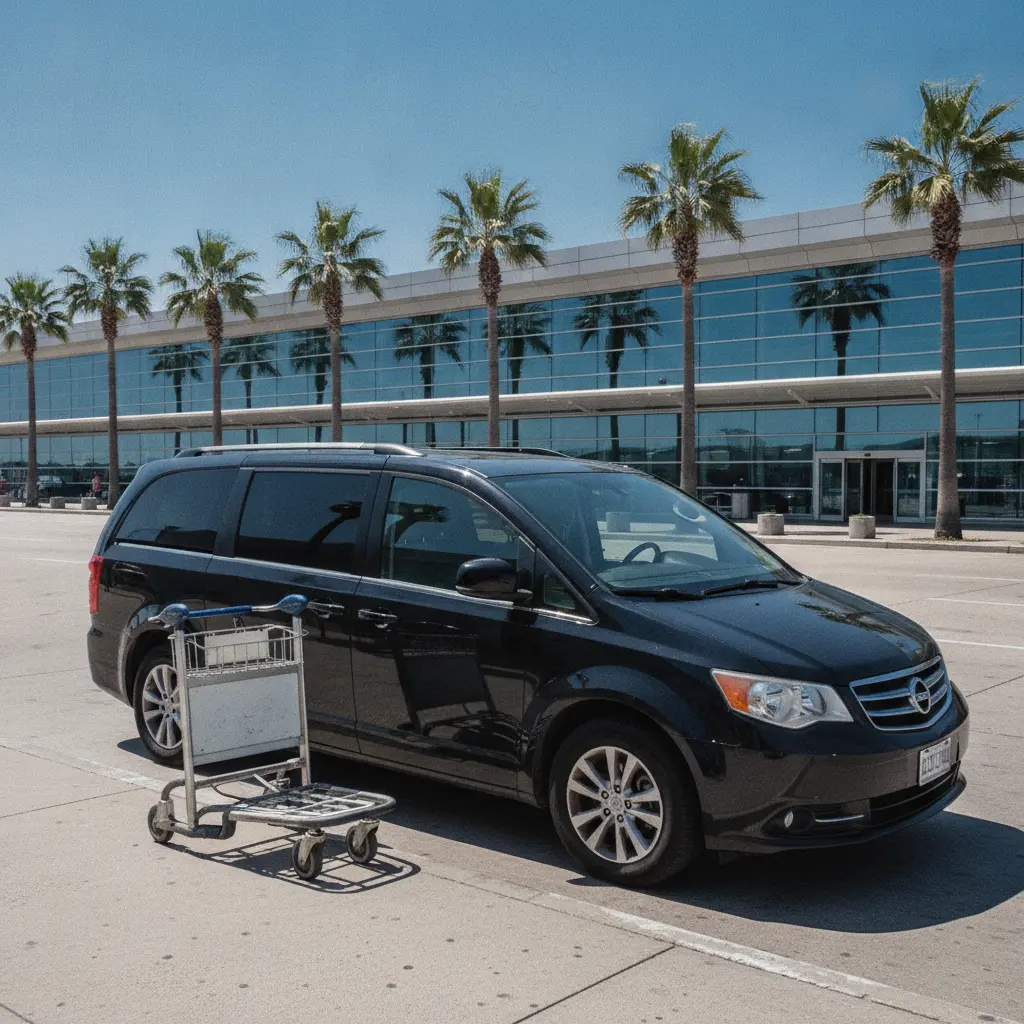
You have cleared passport control, your suitcase is on the trolley, and the arrivals doors are about to slide open. Outside there is a taxi rank, a shared shuttle desk, and a driver who may or may not be holding a sign with your name. The question that usually arrives at this exact moment is not about price — it is about timing: should this have been booked earlier? Fortunately, the answer follows a handful of clear rules rather than guesswork.
This guide is built as a series of direct questions and short, usable answers. Each section gives you the short version first, then explains the reasoning and how to apply it on your trip. If you plan to stay in Antalya for a while and want flexibility beyond the airport run, premium VIP car rental options can sit alongside your transfer plan — but let us secure the first ride from the terminal to your hotel first.
Short answer: when should you book an Antalya airport hotel transfer?
Between 24 and 72 hours before your flight. That window gives the operator enough time to assign a vehicle and driver, and gives you enough time to fix any detail that is wrong. Booking earlier is not mandatory for a standard private transfer — but several situations push the ideal timing further out.
- Hotels in the city centre, Lara or Kundu: 24-48 hours ahead is usually enough.
- Belek, Kemer, Side or Alanya: 3-7 days ahead, because long-distance vehicle pools are smaller.
- July, August, public holidays and New Year: 1-2 weeks ahead; last-minute availability gets thin.
- Large groups, minivans, child seats, extra luggage equipment: at least one week ahead.
There is no single correct date. Your flight time, resort region, travel season and party size combine to determine the right moment, and the sections below deal with each variable one at a time.
Does booking early actually change anything?
Yes — and the benefit is certainty more than price. The real risk in an airport-to-hotel transfer is not paying slightly more; it is landing and finding nobody waiting. When you book in advance, your flight number is logged, the operator watches the arrival and adjusts the pickup if you are delayed.
The second benefit shows up in peak hours. Antalya Airport handles a large number of simultaneous arrivals in summer, and the kerbside gets busy. Walk-up taxis can mean a long queue, and shared shuttles stop at multiple hotels, so your arrival time stretches depending on who else is on board. A pre-booked private transfer removes both the queue and the detours.
The third benefit is comfort: landing at midnight with two suitcases and a tired child is not the moment to negotiate a ride. That is precisely the moment a reservation earns its value.
Does the ideal booking time change with your arrival hour?
Yes. Your pickup time is tied to your landing time, and the hour of day affects both how easily an operator can source a vehicle and how much waiting you are willing to tolerate.
Flights landing late at night or before dawn
Between roughly 23:00 and 05:00, taxis exist but choices shrink, shared shuttles often stop running, and hotel receptions operate with reduced staffing. For late arrivals, book at least 48 hours ahead, ideally a week. It is also worth confirming with your hotel how late the reception desk stays open, so you are not met by a locked door.
Early morning arrivals
For landings between 06:00 and 09:00, 24-48 hours ahead is plenty. The advantage of this slot is that you may be able to go straight to your room, so align the transfer with your hotel's check-in policy rather than sitting in the lobby with your bags.
Connecting flights and delay-prone routes
If you are connecting, give the operator your final arrival flight, not the first leg. Most operators track flights and extend the free waiting period when a delay is logged, but you should still read the confirmed allowance — a common standard is the first 60 minutes after landing, with anything beyond that depending on the provider.
How does the season change your booking window?
Book earlier in high season, relax in low season. Transfer demand in Antalya climbs from late April to mid-October. During that stretch the fleet runs close to full, and last-minute requests often fail to get the vehicle class you actually wanted — especially larger cars and VIP categories.
- June to August: 7-14 days ahead. Hotel check-in queues are also long in this period, so agree a pickup time that matches your hotel's readiness rather than arriving hours early.
- April-May and September-October: 3-7 days ahead is comfortable. Daytime drives are far more pleasant in these milder weeks.
- November to March: 24-48 hours is generally fine. For remote spots such as Kemer or Kaş, a few extra days is safer because fewer vehicles operate locally.
- National holidays and long weekends: treat these as peak season, and consider two weeks ahead.
One practical note: season affects cancellation terms as much as price. In high season, a reservation with flexible cancellation is the smartest way to book early without locking yourself in.
Does your hotel region affect when you should book?
Directly. The further your hotel is from Antalya Airport, the fewer transfer vehicles serve that area, and the earlier you need to act. Approximate drive times and recommendations:
- Lara and Kundu (about 10-15 km): 15-25 minutes. Even last-minute bookings usually work; 24 hours is fine.
- Antalya centre and Kaleiçi (about 13-15 km): 20-30 minutes. Public transport is a real alternative here, but with luggage, 24-48 hours ahead is comfortable.
- Konyaaltı (about 20-22 km): 30-40 minutes. 48 hours ahead works well.
- Belek and Kadriye (about 30-35 km): 35-45 minutes. Book 3-5 days ahead; this is a dense hotel zone.
- Kemer, Göynük and Beldibi (about 40-60 km): 50-70 minutes. 5-7 days ahead is recommended.
- Side, Manavgat and Titreyengöl (about 65-75 km): 60-80 minutes. One week ahead is safe.
- Alanya and beyond (120 km and more): 1.5-2.5 hours. Book at least a week ahead, ideally ten days.
Add 10-15 minutes to any estimate if you are leaving Antalya in summer traffic. Think of your hotel arrival as a calculation — landing time, plus immigration and baggage, plus drive time — rather than a fixed clock time.
Is last-minute booking realistic?
Possible, but not guaranteed. Private transfers can sometimes be arranged a few hours before landing if a vehicle is free. The catch is threefold: your preferred vehicle class may be gone, the price may be higher, and reaching someone quickly becomes harder if something goes wrong.
A sensible rule of thumb: a solo traveller or couple with one suitcase heading to a central hotel can usually book within 24 hours without drama. A family, a large group, a baby, or a remote resort should aim for at least three days — and if less time remains, confirm more than one option in parallel.
For any last-minute booking, pin down four things before you pay: the exact meeting point, how the driver will identify you, a contact number that answers, and what happens if the flight is delayed. If those four answers are not written down, get them in writing.
When should you declare group size, children and luggage?
At the time of booking, ideally a week ahead. Capacity and equipment requests look like details you can add later, but in high season these are exactly where operators struggle.
- Passenger count: give it together with suitcase count. Four adults with four large suitcases will not fit a standard sedan.
- Child seats and boosters: provide the child's age and weight. These items are limited in number, so a week's notice is the safest path.
- Strollers, ski or bike bags, golf bags: list them as separate luggage items.
- Passengers with mobility needs: request a vehicle without high steps, and ask about assistance, at the booking stage.
Under-reporting luggage is the single most common cause of friction at the kerbside. Over-reporting is always the safer error.
When is a VIP transfer the better choice?
For larger families, business travellers, anyone expecting a formal meet-and-greet, and long resort transfers. The difference is the vehicle class, the driver's familiarity with arrivals protocol, and flexibility on route. If you are heading from Antalya Airport to Alanya, Kaş or Side, the comfort of a two-hour drive matters a great deal.
Timing is even more critical in this category: premium vehicles are limited, so book at least a week ahead, ideally 10-14 days. Bundling the arrival transfer and the return leg with the same provider usually produces a more coherent result than two separate bookings.
If you would rather drive yourself around the region — Side, Aspendos, Olimpos at your own pace — pairing an arrival transfer with premium VIP car rental is often the most efficient combination: fixed pickup at the terminal, then freedom for the rest of the trip.
Private transfer or taxi: when should you decide?
Before you fly, not at the kerb. Decisions made in an arrivals hall are rushed, and the trade-offs are actually quite clear.
- Taxi: available immediately, no booking needed. Downsides include queues at peak times, uncertainty about luggage capacity and vehicle class, and variable English at the wheel.
- Pre-booked private transfer: fixed price, name-board greeting, flight tracking, a vehicle class you chose in advance. Less flexible, and you must supply the correct flight details.
- Shared shuttle: the cheapest option, but it drops other passengers first, so your journey time stretches. Not practical for late-night arrivals or remote resorts.
The decision test is simple: if the first hour after landing matters to you — night arrival, small children, a short break — book a private transfer. If budget leads and you land in daylight, a shuttle or public transport can do the job.
Where exactly does the transfer meet you at Antalya Airport?
At the exit of the arrivals hall, with a name board. Antalya Airport's domestic and international operations sit in separate terminal buildings, so check which terminal your flight uses and put that in the booking. It is the difference between a driver waiting at the right door and a driver waiting at the wrong one.
The usual flow: collect your bags, walk through the arrivals exit, look for the sign with your name, hand over the luggage, and follow the driver to the vehicle. Give your name exactly as it appears in your passport, together with the flight number. If your flight is delayed, a short message from the arrivals hall is enough to keep everything on track.
Practical tip: rely on a saved contact number rather than a paper tag. Check your roaming settings before departure; airport Wi-Fi exists but slows down noticeably during peak arrival waves.
Step by step: a booking timeline that works
Seven steps, running from two weeks before departure to the moment you walk out of arrivals:
- Confirm your terminal and landing time. For connecting itineraries, use the final arrival, not the first leg.
- Check your hotel's region and check-in time. If early check-in is not available, plan the transfer around luggage storage instead.
- Count passengers and suitcases. List child seats, strollers and oversized bags separately.
- Choose a vehicle class. Economy sedan, larger car or VIP — availability shifts with the season.
- Complete the booking 24-72 hours ahead, or 1-2 weeks in peak season. Get written confirmation and the driver's contact details.
- Reconfirm 24 hours before departure. Check the flight number, landing time and meeting point.
- Message on landing. A one-line note that you have your bags and are heading to the exit speeds up the meet.
Follow the sequence and you will not have to make decisions at the airport — only look for your name.
What if your plans change after booking?
Tell the operator as early as you can. The most common failure in airport transfers is a changed flight time that nobody communicated. If your flight slips three hours and no one knows, the driver may reasonably assume you are not coming.
- Flight time changed: send the new flight number and landing time; most operators update free of charge.
- Hotel changed: a different address, especially in another resort area, can change the price — ask upfront.
- Extra passenger: this may change the vehicle class, so confirm before arrival day.
- Trip cancelled: read the cancellation terms on your confirmation, and prefer flexible options when booking in high season.
As a habit, save your confirmation and the operator's number in a way that works offline. In-flight and on-landing connectivity is not something to bet on.
The most common timing mistakes
Most transfer problems are timing problems, not service problems. The same handful of errors repeats every season:
- Giving the departure time instead of the arrival time. Transfers are always built around your inbound landing.
- Skipping the terminal. Domestic and international arrivals are in different places; the wrong detail means the wrong door.
- Underestimating luggage. Four large suitcases do not fit a sedan's boot.
- Waiting until the last day in peak season. When the fleet is full, options disappear fast.
- Not reporting a flight change. This is the number one reason a meet-and-greet never happens.
- Ignoring payment and cancellation terms. Deposits, cancellation cut-offs and extras should all be written in the confirmation.
A traveller who checks the first three items on that list has already removed most of the risk from the journey.
Quick questions, direct answers
Can I book before I even board the plane?
Yes, and it is the most practical approach. Finish the booking at home, where connectivity and time are on your side.
What if my flight is two hours late — is there an extra charge?
Most operators track flights and include a free waiting allowance, typically the first hour after landing. Beyond that, terms vary by provider, so read the confirmation before you travel.
Should I book the return leg at the same time?
Yes. Round-trip bookings are more consistent and often better value. Set your hotel pickup roughly three hours before your departure flight.
Is grabbing a taxi at the airport simply easier?
Sometimes, yes. But for night landings, groups and distant resorts, a pre-booked transfer is both more predictable and more comfortable.
Is public transport into central Antalya sensible?
For a solo traveller without heavy luggage, the rail link into the city is a genuinely economical option. If your hotel needs a connection and you are carrying bags, a transfer is more practical.
The takeaway: match the timing to your trip
The practical answer to when you should book an Antalya airport hotel transfer is this: 24-72 hours before your flight covers standard cases, and 1-2 weeks ahead is the safer window in peak season or for special requests. Extend the window for remote resorts and late-night landings, and settle vehicle capacity early if you are travelling as a group.
Booking early buys more than a guaranteed car. It buys flight tracking, a name-board greeting and a fixed price — details you only appreciate once you are standing in arrivals. Protecting the first hour of your holiday costs a few minutes of planning before departure.
Once the terminal-to-hotel leg is sorted, and if you want to explore the Antalya region on your own schedule, take a look at the flexible premium VIP car rental options and combine transfer and rental into a single, coherent plan.