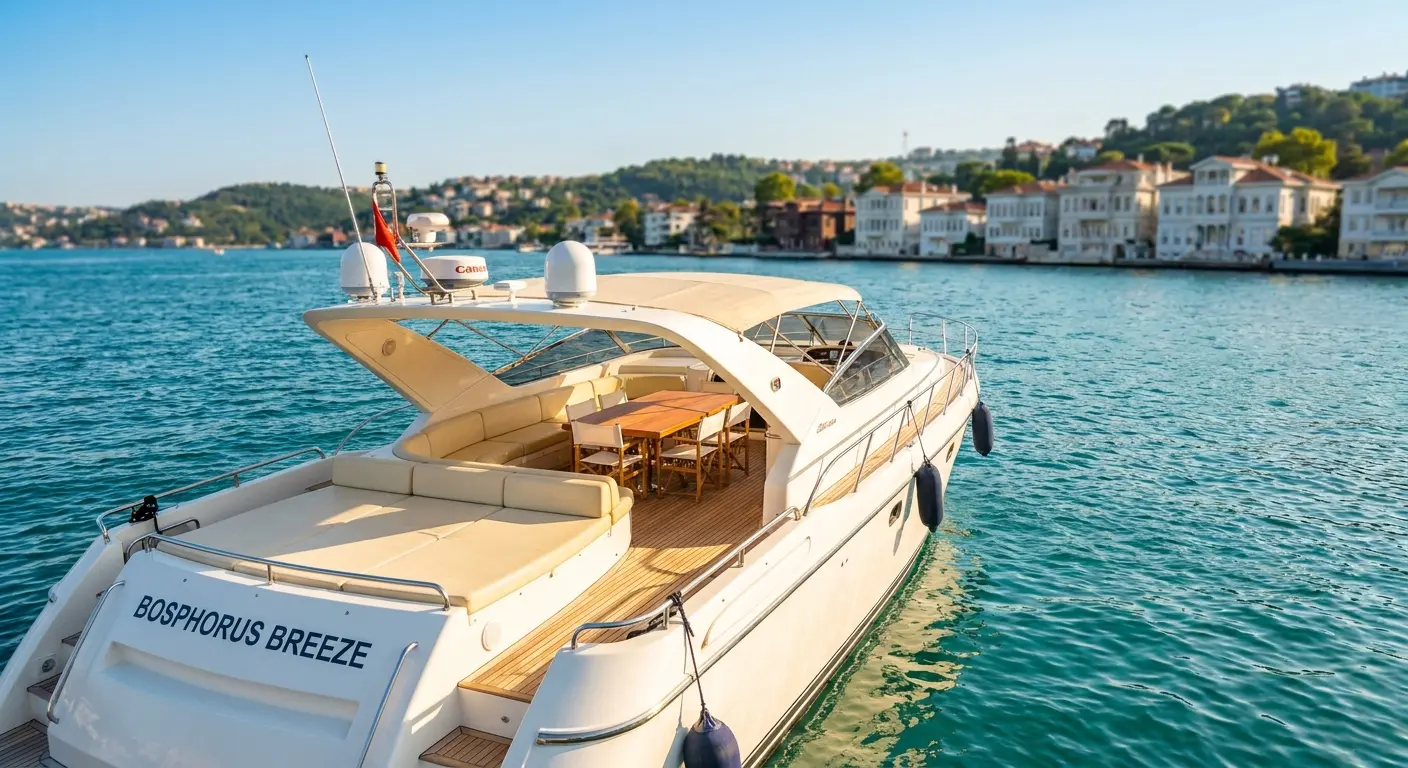
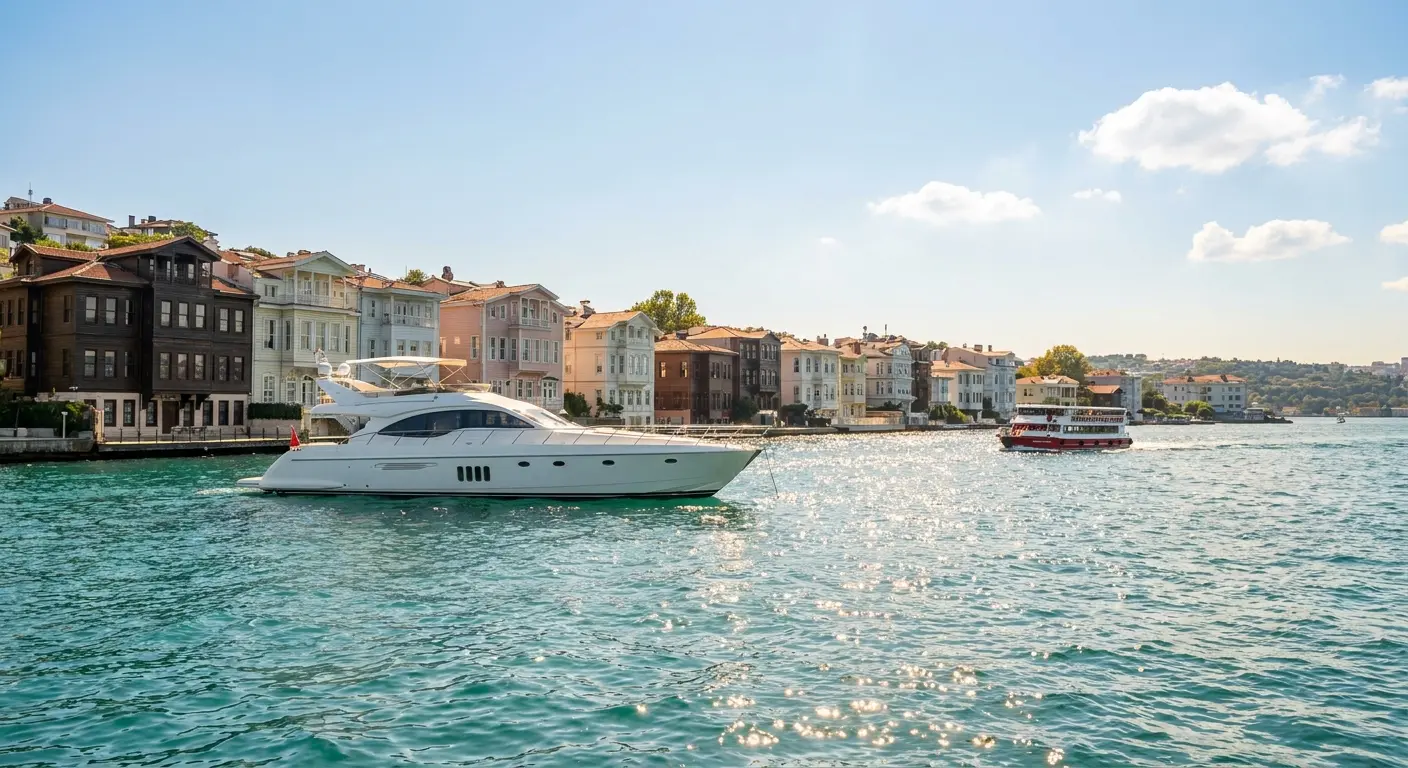
Private Event Boat Rental in Istanbul: A Group Type Guide
Most people start private event boat rental planning by browsing boats and then trying to fit their guest list into one. It works far better the other way round. Decide who is coming, how many people they really are, and what you want the evening to feel like. The hull, the departure time and the route follow from that. A nine-person family dinner and a ninety-person company party can both happen on the water, but they are two completely different productions.
This guide is built around group type rather than around boat size: multi-generation families, couples, corporate teams and friend groups. We look at which boat suits whom, which hours actually work, where budgets silently blow up, and which small detail saves the day. You can compare current options and availability on the Özel Gün Davet Teknesi page on Turlago.
Your guest list picks the boat, not the other way around
Start by writing your headcount three times: optimistic, realistic and worst case. Capacity is always booked against the worst case, because on a boat you cannot add a table at the last minute. An extra table is always fixable; a crowd is not.
Next, think about mobility. If you have older guests, small children, a stroller or a pregnant guest, a flat deck, a wide boarding ramp and a covered saloon make an enormous difference. With a young, high-energy crowd, the upper deck, sun area and open air matter more than interior comfort.
Then, timing. The hour when the cake is cut, when the ring goes on, or when the company presentation starts is the single element that sets your departure time. Build the schedule backwards from it. Dressing the boat and boarding are separate time blocks, and most operators either charge for that window or give you a limited one before departure.
The best match for each group type
Multi-generation families and large family reunions
For families, success is measured in comfort and flow rather than spectacle. A daytime, three to four hour Bosphorus programme is the most balanced choice. Children move around the deck while grandparents stay in the shaded saloon, and food is served from one point everyone can reach.
- Capacity: Plan seating for about 15% more than your confirmed count, plus a small table for children.
- Timing: Noon to late afternoon. Lunch on board, and nobody has to travel home late.
- Ask about: Boarding points, number of steps, number of restrooms, and shaded seating. These decide whether the day works.
- Avoid: Late-night finishes. Getting older guests home becomes the most tiring part of the event.
Couples: engagement, proposal and anniversaries
With only two people on board, privacy beats size. A small motor yacht or a classic wooden boat is far more striking than a large party vessel. The real challenge here is choreographing the surprise.
- Timing: Depart roughly ninety minutes before sunset. The light flatters every photo, and dinner happens after the light fades.
- Route: Short and calm. A long route turns a romantic moment into logistics.
- Ask about: A minute-by-minute plan with the crew for the ring, flowers, music and photographer. If the crew does not know, it is not a surprise.
- Avoid: Sharing the same stretch of water with large party boats at the same hour. Loud music in the background ruins the moment.
Corporate groups: team days, launches, client hosting
For a corporate event the measure is discipline, not fun. You need a reception point, name cards, audio that reaches every corner, a screen or backdrop for the presentation, seating organised by participant group, and a firm end time.
- Capacity: Standing cocktail or seated dinner? A standing layout fits roughly 30% more people on the same deck but kills conversation quality.
- Timing: Early evening onwards. Attendance is high after work hours, and group transfers back are easier to organise.
- Ask about: Sound system, microphones, power setup and a backup plan. In corporate hosting, a technical failure reads as a reputation problem.
- Avoid: Not separating the speech zone from the music zone. If they share one deck, neither works.
Friend groups: birthdays, hen parties, graduations
This group expects high energy and loud music. You want an open upper deck, a powerful speaker system and a boat that is permitted to run late. The most common mistake here is inflating the guest count in the final week.
- Capacity: Do not push the limit. When people are standing, walking and dancing, space per person disappears fast.
- Timing: Evening until late. Sound rules are stricter in these hours, so confirm the boat's licensing situation in writing.
- Ask about: Ice, glassware, water and cleaning flow. If service pace drops, the mood drops with it.
- Avoid: Spending everything on the DJ and nothing on the food. A hungry crowd will not notice the music.
Boat types: which hull fits which party
Choosing a boat feels like a taste decision, but it is really a technical match to your guests.
- Motor yacht: Fast, modern and comfortable inside. Ideal for corporate events and short engagement or anniversary programmes. Most flexible on routing.
- Gulet: Generous deck space, plenty of seating, traditional wooden character. The most comfortable option for large families and full-day programmes.
- Catamaran: Stable and wide, a real advantage for guests prone to seasickness. Excellent for photography and cocktail layouts.
- Classic wooden boat: The strongest atmosphere. For proposals, engagements and boutique gatherings it delivers something a modern hull cannot.
- Large party vessel: Practical for corporate groups above eighty guests, because sound and stage infrastructure is already built in.
Remember that listed capacity and comfortable capacity are different numbers. The figure in the listing is a ceiling; as you approach it, service speed, restroom queues and freedom of movement all shrink. Stay around 80% of the comfortable figure whenever you can.
Departure points and routes: how to calculate time
On a boat, time is measured in experience rather than engine hours. Boarding, settling in, a welcome speech and casting off eat the first thirty minutes. The last twenty go to packing up and disembarking. A four-hour charter is realistically a three-hour programme.
- 2 hours: One direction, a short route and back. Enough for an anniversary, a proposal or a quick cocktail.
- 3-4 hours: The most popular band. A lunch or dinner plus one stop fits comfortably.
- 5-6 hours: A swimming stop, two different stretches and a long meal. Good for big families and full-day corporate programmes.
- Full day: Longer routes with swimming and lunch. Can be demanding with very small children.
Where you depart from should follow where your guests are coming from. Central piers are convenient for guests but busy with boat traffic; quieter piers are calmer but add travel time. Calculate the total journey of your furthest guest and choose the pier around that person, not around yourself.
Choosing the hour, and what the season does to it
Light and temperature behave differently on water. May and September are the most balanced months in terms of both weather and price. In high summer, a boat with no shaded area on deck becomes genuinely uncomfortable at midday.
- Morning: Calm water, cooler air, the best band for large families and older guests.
- Early afternoon: Warmest water for swimming and soft, forgiving light for photographs.
- Evening: Corporate and adult-focused events. Light drops quickly, so confirm the deck lighting is adequate.
- Winter: Choose an enclosed, heated boat instead of an open deck. Winter programmes are usually shorter and hosted for smaller groups.
Food and catering: buffet or plated service?
After the boat itself, catering moves the budget most. There are three models:
- Buffet: Good for large, relaxed groups and easy to cost per head. But queues form and hot food cools quickly.
- Plated service: The right choice for corporate and boutique events. More staff, higher cost, much better presentation.
- Cocktail / finger food: Ideal for standing formats. If it runs longer than two hours, guests go hungry, so add a hot course.
A few practical rules: avoid heavy, greasy dishes at sea. If you serve alcohol, put out plenty of water and bread. If there is a birthday cake, ask in advance how long it will sit in a refrigerator. And tell the operator about vegetarian, gluten-free or allergy requirements at the booking stage, because a boat galley cannot rebuild a menu at the last minute.
Music, volume and permissions
Music is the most common source of disappointment on party boats. Sound that seems normal to you at sea is noise to people on shore, which is why most operators apply hour-based volume limits.
- Live music, DJ or playlist? Who supplies the equipment, and how long does setup take?
- Is it the boat's own system or an external one? External rigs need power and space.
- At what hour does music have to be reduced? Get it in the contract, not in a conversation.
- If there will be speeches or announcements, insist on a wireless microphone and spare batteries.
For corporate events, music should support the programme rather than compete with it. Write the run of show minute by minute and mark exactly when music plays.
Decoration, photography and staging the surprise
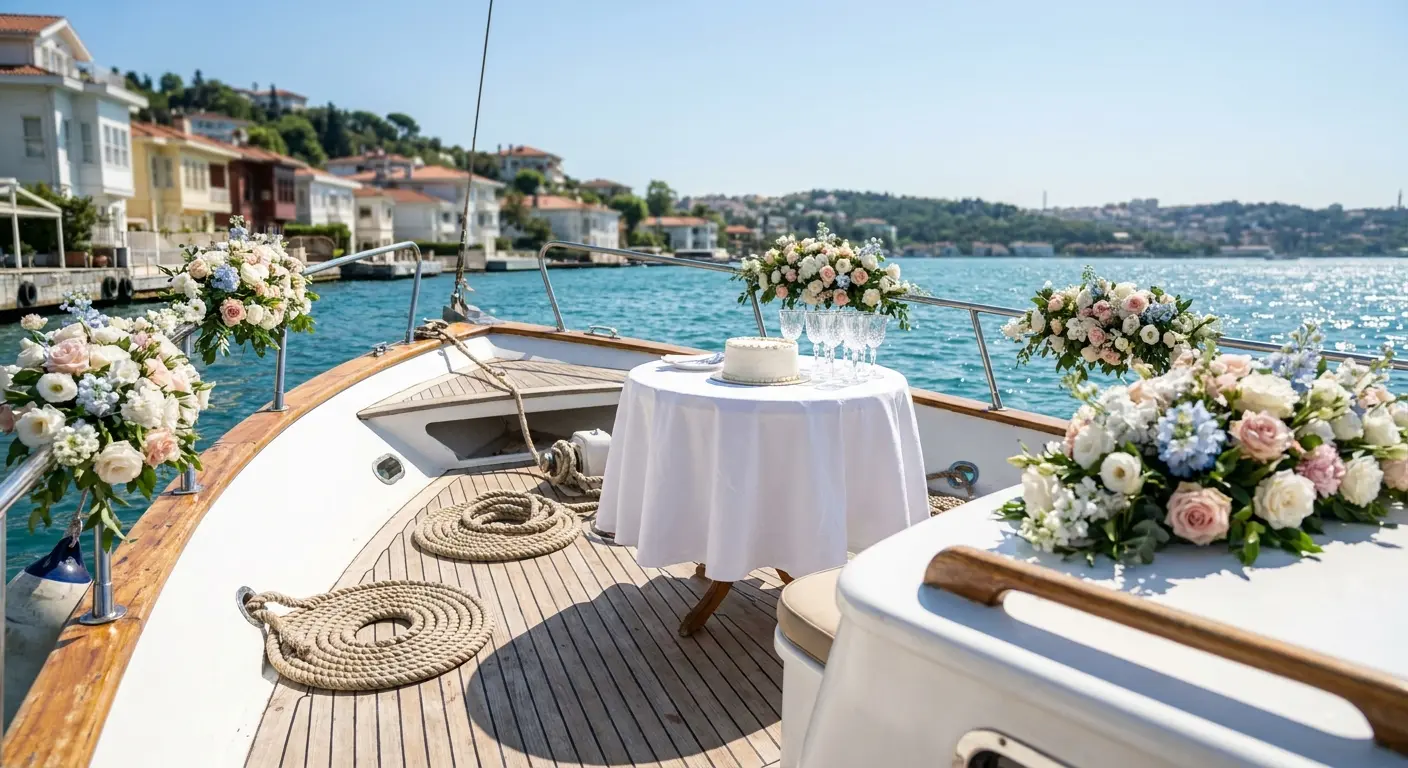
Decorating a boat is not like decorating a hall. Wind, humidity and movement mean light materials fly away and adhesives fail. Fewer, larger, properly fixed pieces always look better than a scattering of small ones.
- Decoration: Favour fabric, flowers and lighting over balloons. A balloon that escapes ends up in the water.
- Photography: Think about light direction. If the sun is behind your guests, their faces go dark. Give your photographer time to learn how the boat moves.
- The moment: Pick one stage point for the ring, the cake, the speech or the video, and make sure everyone is facing it.
- Spares: Candles, lighter, batteries, pins, extra ribbon. These are the things that are everywhere on land and nowhere on a boat.
Budget lines: where the money actually goes
Exact prices shift with season, boat, day and headcount, so here are the cost lines rather than numbers. Total spend usually breaks down into:
- Charter fee: The core item, driven by duration and boat type.
- Fuel and route length: Some operators invoice fuel separately, and longer routes cost more.
- Food and beverages: Fixed per-head menu or consumption-based billing.
- Service staff and crew: Larger groups require additional staff.
- Music, decoration, photography: Separate line items if you bring in external suppliers.
- Cleaning and deposit: Some operators charge a cleaning fee, others hold a refundable deposit.
- Transfers: Collecting and dropping off guests is a hidden but very real cost.
The smartest place to save is decoration and extra spectacle. The worst place to save is food, water and service staff. Guests will never forget running out of food, and they will never remember the stage lighting.
Contract, deposit, cancellation and weather
On the water, the most common disagreement is weather-related. Settle these four points before you pay anything:
- Weather cancellation: Which conditions count as a cancellation, and is the result a refund or a rescheduled date?
- Headcount changes: What is the deadline, and how are additions and reductions priced?
- Overtime: If the programme runs long, how is the extra hour charged?
- Deposit return: In which cases is it withheld, and how long does the refund take?
Also confirm in writing how early the boat will be ready, whether you get early access for decorating, and where the boarding area or parking is. Verbal agreements do not hold on the water.
Safety and comfort: children, older guests, pregnancy, seasickness
Comfort at sea is a by-product of preparation. Plan around your actual guest profile.
- Small children: Life jackets must be provided in age-appropriate sizes. Check the height of the deck railings.
- Older guests: Handrails on the ramp, step count, shade and mid-day timing all matter.
- Pregnant guests: Choose short, coastal routes with minimal swell.
- Seasickness: Medication taken 30 to 45 minutes before departure works far better. Avoid heavy food, drink water, sit mid-deck and look at the horizon.
- Footwear: Non-slip soles are essential. High heels on a teak deck are a risk to the guest and to the boat.
When to book, and how the season works
In peak periods, early booking is a clear advantage. As a rough framework:
- Friday and Saturday evenings: The fastest-selling slots of the year. Move early for these.
- Sunday daytime: The most requested family window, with moderate competition.
- Weekdays: The most flexible and usually the best-value option, and the natural pick for corporate events.
- Special dates: Valentine's Day, New Year's Eve, graduation season and public holidays need much earlier action.
If your schedule has any give, shifting the date by a week in either direction usually means a calmer boat and better conditions. Moving a date is often the single biggest saving you can make.
Eight mistakes people make with party boats
- Exceeding comfortable capacity and watching service collapse.
- Setting the departure time around luggage rather than around decoration and boarding.
- Asking about music limits but never getting them in writing.
- Finalising the menu in the last week and overwhelming the galley.
- Never thinking about how guests will actually reach the pier.
- Planning only for sunshine, with no shade or indoor fallback.
- Never introducing the photographer and decorator to the boat crew.
- Coordinating everything with one person and not knowing who is in charge on the day.
Sum it up in three sentences
Choosing the right private event boat comes down to three sentences. My guest profile is clear, so I am choosing the matching comfort level. My run of show is written hour by hour, so my duration and departure time follow from it. I am not cutting the food or the service staff; I am cutting the spectacle and the decoration.
If those three sentences are settled, everything else is detail. From birthdays to corporate launches, from a twelve-person engagement to a ninety-person team day, you can compare live boat options, capacities and availability on the Özel Gün Davet Teknesi page on Turlago and hold your date directly. Shortlisting two boats and keeping one as a backup is the best insurance your event can have.