Private Event & Organization Boat: A Reservation Checklist
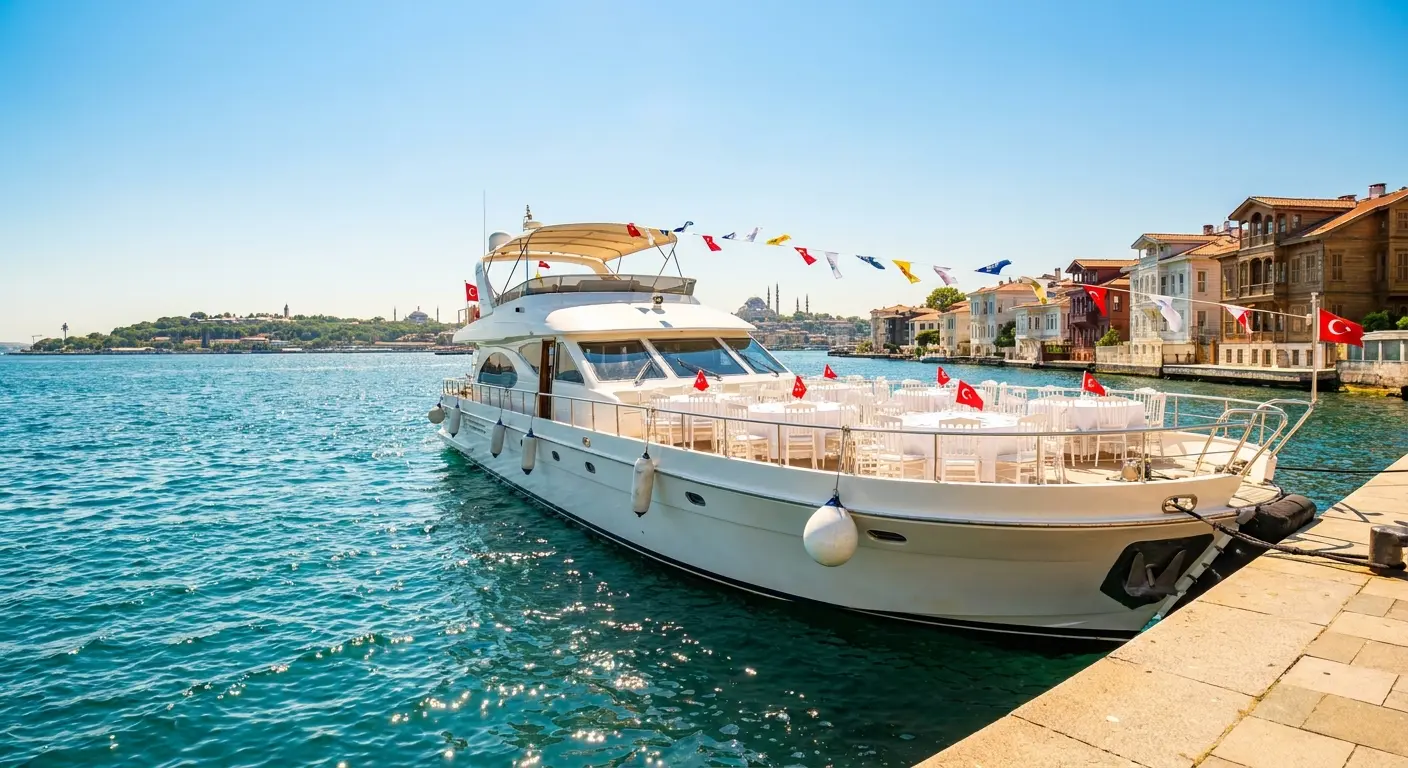
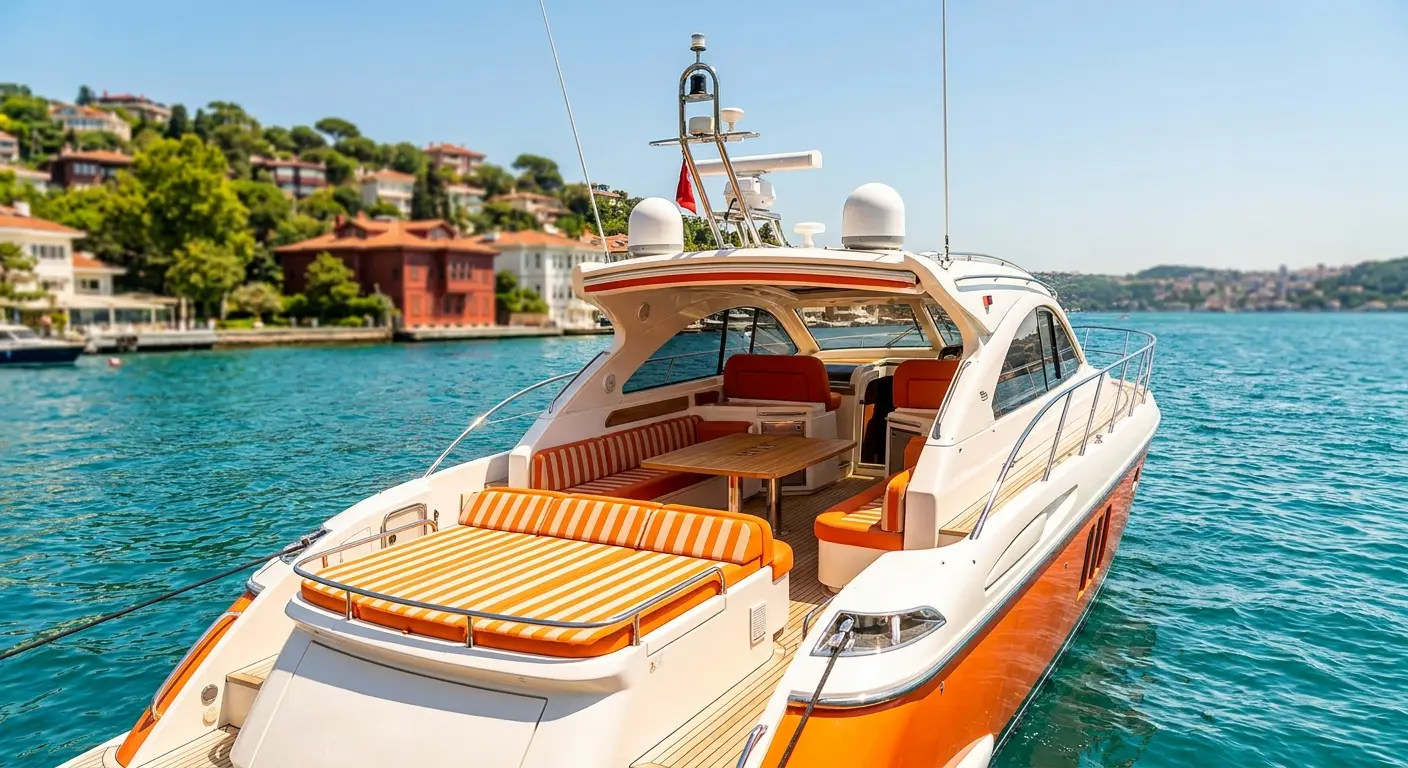
Booking an event boat is not the same as reserving a hotel ballroom or a restaurant terrace. Once you are on the water, you cannot send someone to a back room for extra chairs, call a technician, or stretch the kitchen. That is exactly why experienced organisers write everything down before they sign. This checklist is built around the 24-metre, 170-guest Özel Davet ve Organizasyon Teknesi, which you can view on Turlago, the event boat that departs from Yenikapı in Istanbul. If your gathering is smaller, the more intimate Özel Gün Davet Teknesi is worth a look as well.
Nine questions to settle before you request a date
Most headaches in boat events trace back to something that was never clarified in the first conversation. Answer these nine questions in writing before you move on to decoration or music.
- What is the real guest count? "Around 150" and "exactly 168" lead to completely different table layouts and portion planning. Lock the number before invitations go out.
- What kind of event is it? A corporate launch, an engagement, a graduation and a large family reunion all require different rhythms on the same boat, with the same hours.
- How long does it run? A three-hour window on a 170-guest event is mostly arrivals and departures. Four to five hours usually produces a smoother flow.
- Where do you board and return? Yenikapı is one of the most practical departure points in Istanbul, with easy access from both sides of the city and quick links to the Bosphorus.
- Seated dinner or cocktail? This single decision drives service time, staffing, table layout and total budget.
- Live music or DJ? A live band needs its own footprint, sound checks and setup time. Confirm the boat's own sound system if you plan to rely on it.
- Is there a fixed ceremony segment? Cake cutting, speeches, awards, a surprise video — put each one on a timeline.
- How many children and elderly guests? Deck safety, seating arrangement and walkway space depend on this.
- What is the budget ceiling? Accept up front that there are at least six separate lines: charter, food and drink, music, decoration, photography, gratuity.
What 170 guests actually means in practice
The listed capacity is 170. Treating that as "170 chairs" is the single most common planning mistake. Capacity on a boat is a moving target: comfortable for a stand-up cocktail, tight for a full seated dinner, and quite demanding once you add a stage and a dance floor.
- Cocktail style: 170 circulates easily, with separate service stations.
- Seated dinner: 130–150 is the sweet spot; more than that feels crowded.
- Stage + dance floor + seating: Keep it to 100–120 to preserve the experience.
- Hybrid layout: Half seated, half standing. This is the most popular compromise for large events.
Also ask how the open and enclosed areas are distributed. If the indoor area is small, even on a dry evening a chunk of your guests will end up crowded inside once the Bosphorus breeze picks up. On this boat, the professional crew can help you plan the table layout around your event flow, but the final decisions remain yours.
Four event types, four planning rhythms
Corporate events
For a launch, a year-end party, a dealer meeting or a client dinner, visibility and control matter most. Decide where the speaking microphone will sit, which direction the presentation screen faces, and how catering slots fall between speeches. The classic error is scheduling the main catering course during a keynote; guests stand up mid-talk and the speech loses the room.
Weddings, engagements and proposals
Event boats have become one of the most requested venues for small and mid-sized weddings in Istanbul. A 170-guest capacity gives couples a generous footprint for a Bosphorus celebration instead of a traditional hall. Prioritise three decisions: where the cake table goes, which angle the photographer will work from, and how the dance floor empties out when the crowd surges forward. Freeze your seating chart at least a week ahead.
Graduations and school events
Graduation crowds are young, mobile and loud — all of which is fine if safety and balance are handled first. Deck safety, open-air seating and sound control are the three operational anchors. Keep the programme compact. A four-hour structure usually fits a large graduating class well. Carve out separate time windows for cake, diploma handover and group photos; do not stack them together.
Family and friends gatherings
Anniversaries, milestone birthdays and reunions feel far more special on the water than in a crowded restaurant. Party sizes here usually sit between 60 and 120, which lets a 170-guest boat feel genuinely spacious. The most useful tip for family events is to push the main catering slot into the second half of the cruise. Guests spend the first 40–50 minutes taking in the view and photographing everything; warm food served that early goes cold.
Departing from Yenikapı and choosing your route
Yenikapı Marina sits at the intersection of Marmaray, metro and ferry lines, which makes it one of the easiest boarding points for guests arriving by public transport. Two departure windows are best avoided:
- Weekdays, 17:00–19:00: traffic congestion delays too many guests.
- Summer, 13:00–15:00: peak heat with limited shade on the open deck.
Better windows: 16:00–18:00 from spring through autumn, and 15:00–16:30 in winter. Both give you daylight and, toward the end, a golden-hour approach back to the marina.
On the route itself, talk to your captain in advance. The most requested flow from Yenikapı runs: Yenikapı – Maiden's Tower – Bosphorus entrance – Dolmabahçe – Ortaköy – return. That loop is roughly three hours. On a five-hour programme you can push as far as Bebek or Kanlıca and move slowly along the waterfront mansions. Timing the return near sunset produces the most memorable part of the evening, but arriving back at Yenikapı about 30 minutes before dark makes disembarkation and onward transfers much easier for a large group.
Menu and catering: seated or standing?
Catering is where large event budgets most often slip. Before choosing a menu, lock down these five points:
- Service style: buffet, set menu, plated service or cocktail stations. For 170 guests, plated service is usually the slowest and most expensive option.
- Hot versus cold balance: maintaining hot food at sea is tricky; cold mezze and cocktail plates are more reliable.
- Beverage structure: open bar, limited bar or alcohol-free. This can account for up to a third of the total budget.
- Special diets: vegan, gluten-free and allergy-safe portions must be planned in advance. Requests on the day are rarely accommodated.
- Cake and celebration items: confirm the conditions for bringing a birthday, anniversary or engagement cake on board.
This boat is set up for both seated dining and cocktail arrangements, with open and enclosed seating areas designed for year-round use. The flexibility is real; the limiting factors end up being budget and service time rather than the vessel itself.
Technical checks: sound, light and crew
Most technical issues that disrupt a boat event fall into three categories: microphone hum, music drop-outs and insufficient lighting. Walk through this list with the operator during your booking call:
- Sound system: how many speakers, which deck zones are covered, how a DJ connects.
- Microphones: wireless or wired, and whether a backup is included.
- Lighting: deck lighting for late returns and how decorative lighting can be added.
- Power: generator capacity if you bring your own AV gear.
- Crew: beyond the captain, how many staff will be on board and who provides the service team.
- Restrooms and cleaning: toilet count and cleaning frequency are real comfort factors at 170 guests.
This vessel comes with a professional captain and crew. Even so, make sure the scope of the service team is spelled out in the contract. Some operators book service staff under a separate line item, and knowing that in advance prevents budget surprises.
A working budget checklist
Large event budgets are far easier to control once they are split into named lines. Move these into a spreadsheet and you will cut your decision time in half:
- Charter fee: hourly or package, current availability, in-season vs off-season rates.
- Fuel and harbour fees: longer routes raise fuel costs. Clarify whether this is fixed or variable.
- Food and beverage: per-person rate or consumption-based.
- Service staff: is gratuity and service included?
- Music: DJ, live band, or both.
- Decoration: florals, linens, themed elements.
- Photo and video: optional, but invaluable for memorable events.
- Guest transport: can be a distinct line item.
- Contingency: keep 10–15% aside. Always.
Six steps you should never skip during booking
- Get a written quote. Nothing discussed on the phone replaces a contract. Deposit, payment schedule and cancellation terms must be in writing.
- Confirm the date and slot. A boat can host more than one event in the same day; make sure your specific time window is explicitly reserved.
- Ask about the deposit. Large events typically require 20–40%, with refund terms tied to the date.
- Clarify cancellation and weather policy. Sea conditions can force a postponement; the compensation rule must be in the contract.
- Check the outside-catering rule. Some boats allow outside food and drink, others do not.
- Confirm the final headcount 72 hours ahead. The kitchen plans portions against that number.
Event day, hour by hour
T–3 hours: check decoration and table setup. Sign for the photographer's and DJ's equipment.
T–90 minutes: catering and cake must already be positioned on board. There is very little slack for chasing items at this stage.
T–45 minutes: welcome desk and guest list check. Post the seating chart near the entrance.
T–15 minutes: final route and return-time confirmation with the captain.
T0: welcome drinks ready as the first guests board.
T+30 minutes: departure complete, programme underway. Speeches from this point onward will not disturb the flow.
T+2 hours: main catering window. Keep music levels lower during the first half of the meal.
T+3 hours: cake, toasts, photos, awards — the emotionally loaded segment.
T+4 hours: switch to lighter bites on the final catering round as you approach the return leg.
T+5 hours: same welcome team handles the send-off, with guest transfers ready to go.
Seven mistakes that keep repeating on large event boats
- Filling capacity to the maximum. 170 is a ceiling, not a comfortable target. 90% occupancy is where events breathe.
- Overloading the programme. Speeches, cake, dancing and a surprise video do not fit into the same half hour.
- Scheduling catering at the wrong moment. Hot food served during the photo-and-view window goes cold.
- Not testing sound on board. Rehearse on the boat, not in a hall.
- Trusting the weather to stay warm. Even summer evenings cool down over the Bosphorus; keep the indoor area open and set up.
- Leaving the photographer and DJ uncoordinated. If they do not talk to each other, key moments are missed.
- Glossing over deposit and cancellation terms. Verbal agreements leave you exposed when a date changes.
Alternatives worth comparing alongside this boat
If your event does not need 170 seats, or you want a more boutique atmosphere, it is worth comparing other options in the same category. For a corporate launch that benefits from a tighter footprint, the 23M charter yacht in Istanbul with party equipment is a strong comparison point. Couples and families looking for a more classic, elegant atmosphere tend to gravitate toward the classic and sleek Lobster motor yacht charter. Whichever option you weigh, the checklist in this article applies exactly the same way.
Final five checks before you leave the boat
- Verify the exit headcount. On a 170-guest event, a registered list is the only way to track who has disembarked.
- Lost and found box. Phones, wallets and shawls aside, camera accessories are the most commonly forgotten items.
- Reconcile the final invoice. If there are extras outside the contract, agree on them in writing the same day.
- Photo and video delivery date. If you hired a professional crew, put the delivery window in the contract.
- Leave a review. It helps the operator, your future bookings and every traveller who reads it next.
Closing thought: a checklist is really a comfort list
The reason boat events feel complicated is that so many decisions are connected. Choose the capacity and the menu shifts. Choose the menu and the hours shift. Choose the hours and the route changes. Choose the route and the music and decoration flow change too. Keeping everything in a single planning document, breaking decisions into small steps, and dating each line is what keeps the process manageable.
If you want to check live availability for the 170-guest Özel Davet ve Organizasyon Teknesi, you can view it directly on Turlago, the event boat that departs from Yenikapı. Open and enclosed seating, a full music and sound setup, catering-friendly table layouts and a four-season design make it a strong candidate for corporate events, weddings and engagements, graduation celebrations and large family gatherings.
The right habits are simple: write the list before you write the cheque, keep every commitment in writing, hold back 10–15% of the budget as contingency, and follow the hour-by-hour plan on the day. With those four in place, the Bosphorus does the rest — and what stays with your guests is the memory, not the logistics.