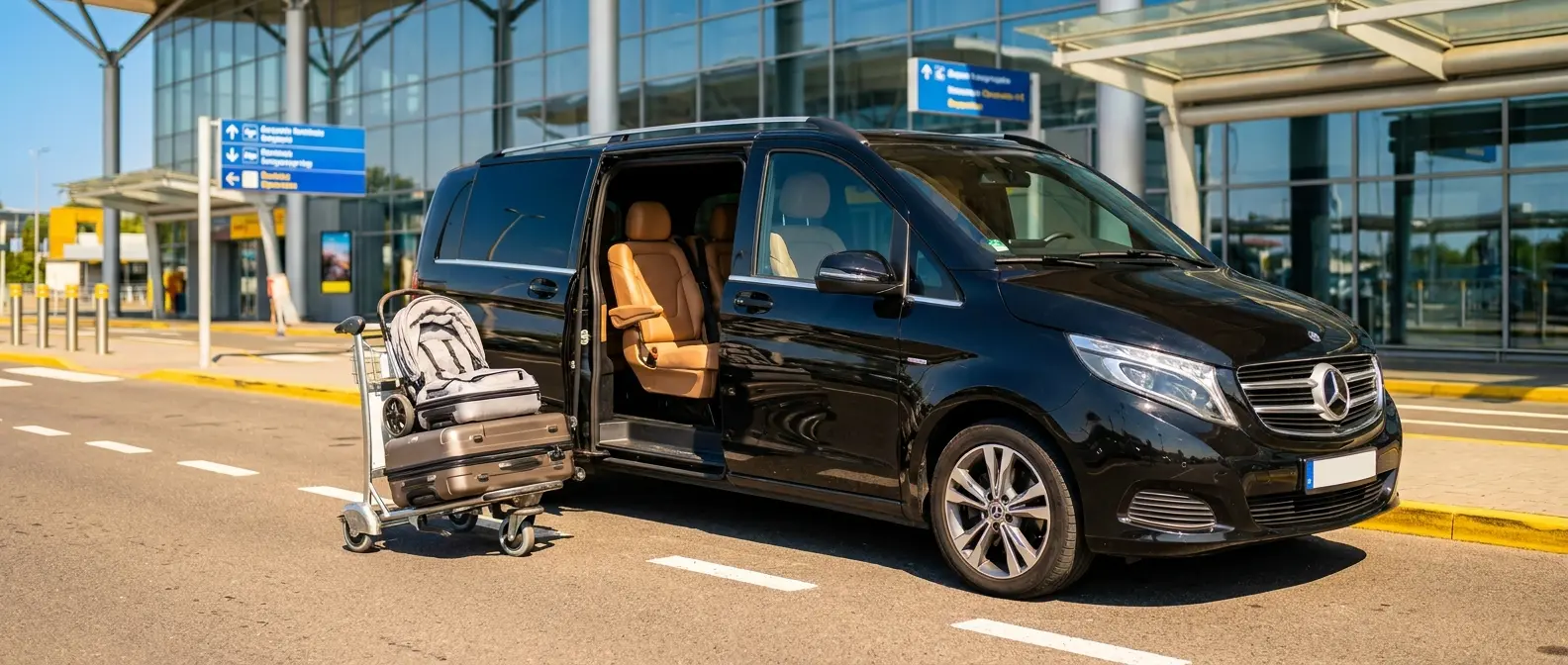
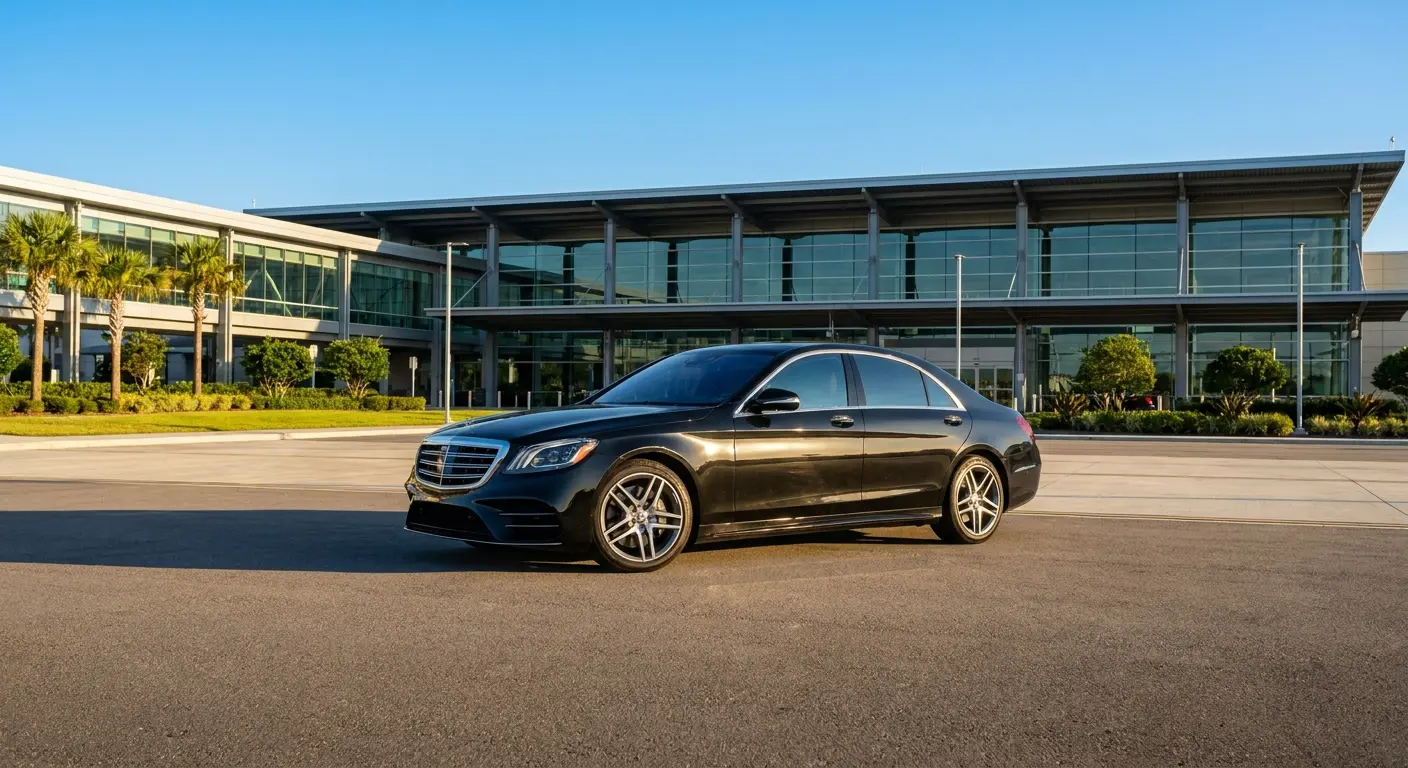
Sabiha Gökçen Airport Transfer Options: Full Comparison Guide
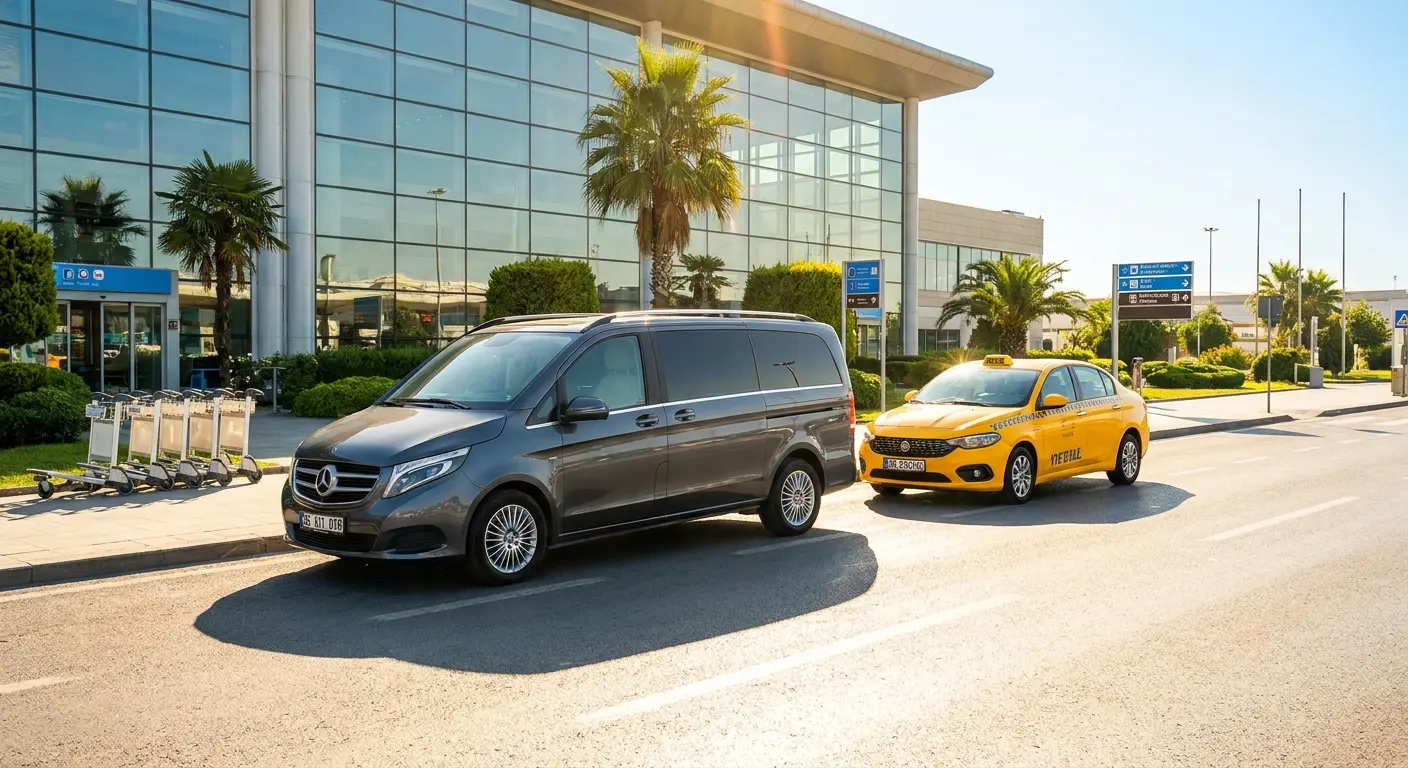
Your Transfer Decision Starts Before You Land
Most travellers plan their flight, their hotel and their itinerary in detail, then leave the airport transfer to chance. That is exactly where trips start to feel messy. Sabiha Gökçen sits on Istanbul's Asian side, and the way you leave the terminal shapes the first impression of your entire trip: how tired you arrive, how much you spend, and whether you make your first appointment or dinner reservation on time.
There is no single "best" transfer option at Sabiha Gökçen. There is only the option that fits your arrival time, group size, luggage load and budget. This guide puts the five realistic choices — metro, HAVABÜS, taxi, shared shuttle and private VIP transfer — side by side, using the same five criteria. If comfort and predictability matter more to you than the lowest possible fare, you may want to browse the VIP car rental options on our platform before reading further.
Location First: Why Sabiha Gökçen Is a Different Equation
Sabiha Gökçen is located between Pendik and Kurtköy on the Asian side of Istanbul. That geography matters more than it seems. Reaching Asian-side districts such as Kadıköy, Ataşehir, Maltepe or Pendik is relatively quick. Crossing to the European side, however, means joining bridge traffic, and both available routes become unpredictable during peak hours.
This is why the question "how long does it take from Sabiha Gökçen to the city?" has no single answer. The same route can take 45 minutes at 7 a.m. and well over two hours on a Friday evening. Any honest comparison has to accept that variability instead of pretending it away.
The Five Main Options at a Glance
- Metro (M4 line): Cheapest option, immune to traffic, but requires transfers and luggage handling.
- HAVABÜS / Havaist: Fixed-route, fixed-price coaches to major hubs.
- Taxi: Door-to-door flexibility, but both time and cost fluctuate with traffic.
- Shared shuttle: Several passengers share one vehicle; economical but indirect.
- Private car / VIP transfer: Meet-and-greet, pre-fixed price, direct drop-off; built for comfort and time.
1. Metro (M4 Line): The Traffic-Proof Budget Choice
The airport is the eastern terminus of the M4 metro line, which connects it directly to Kadıköy. From Kadıköy you can continue via Marmaray, ferry or other metro lines toward the European side. Because the metro never sits in traffic, it is the easiest option to time accurately. It runs on its own rhythm regardless of the hour.
Its biggest strength is cost: a single fare is negligible compared to a taxi or private transfer. The trade-off is physical. Stairs at station entrances, long walking distances between platforms and crowded carriages make luggage handling a real burden for anyone carrying two or three suitcases. The line also closes at night, so late landings remove the metro from the table entirely.
- Best for: Solo travellers with light luggage, budget-conscious visitors, and anyone heading to the Asian side.
- Not ideal for: Heavy luggage, small children, late-night arrivals, or anyone who wants a direct hotel drop-off.
- Key detail: The more transfers you add, the more comfort drops. Kadıköy is easy; Levent or Başakşehir may require two or three changes.
2. HAVABÜS and Havaist: The Balanced Middle Ground
Fixed-route airport coaches have been a reliable mid-tier option at Sabiha Gökçen for years. They offer fixed routes, a fixed fare and scheduled departures. You place your luggage in the hold, which makes them far more comfortable than the metro for anyone travelling with suitcases.
These services reach hubs such as Taksim, Kadıköy and Bakırköy. Travel time depends on traffic, and routes that cross the bridge can stretch significantly during peak hours. Even so, the fare is clearly lower than a taxi, and buying a ticket in advance reduces the risk of waiting in line.
- Best for: Solo travellers or couples heading to a point near a served hub, looking for a balance of cost and comfort.
- Not ideal for: Hotels outside the route, late-night arrivals, or travellers expecting door-to-door service.
- Practical tip: Never plan your departure from the scheduled arrival time alone. Add at least 45 to 60 minutes for immigration and baggage claim.
3. Taxi: Door-to-Door, But Variable
A taxi is the most flexible option: you don't carry your bags, and you are dropped exactly at your hotel entrance. You join the queue outside the terminal and take the next car. Two uncertainties come with it, though: time and price. When traffic is heavy, the journey lengthens and the meter keeps running.
Night tariffs, bridge and motorway tolls passed on to the passenger, and differences between airport and city taxis all make the final number hard to predict in advance. For short distances on the Asian side, however, a taxi can still be a sensible choice.
- Best for: Short Asian-side hops, groups of two or three, travellers who decide on the spot.
- Not ideal for: Anyone who wants a fixed budget, late-night arrivals, or heavy luggage loads.
- Watch out: If your arrival lands around midnight, demand is high and supply is low, so queues can get long.
4. Shared Shuttle and Hotel Transfers
Shared shuttles combine several passengers heading in the same direction into a single vehicle. The logic is simple: you split the cost and give up some time. Because the vehicle must drop other passengers at their hotels, your own arrival can take longer than expected. Still, hotel transfer packages are convenient, particularly for travellers who book them together with their accommodation.
The main advantage is predictability: the price is known upfront, the greeting usually happens at the terminal exit with a name sign, and luggage is rarely a problem. The downside is that departure times can flex around other passengers.
- Best for: Travellers looking for a middle point between cost and comfort, staying in a central area.
- Not ideal for: Business travellers on a minute-by-minute schedule.
5. Private Car and VIP Transfer: Time and Comfort First
A private transfer means a driver waiting for you with your name, a dedicated vehicle, and a price fixed in advance. The car takes no other passengers and makes no detours. If your flight is delayed, the driver tracks it and waits; having the vehicle ready while you collect your bags is a level of convenience that is hard to overstate after a long flight.
Private transfers cost more than the alternatives, but that gap is often money well spent. With a larger group, the per-person cost can fall close to taxi level once you divide the total. For late-night arrivals, business trips, families with children and first-time visitors, it is the safest and least stressful option. For travellers who want corporate-standard vehicles and professional drivers, the VIP car rental options are the right starting point.
- Best for: Business travel, families, larger groups, night flights, first-time visitors, anyone prioritising comfort.
- Not ideal for: Solo travellers chasing the absolute lowest fare with no time pressure.
- Key detail: Choose the vehicle class by passenger and luggage count, not seat count alone. Overlooking this is the most common cause of a squeeze at the curb.
Comparing the Five Options Across Five Criteria
To decide, you only need to score each option against these five criteria. The lists below show where each option wins and where it falls short.
Criterion 1 — Cost
- Lowest: Metro
- Low to mid: HAVABÜS / Havaist
- Mid: Shared shuttle
- Variable: Taxi (rises with distance and traffic)
- Highest but fixed: Private / VIP transfer
Criterion 2 — Time Predictability
- Highest: Metro (unaffected by traffic)
- High: Private / VIP transfer (route knowledge plus live tracking)
- Medium: HAVABÜS / Havaist
- Low: Taxi and shared shuttle (traffic plus extra stops)
Criterion 3 — Comfort and Luggage Handling
- Highest: Private / VIP transfer
- High: Taxi
- Medium: HAVABÜS / Havaist and shared shuttle
- Low: Metro (drops sharply on multi-transfer routes)
Criterion 4 — Late Night and Early Morning Suitability
- Highest: Private / VIP transfer (24 hours, fixed fare)
- Medium: Taxi (queue risk when demand spikes)
- Limited: Shared shuttle (no departures at some hours)
- Very limited: HAVABÜS / Havaist (sparse overnight services)
- Unavailable: Metro (line closed)
Criterion 5 — Group and Family Friendliness
- Highest: Private / VIP transfer (child seats, minivan options)
- High: Shared shuttle and taxi
- Medium: HAVABÜS / Havaist
- Low: Metro (difficult with a stroller and multiple bags)
What Will You Actually Pay?
Giving a single number would be misleading, because three variables drive the total: distance, time of day and passenger and luggage count. The general ranking, however, almost never changes: metro is the cheapest, private transfer the most expensive, with HAVABÜS and shared shuttles in between and taxis the hardest to predict.
There is one figure worth calculating: cost per person. For a solo traveller, the gap between metro and private transfer is large. For a family or group of four, dividing the private car's total by the number of passengers brings it surprisingly close to a taxi fare. Add luggage comfort, door-to-door delivery and a meet-and-greet welcome, and the difference usually lands firmly on the "worth paying" side.
The real value of a fixed price is that it removes surprises. If you sit in traffic for two hours, the fare doesn't change. If the route lengthens, it still doesn't change. For international visitors and corporate travellers in particular, that predictability can be worth more than the saving itself.
Time and Uncertainty: How to Read the Traffic Factor
Istanbul traffic is the most volatile variable in transfer planning. A journey from Sabiha Gökçen to the European side can move smoothly in the early morning and then stretch dramatically on a weekday evening. Weekend mornings tend to be calmer, while Sunday evenings can get busy with return traffic.
Ask yourself one question based on your landing time: Does the time I need to reach my destination overlap with peak traffic? If the answer is yes, the options that remove uncertainty — metro or private transfer — move to the front. If the answer is no, HAVABÜS and taxis are perfectly reasonable choices.
Comfort, Luggage and Group Size
Luggage is the factor travellers most often underestimate and the one that shapes the experience most. With one suitcase and a carry-on, nearly every option works. With two large suitcases, a stroller and a backpack, the picture changes: metro and similar solutions become painful, and shared shuttles can run into luggage capacity limits.
Group size determines vehicle class directly. Two people fit in a sedan; a family of four needs an SUV or a car with generous boot space; parties of six or more need a minivan or minibus. When booking, state not only the number of passengers but also how many bags and how big they are. This single detail prevents the most common problem at airport curbs.
Late Night and Early Morning: The Rules Change
A flight landing at 12:30 a.m. requires entirely different planning from one landing at noon. The metro is closed, HAVABÜS services are sparse, taxi queues can be long, and fatigue is at its peak. At these hours, the value of a private transfer is far higher than during the day: a driver meeting you by name in the terminal works like a dependable exit door in the middle of the night.
The same logic applies to early-morning departures. If you need to be at the airport by 5 a.m., you may have to leave your accommodation at 3 a.m. Nothing runs at that hour. A private transfer solves such plans with one fixed fare and a predictable duration.
Notes for Families with Children and Older Travellers
For families with small children, the transfer is not just transport but a question of safety and structure. Child seats, having bags loaded into the car and the flexibility to pause during the journey can only be fully guaranteed in a private transfer. Sharing a vehicle with strangers can be challenging with a crying baby or an impatient toddler.
Older travellers face a similar situation: stations with stairs, long walking distances and crowded carriages are genuine obstacles. Door-to-door service goes well beyond comfort for this group; it is a practical necessity.
Which One Wins in Your Scenario? A Simple Decision Guide
Find the closest match below; the first line is usually the right answer.
- Solo, light luggage, daytime, Asian side: Metro.
- Solo, light luggage, heading to a served hub: HAVABÜS / Havaist.
- Two or three people, short distance, deciding on the spot: Taxi.
- Central hotel, budget matters, no rush: Shared shuttle.
- Larger group, heavy luggage, night landing, business trip or family with children: Private / VIP transfer.
Eight Practical Tips for Sabiha Gökçen Transfers
- Plan from the moment you clear baggage claim, not from the landing time. Add at least 45 to 60 minutes for immigration and luggage.
- Share your flight number. With a private transfer, the driver tracks your flight and won't waste time waiting if you're delayed.
- Report your luggage accurately. One missing suitcase can mean the vehicle class is too small.
- Confirm the currency upfront. With cash payments in particular, currency and exchange differences can create surprises.
- Get the meeting point in writing. Instead of a vague "terminal exit", ask for a door number or a clearly identifiable spot.
- Don't assume a taxi queue on late arrivals. Demand is high and vehicle supply is limited at those hours.
- Ask whether bridge and motorway tolls are included. This one question clarifies the total cost.
- Book several days ahead in high season. During summer and holiday periods, suitable vehicles become harder to find.
Booking Step by Step
Reserving a private transfer takes less time than you might expect. Follow this sequence:
- Enter date and time: State your flight's arrival date and hour.
- Add your destination: Hotel name or full address, ideally with a building number.
- Set passenger and luggage counts: Adults, children, infants and bags separately.
- Choose a vehicle class: Sedan, SUV, minivan or minibus.
- Add extras: Child seat, name sign, additional stop.
- Provide the flight code: Required for live flight tracking.
- Save your confirmation: Driver details and meeting point are usually sent before departure.
Frequently Asked Questions
What is the fastest way from Sabiha Gökçen to Taksim?
During heavy traffic, metro plus a connection is generally the most predictable route. When traffic is light, a private transfer or taxi can shorten the total time. No exact duration can be guaranteed — it varies widely by hour and day.
Which options are available for a midnight landing?
The metro is closed. Taxis operate but queues can be long, and HAVABÜS services are sparse. At these hours, a pre-booked private transfer is the safest and most practical solution.
Is a private transfer really worth the extra cost?
As passenger and luggage numbers grow, at night, or on a first visit to Istanbul, yes. The per-person cost approaches taxi level, and in return you gain time, comfort and predictability.
Why do shared shuttles sometimes take so long?
Because the same vehicle also drops other passengers at their hotels. More stops mean more time. That is why shuttles are unsuitable for travellers on a tight schedule.
Which vehicle should I choose if I have a lot of luggage?
For two large suitcases plus a carry-on, a sedan with generous boot space or an SUV works well. For groups with three or four bags, a minivan is recommended. Always state your luggage count when booking.
Final Word: The Right Choice Starts With the Right Information
There is no single perfect way to get from Sabiha Gökçen into the city — only the option that fits your travel profile. If budget leads and your luggage is light, the metro or HAVABÜS will serve you well. If you want to decide on the spot and go door to door, a taxi remains a valid choice. But when the equation involves a larger group, heavy luggage, a night landing, a business trip or a family with children, the balance shifts: predictable timing, a fixed fare, a name-sign welcome and a professional driver outweigh the saving.
Three questions settle the decision: How many of us are there and how much luggage do we have? What time do we land? How quickly do we need to reach our destination? The answers almost automatically point to one of the five options.
For travellers who prioritise comfort and time, and who want to choose the vehicle class and driver standard in advance, the VIP car rental options on Turlago are a good place to start — removing the uncertainty at the airport exit before your plane even touches down.