Sabiha Gökçen Airport Transfer With a Baby: How to Plan It
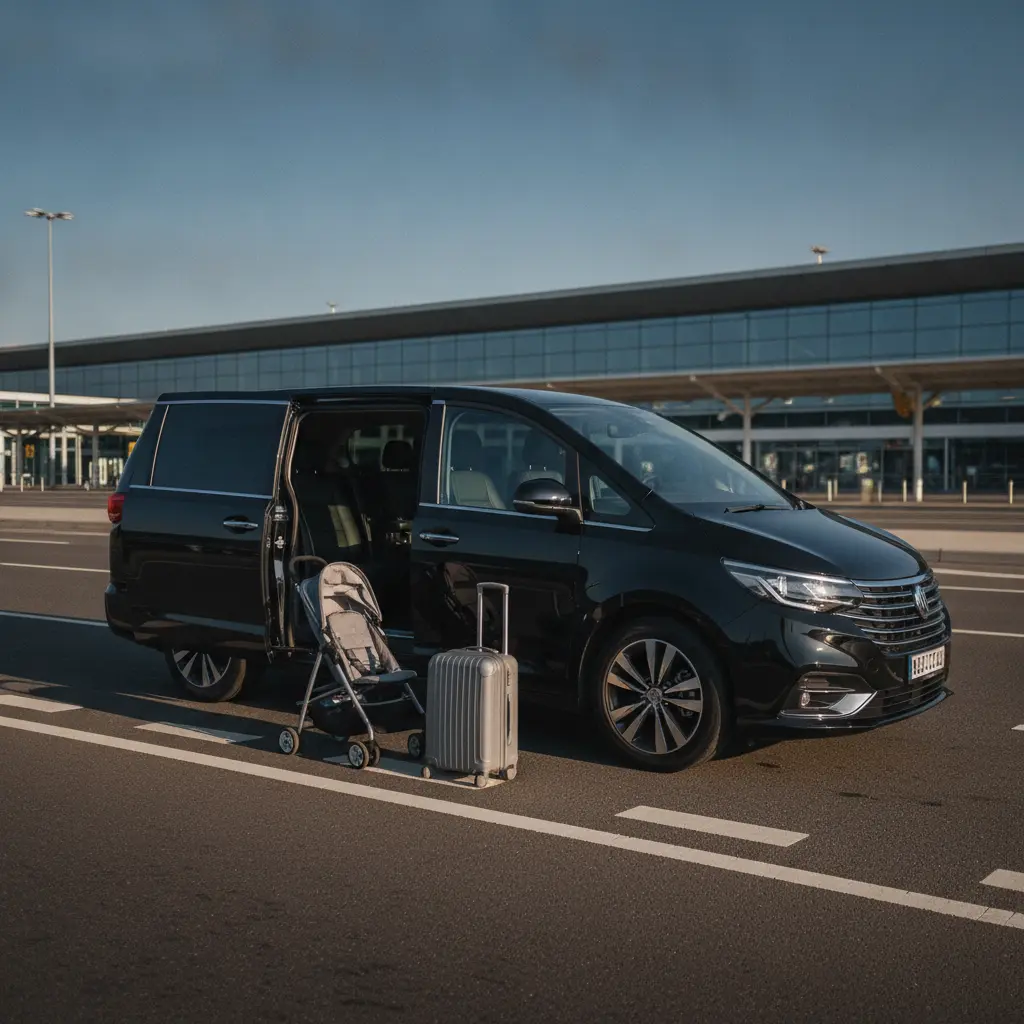
Landing at Sabiha Gökçen with an infant turns one ordinary hour into the most demanding part of the trip. You are standing in the arrivals hall with a baby on one arm, a folded stroller on the other, two suitcases behind you and about four hours of broken sleep. At that moment, the transfer stops being a line item on a booking confirmation and becomes the thing that decides whether the day ends calmly or badly. This guide answers one question in plain terms: if you are travelling with a baby, how should you actually plan a Sabiha Gökçen airport transfer? The format below is deliberately question-and-answer, because that is how parents search when they are tired. If you are weighing up a private vehicle, you can compare vehicle classes on Turlago's chauffeur-driven private car hire page before you read any further.
What makes a Sabiha Gökçen transfer different when you have a baby?
The short answer: not the distance, but the fragility of the plan. A delay is an annoyance for an adult traveller. For a family with an infant, a delay means a hungry baby, a soaked stroller and two exhausted parents trying to solve a problem in a language they may not speak.
Three specifics of this airport shape your planning:
- Location. Sabiha Gökçen sits on the Asian side of Istanbul, roughly in the Pendik–Kurtköy corridor. If your hotel is on the European side, your route involves a bridge or tunnel crossing, which adds a genuine variable to your travel time rather than a fixed number of minutes.
- Traffic profile. The main arteries into the city tighten between roughly 07:00–10:00 and 17:00–20:00. Knowing those windows matters more with a baby, because 40 minutes in a car seat and 70 minutes in a car seat are two completely different experiences.
- Equipment load. Stroller, infant carrier, nappy bag, spare clothes. Boot capacity and vehicle class stop being aesthetic choices and become operational requirements.
So the useful question is not which company is cheapest. It is which company actually knows how to work with babies: one that supplies a properly sized child seat, tracks your flight, states its waiting policy in writing, and meets you at the right door rather than somewhere near it.
How long does it take from Sabiha Gökçen to the main districts?
The short answer: time of day and route matter more than kilometres. The figures below are typical ranges in normal traffic, and with a baby I would add 15–20 minutes on top, because stroller folding, child seat fitting and the walk out of the terminal all happen inside that window.
- Pendik / Kurtköy: about 15–20 minutes. The closest practical base to the airport and the lowest-risk option for early departures.
- Kartal / Maltepe: about 20–30 minutes.
- Ataşehir / Ümraniye: about 25–35 minutes.
- Kadıköy / Moda: about 35–45 minutes. The Asian side's main hub and a common choice for families thanks to hospitals and pedestrian-friendly streets.
- Levent / Maslak: about 45–60 minutes, heavily bridge-dependent.
- Taksim / Beşiktaş: about 50–70 minutes.
- Sultanahmet / Fatih: about 60–80 minutes. If your hotel is in the historic peninsula, add the final 200 metres on cobblestones to your mental timetable — it is the part where a stroller becomes awkward.
- Bakırköy and the old Atatürk Airport area: about 60–80 minutes.
- Transfer to Istanbul Airport: about 80–100 minutes between the two airports. If you are connecting the same day, leave at least four hours.
Rule of thumb: with a baby under six months, consider splitting any journey over 45 minutes with a short stop. Two calm halves beat one long, escalating one.
Which vehicle class should a family with a baby book?
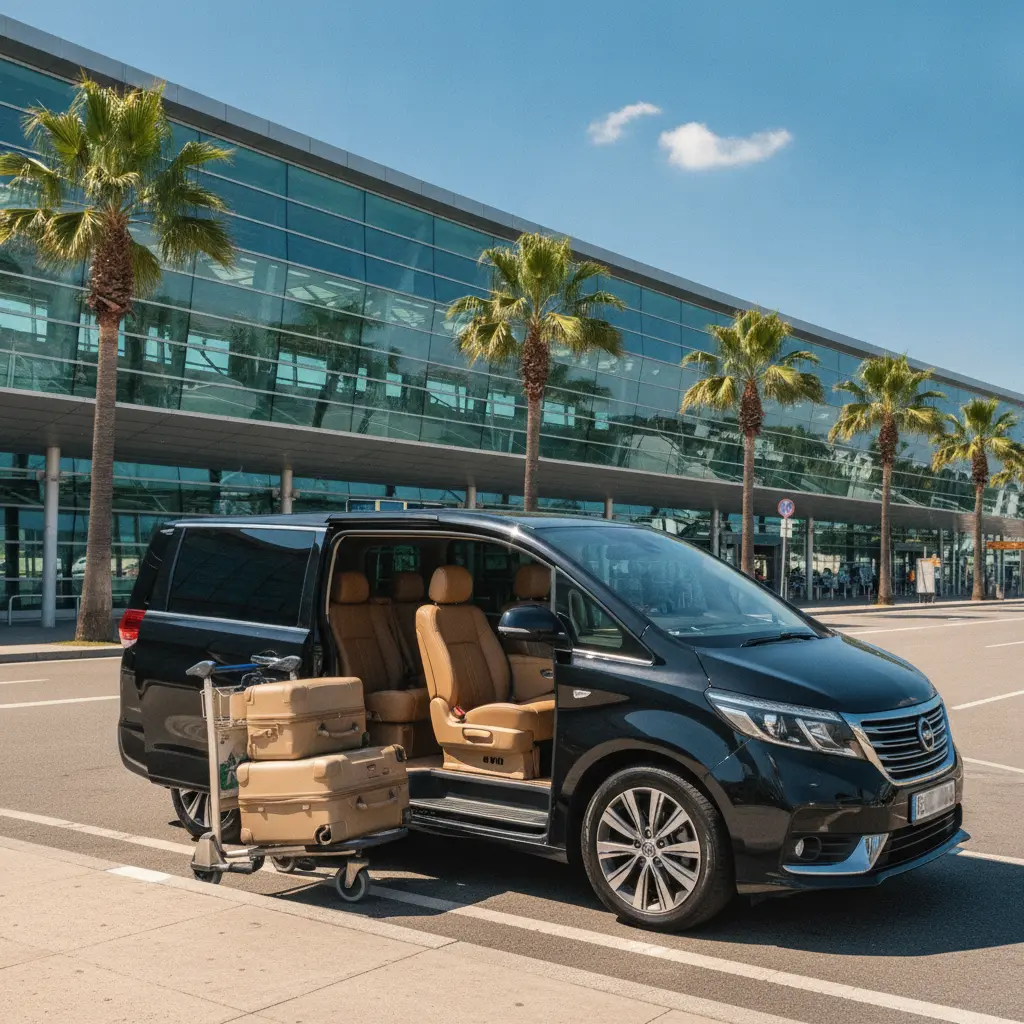
The short answer: if you have two large suitcases and a full-size stroller, a sedan may not be enough. Do the luggage arithmetic before you book, not at the kerb.
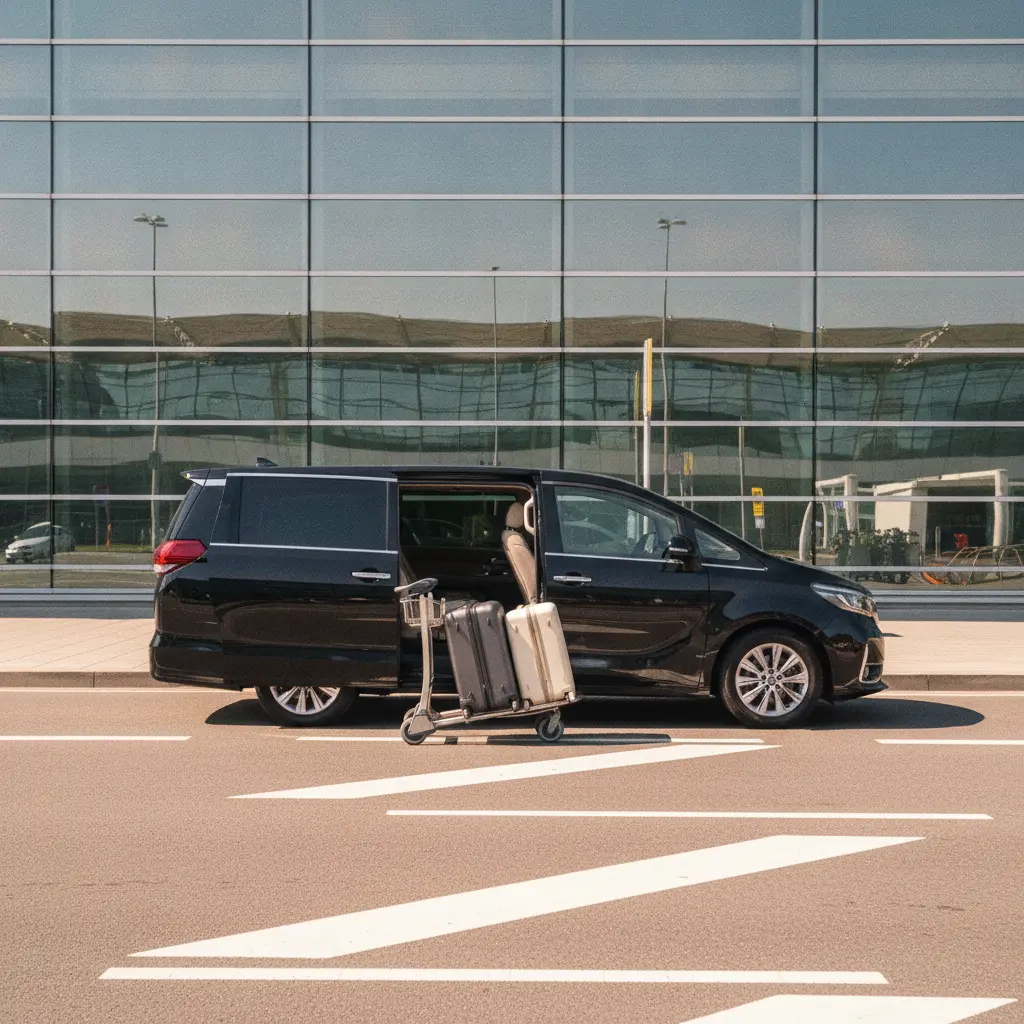
Work it out like this: boot space needs to cover suitcases + folded stroller + cabin bags + infant carrier. A folded stroller takes up roughly the volume of a cabin bag; add a nappy bag and a sedan boot fills up fast. If the stroller ends up on the back seat, you have lost the space the child seat needs. This is the single most common squeeze at airport pick-ups.
- Sedan: fine at the margin for two adults, one baby, two small cases and a compact umbrella stroller. Struggles with large travel-system strollers.
- Minivan or larger body: the most balanced choice for two adults, one or two children, three cases and a full-size stroller. More space per seat also means less jostling while the baby sleeps.
- VIP van: sensible for families of four or more, for two child seats, or for bulky equipment. A lower loading height makes getting a baby in and out noticeably easier.
Do not choose a class on passenger count alone. Write your luggage list down and send it. A good operator will tell you to upgrade when they see it; a bad one says yes to everything and surprises you at the door.
How exactly should you request a child seat?
The short answer: give weight and height, not just age. Child seat groups are defined primarily by weight, and saying only that your child is 14 months old is the number one reason the wrong seat turns up.
Put these three details in your booking notes:
- Weight in kilograms. For example, 8 kg.
- Height in centimetres and age. For example, 72 cm, 11 months.
- Seat type and direction. Infant carrier (0–13 kg, rear-facing), child seat (9–18 kg, forward-facing) or booster (15–36 kg).
Then ask two more questions: is the seat free or chargeable, and is it ISOFIX compatible? ISOFIX reduces the chance of a fitting error and clicks in within seconds. At midnight, in the rain, with a half-asleep baby, that difference is real rather than theoretical.
Turkish traffic regulations require children to travel in the rear seats in a restraint system appropriate to their age and weight, and in practice a child seat or booster is expected for children under around 135 cm. If you are arriving from abroad, note that local practice may not match your home country's standard exactly, so confirm the current rule before you travel. For a child under two, rear-facing travel remains the safer option for the neck and spine. If you plan to bring your own infant carrier, check with your airline whether the model is certified for in-cabin use — some are, some are strictly hold luggage.
What time should the car be booked for relative to landing?
The short answer: book for when you will leave the terminal, not when the wheels touch down. Otherwise the driver's free waiting time starts expiring while you are still at the baggage belt.
Realistic buffers:
- Domestic arrival: landing + 30–40 minutes (baggage belt plus stroller collection).
- International arrival: landing + 60–90 minutes (passport control, baggage, customs). Busy periods can push this past 100 minutes.
- Stroller sent to the aircraft door (gate-checked): add 10 minutes. If it takes long to arrive, a trip to the lost baggage desk can add another 20–30 minutes.
Worked example: if your international flight lands at 14:10, set the pick-up for around 15:20–15:30. Share your flight number in the booking; good operators track it and adjust the driver even if you land early. That single piece of information removes the need to call a company from the kerb with a baby in your arms.
For the return leg, do the reverse: have the car collect you so that you reach the airport three hours before departure. Check-in, a baby-inclusive security screening and a nappy change stop make two hours genuinely tight.
What happens if the flight is delayed?
The short answer: this is the clause that causes most disputes. Before you book, get the free waiting period and the hourly rate after it in writing.
A common industry norm for airport pick-ups is 45–60 minutes of free waiting, then an hourly charge. For a family with a baby that can feel narrow, because stroller delivery, a nappy change and a feed are not predictable. So clarify two things:
- Does the waiting period start from the actual landing time or from the pick-up time you specified?
- What happens if the flight is delayed by more than two hours? Is there an extra charge, or is the booking simply moved?
Good practice looks like this: flight tracking, no extra charge for delays, and a driver who shares their live location on a messaging app. At midnight with a sleepless baby, you do not want to be on hold in a call queue. The confirmation should carry the driver's name and phone number — one line that can save the whole day.
How should you plan for a stroller and your luggage?
The short answer: keep the stroller in your control until the aircraft door and gate-check it. That way you are not carrying a baby through long terminal walks.
A loading order that works:
- Load the suitcases first, the stroller last, so you are not unloading cases again to make room.
- Keep the nappy bag in the cabin rather than the boot — bottles, spare clothes, nappies and medication should stay with you.
- Send the folded stroller dimensions to the transfer company. Some reversible travel systems stay bulky even when folded and effectively force a minivan.
- Carry a plastic bag for wet wheels. In winter the tyres come in muddy and a clean boot is not always an option.
Ask the driver to secure the stroller in the boot. A loose, heavy object behaves like a projectile under braking. Requesting that it is strapped down is a professional expectation, not an unreasonable one.
Are there baby care rooms at Sabiha Gökçen?
The short answer: yes. The terminal has baby care rooms in both the domestic and international areas, with changing units, a private space for feeding and access to a sink. They are marked on terminal maps and the information desks will point you to the nearest one.
Treat these rooms as a planned stop, not an emergency exit. A break in the last 45 minutes before boarding measurably reduces the chance of a meltdown in the air. Worth keeping in your bag:
- A small thermos for hot water (cafés will usually help).
- A changing mat and a disposable liner.
- Wet wipes and hand sanitiser.
- A full change of clothes — for the baby and for you.
At security, baby food, breast milk and infant medication are exempt from the usual liquid limits, but they may be screened separately and you may be asked to taste them. Keeping them in one clear bag within easy reach speeds the process up considerably.
What changes on a night arrival?
The short answer: book the night transfer in advance and prepare the car more carefully than you would in daylight. Night is when your options for improvising at the airport are at their lowest.
- Ask about the night tariff. Many operators apply a different rate between 22:00 and 06:00. Get the total in writing to avoid a kerbside surprise.
- Choose door-to-door service so you can move a sleeping baby without waking them. A car park-to-terminal walk at night is both dark and tiring.
- Wait while the driver fits the infant carrier. Do not rush it; a correctly installed seat is worth two extra minutes.
- Ask for dim lighting and quiet. These are the two variables that most reliably get a baby back to sleep.
One more night detail: is your hotel reception open 24 hours? Smaller boutique properties often need advance notice for late check-in, and standing outside with a baby is a miserable way to end a travel day. Confirm the hotel's night policy when you book the transfer.
HAVABÜS, taxi, public transport or private transfer — which works with a baby?
The short answer: for a family with an infant, door-to-door private transfer is almost always the least punishing option, though the others can work depending on budget and luggage.
- Airport shuttle buses (HAVABÜS-style services): economical and reliable. The downside is the last leg from the drop-off point to your hotel, which you still have to solve with a taxi or on foot. With a stroller and two suitcases, that last stretch can be the hardest part of the day. Child seats are not standard on board.
- Taxi: available immediately and flexible. But child seats are almost never provided, boot space is limited, and you need to know the night tariff and the likely route in advance. The risk of sitting in heavy traffic is high.
- Public transport: the cheapest by far, but transfers, crowds and stairs with luggage make it unrealistic with a baby. It is only genuinely viable for one adult, one bag and a journey with no time pressure.
- Private transfer: name-board greeting, fixed price, a vehicle class you chose, a child seat on request and door-to-door delivery. For a family with a baby, the total benefit usually justifies the difference in price.
The question worth asking yourself is this: where do I want to spend my energy today? If the answer is on your baby, then the transfer belongs in the planning column rather than the comfort column. You can review the private options on Turlago's chauffeur-driven private car hire page.
What drives the price of a baby-friendly transfer?
The short answer: distance alone does not explain it. When you see two very different quotes for the same route, the gap usually comes from these items:
- Vehicle class. The jump from sedan to minivan reflects boot space and seat count.
- Night tariff. An additional rate between 22:00 and 06:00.
- Waiting time. An hourly charge once the free period is exceeded.
- Child seat. Free with some operators, charged per seat by others.
- Extra stop. Calling at an address before reaching the hotel.
- Bridge and tunnel tolls. Confirm whether European-side crossings are included or billed separately.
- Excess luggage. Beyond the vehicle's capacity, a second vehicle may be required.
When comparing quotes, ask for the all-in total: greeting, luggage assistance, child seat, waiting time and tolls. Settle the payment method up front as well, so you are not asked for cash at the kerb. This is a lesson learned the practical way — negotiation with a baby in your arms is not a negotiation you want to have.
When should you book, and what cancellation terms should you insist on?
The short answer: at least 48 hours ahead in normal periods and one to two weeks ahead in peak season. Child seats are a separate constraint from vehicles, and they run out faster than cars do.
Peak periods include religious holidays, New Year, the June–September summer season, school half-terms and major sporting or cultural events. Availability tightens and last-minute prices climb.
Look for these in the terms:
- A free cancellation window: how many hours before departure can you cancel without penalty?
- Flight changes: can the booking be moved to another time on the same day?
- No-show policy: if you miss the flight, how much is refunded?
- Payment: online or in the vehicle? Are cards accepted?
With a baby, plans move. A flexible cancellation policy can be worth more than the lowest headline price. Think of the difference as an insurance premium rather than a wasted expense.
Which season is hardest to plan for?
The short answer: summer for traffic and heat, winter for weather. In both cases the remedy is the same — extra time in the schedule.
- Summer (June–September): interior temperatures in a parked vehicle rise fast. Ask that the air conditioning does not blow directly on the baby, lay a thin cloth over the child seat and let the car cool for five minutes before loading. Traffic can stretch a 45-minute run to 70 minutes, so plan water and feeds accordingly.
- Winter (December–February): rain and wind around Sabiha Gökçen can increase flight delays. Pack a rain cover for the stroller, a towel and spare socks, and confirm that the vehicle's heating works when you book.
- Spring and autumn: the most comfortable windows, though an evening chill still justifies a light blanket.
One local detail: Sabiha Gökçen sits in one of Istanbul's windier districts. In gusty weather, do not leave a stroller standing open and do not hold a luggage trolley one-handed; sudden gusts in the open areas outside the terminal are a real hazard for anyone carrying a baby.
What extra steps apply if you arrive on an international flight?
The short answer: longer queues, longer baggage waits and more paperwork. Push your transfer time back accordingly.
- Baby passport and visa: your infant needs their own passport, and visa requirements apply regardless of age. The driver will never ask, but missing documents are the number one reason people miss flights.
- Immigration queues: at international arrivals, passport control can take 40–60 minutes at busy times. Priority lanes for families are not guaranteed, so do not build a plan that depends on them.
- Formula and liquids: baby food and breast milk are permitted through security but may be screened separately. A small thermos makes the rest of the journey easier.
- Meet and greet: some operators offer an in-terminal greeting and luggage assistance for an extra fee. After a long night flight, that service is often more valuable than it sounds.
- Insurance and health: check that your baby is covered by your travel health policy, and know that you can dial 112 for emergencies in Turkey and that the terminal has a medical point.
If you are arriving on a connection, factor in whether a delay on the first leg will affect the second. With a baby, I would not take a connection of under two hours.
In-car comfort checklist for the journey itself
The short answer: one bag, three things. Nappy, feed, sleep. Everything else is optional.
- An accessible bag: a small bag that stays next to you in the car — nappy, wipes, spare bodysuit, dummy, bottle.
- A blanket: a thin layer for air conditioning that doubles as a way to block light.
- A dummy or a bottle: sucking is the most effective way to equalise ear pressure during descent, and it also settles a baby after sudden braking.
- A quiet distraction: a soft toy or a book. Noisy toys exhaust both the baby and the driver.
- Screen time: short bursts can rescue a long ride, but never mount a tablet on the child seat — it becomes a hazard under braking. Hold it instead.
- Layered clothing: in-car temperatures fluctuate; layers you can remove quickly are the practical answer.
And for the parents: bring water and a snack. The parent who plans for every one of the baby's needs and none of their own tends to run out of steam halfway through the journey.
Five mistakes parents make with airport transfers
- Not sharing the luggage list. Booking a sedan and hoping for a minivan at the kerb is the most common failure. Send the list and agree the class together.
- Requesting the child seat at the last minute. It is a stock issue. State it at the time of booking.
- Entering the landing time as the pick-up time. Skip the passport and baggage allowance and the waiting charge is guaranteed.
- Not asking about the night tariff. Getting the all-in total in writing removes any kerbside negotiation.
- Not taking the driver's contact details. One phone number prevents twenty minutes of being lost in an arrivals crowd.
The ten-minute plan that buys you an hour of calm
On a trip with a baby, the transfer is the most controllable part of the day. Flights get delayed, babies get fussy, bags arrive late — but being met by the right vehicle, at the right time, with the right seat, is within your control. The to-do list is short: write your luggage list, choose the vehicle class from it, request the child seat by weight and height, share your flight number, and get the waiting time and night tariff confirmed in writing.
Finish those five steps today and, when you walk out of the arrivals hall, only one task remains: pick up your baby and get in the car. Everything else is already planned.
To arrange a Sabiha Gökçen transfer that matches your child's age and your luggage, you can browse the chauffeur-driven private car options on Turlago, compare vehicle classes and service inclusions, and complete your booking at your own pace.