Scandinavia and Fjords Tour 2026: Best Time to Go
One Route, Eight Days, Four Seasons of Difference
The Scandinavia and Fjords Tour runs eight days, departing Istanbul Sabiha Gökçen and returning from Helsinki. In between you cover Copenhagen, Malmö, Göteborg, Oslo, Karlstad, Örebro and Stockholm, plus one overnight Baltic crossing on Silja Line. The itinerary itself never changes. What changes — dramatically — is the month you choose to travel in.
That is because this is not a museum-and-bus tour. Most of the eight days happen outdoors: on canal promenades, in city squares, on ferry decks and through train windows. Daylight, wind and rainfall are not background details here; they are part of the programme. View the Scandinavia and Fjords Tour on Turlago to see the full programme, inclusions and current pricing. This guide focuses on a different question: which window of the year actually gives you the most out of those eight days?
What the Eight Days Actually Look Like
Before talking timing, it helps to know which days are spent walking in cities and which are spent on the road — because that ratio is what makes season matter.
- Day 1 — Istanbul (SAW) to Copenhagen: Meet at Sabiha Gökçen at 06:40, Pegasus scheduled flight to Copenhagen, then a panoramic city tour covering Christianborg Palace, Amalienborg Palace, the Little Mermaid, Strøget (Europe's longest pedestrian street), Nyhavn Canal, the medieval stock exchange buildings and the City Hall square.
- Day 2 — Copenhagen to Malmö to Göteborg: Malmö's Stortorget and Lilla Torg squares, City Hall and St. Petri Church, then Göteborg's Avenyn boulevard, Gustav Adolf Square, the Poseidon statue, opera and theatre buildings.
- Day 3 — Göteborg to Oslo: Oslo panoramic tour: the Royal Palace, the Storting, the City Hall where the Nobel Peace Prize is awarded, the National Theatre, Oslo Cathedral, Karl Johans gate and the Residance Museum.
- Day 4 — Oslo: The day built for optional extras — the historic Flåm Railway and a two-hour fjord boat cruise.
- Day 5 — Oslo to Karlstad to Örebro to Stockholm: Karlstad panoramic tour and free time for lunch. A long coach day.
- Day 6 — Stockholm: Fjällgatan viewpoint, medieval Gamla Stan, Djurgården Park, the City Hall, the National Theatre building that houses seven theatres under one roof, the stock exchange building and Kungsträdgården.
- Day 7 — Stockholm to Helsinki: Optional Uppsala & Sigtuna tour, then the Silja Line overnight cruise.
- Day 8 — Helsinki to Istanbul: Helsinki panoramic tour including Senate Square with the Sibelius Monument, Parliament Square and the Royal Opera House, then the return flight.
Two things stand out. First, almost every day involves a walking-based city tour. Second, Day 5 is essentially a transfer day. Both details matter far more to your enjoyment than most travellers expect when they book.
Daylight: The Quiet Deciding Factor
Scandinavia does not divide the year into four equal seasons. It has a near-endless summer and a very short winter day, and this route spans a wide band of latitude, so daylight changes noticeably even along the way.
In practical terms: during the summer months there is enough light after dinner to keep exploring on your own. The free time built into the panoramic tours becomes genuinely free. Photographers are not fighting a 4 p.m. dusk. In Stockholm and Helsinki around midsummer it barely gets dark at all, which creates the specific feeling this tour is known for — the coach stops, the guide finishes, but the day has not ended.
Winter reverses everything. Short daylight compresses the panoramic tours, and a significant share of what you would see from the coach slips into darkness. That does not make the tour bad; it makes it a different tour. On an eight-day itinerary this packed, daylight is a real budget line.
Month by Month: What Each Window Gives You
May — Fewer Crowds, Rapidly Lengthening Days
May is the most underrated month for this route. Days stretch quickly, squares have not yet filled with peak-season crowds, and panoramic tours feel relaxed. Nyhavn's waterfront cafés are open and canal-side walking is genuinely pleasant. Mornings and evenings stay cool, so layering is essential — and the difference between sheltered city streets and exposed water is at its most obvious on the fjord day.
June — Almost No Darkness
If maximising daylight is your goal, June is the answer. Gamla Stan's lanes are still bright in the late afternoon, and in Helsinki the nights never fully close in. On an itinerary this dense, extra daylight translates directly into extra experience. The deck time on the Silja Line crossing on Day 7 becomes something else entirely in a June evening. Crowds are still manageable compared with July.
July — Peak Season, Everything Open
July is the north at its most alive. Outdoor venues, canal boats and waterfront spaces are all operating at full capacity, making it the safest window for the nature-focused optional tours — the Flåm Railway and the fjord cruise in particular. The trade-off is volume pricing and crowds, especially around midday in central Copenhagen and Stockholm. On a coach tour that means stop times need to be used efficiently, and early risers get a real advantage.
August — Warmest Water, Busiest Streets
August behaves much like July: long days, mild weather, and sea temperatures near their yearly peak, which makes sitting on the Baltic ferry deck genuinely comfortable. School holidays add family traffic, and optional tours such as Uppsala & Sigtuna see larger groups. Crowds thin noticeably in the final week; targeting late August balances summer comfort with calmer streets.
September — The Best Overall Balance
September is arguably the strongest month for this particular itinerary. Days remain long, light is softer, cities have emptied out and prices ease. Panoramic tours run without jostling, and finding a seat in the squares where free time is given becomes easy. The one caveat is that mornings get cooler as the month progresses and conditions in higher terrain become less predictable. Early September and late September feel distinctly different; if you can, aim for the first half.
October to April — An Honest Assessment
Winter travel on this route is possible but requires adjusted expectations. Daylight shrinks sharply, and a meaningful part of the panoramic city touring can fall into twilight. The nature-based optional tours out of Oslo either stop operating entirely or run on very limited schedules outside the season. The Silja Line crossing runs year-round, but deck time disappears.
On the other hand, Nordic cities transform in winter: museums, café culture and indoor experiences take centre stage. Indoor attractions such as Stockholm's Vasa Museum operate independently of the weather, so a winter departure is never empty. Still, this itinerary was clearly designed around the outdoors, which is why late April to mid-September should be your first choice.
Grading the Optional Tours by Season
Six optional experiences sit outside the included programme. Their sensitivity to season varies enormously, and knowing which is which helps you budget and plan realistically.
- Kronborg Castle & Frederiksborg Palace (€85, Day 1): Largely an exterior-viewing coach route. Operable year-round, but the short winter day cuts the light early. Spring and summer are far more rewarding photographically.
- Vigeland Tour (€40, Day 3): The open-air sculpture park at Frogner, displaying Gustav Vigeland's 214 granite and bronze human figures and 13 wrought-iron gates. Rain reduces the pleasure considerably; on a clear day you could happily spend hours here. One of the most weather-sensitive extras.
- Historic Flåm Railway (€150, Day 4): A scenic, nature-driven rail journey. Timetables and access can shift outside the main season, making summer and early autumn the safest choices.
- Fjord Boat Cruise (€150, Day 4): Two hours on the water. Being exposed to wind and weather makes this the most conditions-dependent extra of all. Most comfortable at midsummer; in May and September, layering is non-negotiable.
- Vasa Museum (€50, Day 6): Entirely indoors. The warship that sank in Stockholm on its maiden voyage in 1628 and was recovered after 333 years on the seabed is displayed in the same comfort in every month of the year. Your reliable option when the weather turns.
- Uppsala & Sigtuna Tour (€85, Day 7): A walking-heavy excursion covering Uppsala Cathedral and university museum, plus the old coloured houses of Sigtuna, Sweden's first town. Delightful in summer, compressed in winter.
In short: the nature-based extras (Flåm, fjord cruise, Vigeland) belong to late May through mid-September, while the indoor one (Vasa) works every month of the year.
Reading the Day-by-Day Programme Through the Seasons
Day 1: Arrival in Copenhagen
The flight leaves Istanbul in the morning and the panoramic city tour begins almost immediately after landing. Tiredness is the main variable here. The tour covers the Little Mermaid, Nyhavn, Strøget and the City Hall square. In summer there is still plenty of light when it ends, and dinner around Nyhavn is a natural extension of the day. In winter the second half of the tour falls into darkness, and resting early is the smarter call.
Day 2: Two Countries, Two Cities, One Coach
Malmö and Göteborg in a single day makes this one of the most energetic days of the programme. Both cities are toured largely on foot through squares and along canals. In summer that is a pleasant stroll; in winter it becomes a brisk, shortened walk. May and September hit the sweet spot.
Day 3: Oslo Panorama and the Vigeland Decision
The Oslo panoramic tour takes in the Royal Palace, the Storting, the City Hall where the Nobel Peace Prize is awarded, the National Theatre, Oslo Cathedral, Karl Johans gate and the Residance Museum. The optional Vigeland extension is an outdoor sculpture park, which makes it one of the most season-dependent decisions on the trip. On a sunny day you can linger; in grey weather the visit shortens. Summer and early autumn make the choice easy.
Day 4: The Nature Day
The most flexible day of the tour. After breakfast, travellers can join the Flåm Railway excursion or the two-hour fjord boat cruise; those who opt out get free time in Oslo. This single day shows most clearly what your season choice has bought or cost you. At midsummer, two hours on the water feels short; in May, standing on deck without a windproof layer is uncomfortable.
Day 5: The Long Transfer
Oslo to Stockholm via Karlstad and Örebro, with a panoramic tour in Karlstad and free time for lunch. Most of the day is spent on the coach. In summer the long daylight makes window-gazing genuinely enjoyable and you arrive in Stockholm while it is still bright. In winter, much of the drive happens in darkness. Either way, bring snacks — lunch on this day is not included.
Day 6: Layers of Stockholm
The tour starts at the Fjällgatan viewpoint and continues through medieval Gamla Stan, Djurgården Park, the City Hall, the National Theatre building housing seven theatres under one roof, the stock exchange building and Kungsträdgården, followed by free time for shopping. The optional Vasa Museum visit belongs to this day and is one of the few extras unaffected by season. Gamla Stan's cobbles get slippery in rain and icy in winter, so good footwear matters regardless of when you travel.
Day 7: Uppsala, Sigtuna and the Crossing
After breakfast, the optional Uppsala & Sigtuna excursion visits the semi-Gothic, semi-medieval university city of Uppsala — including its cathedral and university museum — and Sigtuna, Sweden's first town, with its old coloured houses. The group then transfers to the port for the Silja Line cruise to Helsinki, settles into cabins and has free time. Overnight on board.
This is the day the season matters most. In summer, deck time is half the experience; in winter, the cabin and public areas carry it. September may be the most pleasant month of all for this crossing.
Day 8: Helsinki and Departure
After breakfast on board, the Helsinki panoramic tour takes in Senate Square with the Sibelius Monument, Parliament Square and the Royal Opera House. Helsinki is known as the White City of the North for its pale stone architecture. The group then transfers to the airport for the Pegasus scheduled flight back to Istanbul. How this final day feels depends largely on how the previous seven went — in summer it ends with satisfaction rather than exhaustion.
The Silja Line Crossing by Season
Accommodation is structured as six nights in 3- and 4-star hotels plus one night in an economy inside cabin on the Silja Line cruise, with breakfast included — seven nights in total. That single night is the most distinctive part of the trip and the most season-sensitive.
In summer, the Baltic crossing turns into an evening on deck watching the archipelago slide past. In June and July it barely gets dark, which is an unusual experience at sea. Late August and September bring calmer water and lighter crowds. In winter the crossing still operates, but deck use effectively disappears and the whole experience moves indoors.
One practical note: the cabin is an inside cabin, so there is no window. Long summer daylight does not compensate for that, but the amount of time you will want to spend on deck does.
Setting Fjord Expectations by Season
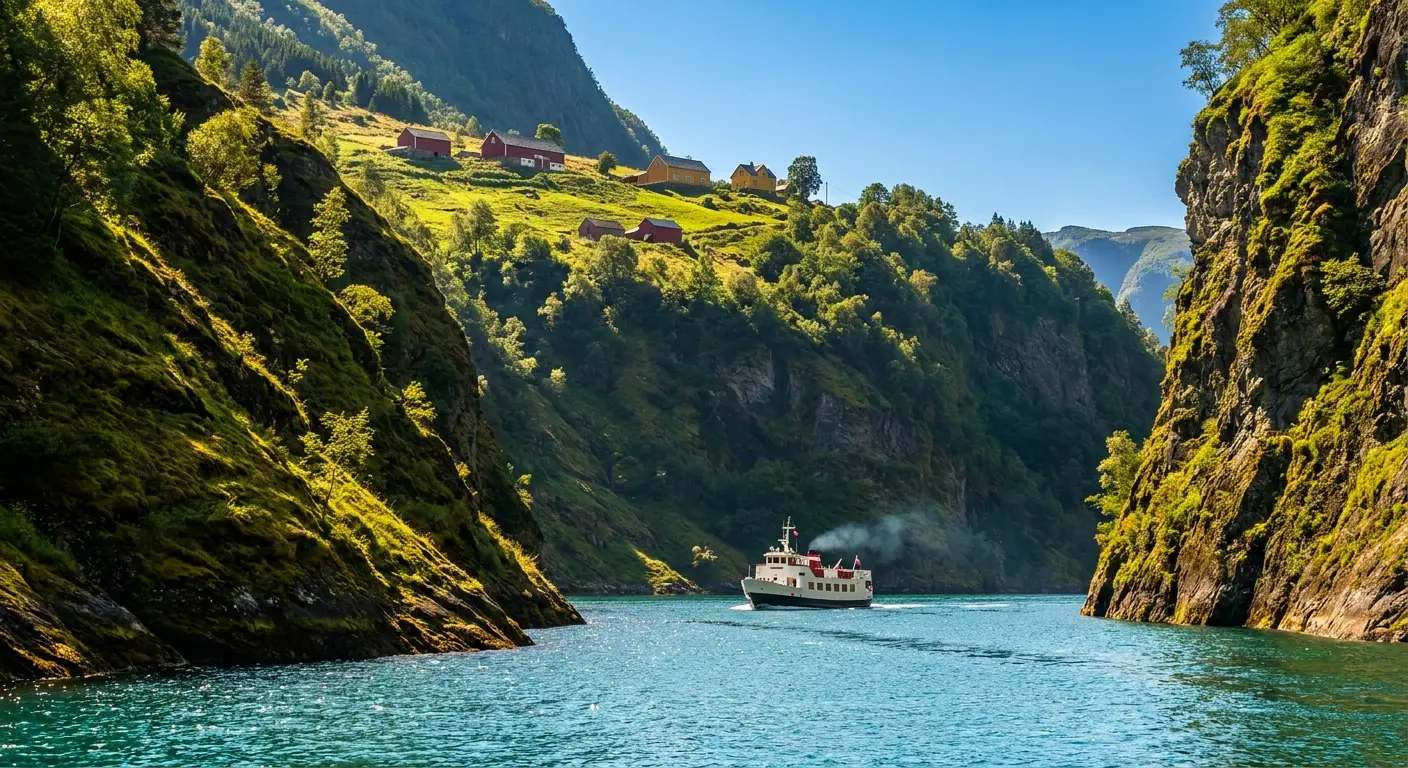
Fjords tend to be imagined in one specific way: steep rock walls and deep blue water. That is accurate, but the mood changes considerably through the year. In summer the slopes are vivid green and the water reads lighter, so the whole scene feels more open under a high sun. In spring you get snow-capped peaks alongside green slopes — the combination photographers chase most. In autumn the palette shifts to yellow and orange and the air turns still.
The practical takeaway: whatever month you choose, pack a windproof, water-resistant outer layer for the boat. Conditions on the water are always harsher than in the city centre you left that morning.
Packing: The Maths of Layering
On this route you walk city streets and spend time on water on the same day. A single heavy coat is the wrong answer; a layering system is the right one.
- Base layer: Breathable, quick-drying long sleeves. Needed even in summer for the evening cool.
- Mid layer: A light fleece or thin wool sweater. Your most-used item in May, early June and September.
- Outer layer: Windproof and lightly water-resistant jacket. Non-negotiable for the fjord boat and the ferry deck.
- Footwear: Comfortable, water-resistant shoes with good grip for Gamla Stan's cobbles and the squares of Malmö and Göteborg.
- Accessories: Thin scarf, light hat or bandana, sunglasses. Northern light reflects hard even in summer.
- Small daypack: For carrying a layer, water and an umbrella during city tours.
The most common mistake in May and September is bringing one layer too many and one layer too few at the same time — pack for range, not for a single temperature. For July and August, keep a windproof spare regardless.
Price, Capacity and Timing Your Booking
The current list price is 47,740 TRY with a capacity of 100 travellers. On coach tours, seats, flight allocations and hotel blocks move together, so mid-season departures fill quickly. Peak demand runs from mid-June to the end of August. September is the most flexible month on both availability and price, while May is where the best value tends to sit.
Budget for more than the package price. Not included: mandatory travel health insurance (€20), visa fees and service charges, the Turkish exit tax, lunches and dinners not specified in the programme, personal expenses, museum and site entrance fees, optional tours, tourist city taxes, and optional driver gratuities of €10 per person. If you joined every optional tour (Kronborg €85 + Vigeland €40 + Flåm €150 + fjord cruise €150 + Vasa €50 + Uppsala & Sigtuna €85 = €560), that becomes a substantial additional line. Deciding in advance which extras genuinely matter to you is as valuable a decision as choosing your month.
Visa, Insurance and Paperwork Timing
This route crosses several countries, entering via Copenhagen and exiting from Helsinki. Leaving paperwork to the final weeks is the fastest way to jeopardise an otherwise well-planned trip. A workable timeline:
- Three months before departure: Confirm your booking and lock in your seat.
- Eight to ten weeks before: Start the visa appointment and document process. Visa fees and service charges are not included in the package.
- One month before: Arrange travel health insurance — it is mandatory and costs €20.
- Two weeks before: Pay the exit tax and reconfirm flight times.
- One week before: Meeting point is Sabiha Gökçen Airport international departures terminal at 06:40 — plan to be there three hours before the flight.
Frequently Asked Questions
What is the best month for this tour?
Broadly, early June to mid-September. Choose late May or early September if you want fewer crowds, late June for maximum daylight, and mid-July to early August for the most stable weather.
Can you do it in winter?
Yes, but it becomes a different trip. Short days compress the panoramic city tours and the nature-based extras operate on uncertain schedules. Since the itinerary is designed around the outdoors, winter should not be your first choice.
How many layers do I need?
Three layers (base, mid, windproof) work well in May and September. Two are usually enough in July and August, but always keep an extra layer for the fjord boat and the ferry deck.
Do I have to take all the optional tours?
No — all are optional. The Vasa Museum is the safest choice year-round since it is indoors, while the Flåm Railway and fjord cruise deliver the most in the summer months.
What is included in the accommodation?
Six nights bed and breakfast in 3- and 4-star hotels plus one night in an economy inside cabin with breakfast on the Silja Line cruise — seven nights total. Airport-hotel-airport transfers and all city transfers by private coach are included.
Final Word: Choose Your Window, Not Just Your Route
On the Scandinavia and Fjords Tour, timing influences not which cities you see but how you experience them. Daylight, the operating season of the outdoor extras, crowd levels and price all move together. If you want quiet streets and better value, aim for late May or early September. If you want maximum light and full peak-season energy, take late June or July. If you want the most balanced version of the whole trip, take September.
Eight days across this route does not demand hour-by-hour planning. It does reward three decisions made in advance: packing in layers, booking early, and choosing which optional tours are worth it to you. To see the complete programme, included services and current pricing, view the Scandinavia and Fjords Tour on Turlago and set your calendar accordingly.