Scandinavia & Fjords Tour: Best Time of Year for 8 Days
Most people planning a Scandinavia and Fjords tour start by choosing a country. That is the wrong first question. On an eight-day route that runs from Helsinki through Stockholm, Oslo, Gothenburg and Malmö to Copenhagen, the variable that changes your experience most is not the map — it is the month you travel. In this guide we walk through the real day-by-day itinerary and look at what each stop actually gives you in each season, so you can match the trip to your expectations rather than to a brochure. You can view the Scandinavia and Fjords Tour on Turlago while you read.
The short answer: late May to mid-August is the sweet spot
In Northern Europe, the warmest weeks and the quietest weeks almost never overlap. On this itinerary, that means two distinct windows depending on what you value:
- If you want long daylight and maximum comfort: 10 June to 20 July. Daylight stretches to 18-19 hours, the cruise deck is genuinely enjoyable, and the fjord boat trip runs in the calmest conditions of the year.
- If you want quieter cities and softer pricing: 25 May to 15 June, or 20 August to 15 September. In early June you can photograph Senate Square with almost nobody in frame. By September, light turns warmer and temperatures settle between 12 and 16°C.
Avoid November through February. Daylight drops to roughly six hours, panoramic city tours are largely spent in the dark, and fjord boat departures can be cancelled in poor conditions. April and October sit in a middle zone: cheaper, but noticeably wetter.
Month by month on this exact route
These are typical conditions for the cities on the programme — not forecasts, but a realistic baseline for planning:
- May: Helsinki runs 10-15°C with everything in bloom. Stockholm and Oslo evenings sit around 8-10°C. Patches of snow still cling to fjord slopes, which gives photos real depth. Crowds are low.
- June: From mid-month, the white nights begin. Helsinki stays bright close to midnight and the sun returns around 4am. Maximum usable daylight for city tours, and Copenhagen is a very pleasant 17-20°C.
- July: The warmest and busiest month. Helsinki, Stockholm and Copenhagen can hit 20-24°C, which makes sitting on the Silja Line deck a genuine highlight. Hotel prices and street crowds peak at the same time.
- August: Still summer, though daylight starts shortening. Evenings cool toward 15°C by late month. Morning mist becomes more likely in the fjords, which makes afternoon departures the safer choice.
- September: Autumn colour across the Swedish interior — the Örebro and Karlstad stretch of the drive — is superb. Expect 10-15°C and more rain. Prices drop and cities empty out.
Important context: this is a coach-based tour. Weather does not only affect the boat and walking sections; it also shapes the long transfer day from Stockholm through Örebro and Karlstad to Oslo. A sunny transfer day and a rainy one feel like completely different trips. That is why June and July give you the highest return across the whole programme.
Helsinki: when the "White City of the North" actually glows
Day one begins at Istanbul Sabiha Gökçen Airport, with a meet-up at 08:00 and a Pegasus scheduled flight to Helsinki. The same afternoon, the Helsinki panoramic city tour covers Senate Square, Parliament Square, the Royal Opera House and the Sibelius Monument.
Helsinki's pale granite and marble architecture reads as bright even under cloud, but it truly shines on June and July afternoons. At these latitudes the sun stays low, so shadows never turn harsh and facades hold soft, even light for hours. For photographers, that means the middle of the day is still usable.
At the end of day one, guests can join the optional historic Porvoo tour (45 EUR), a wooden-town day trip about an hour east of Helsinki. If you take it, aim for the late slot — around 21:00 in late June — when the town is nearly empty and the light is at its best.
Silja Line cruise and Stockholm: getting the sea night right
Day two transfers to the Silja Line cruise from Helsinki to Stockholm, with an overnight in an economy inside cabin. Day three arrives in Stockholm for the panoramic tour: Fjällgatan Hill, the medieval Gamla Stan, Djurgården Park, City Hall, the National Theatre building, the stock exchange and Kungsträdgården.
The quality of the cruise experience is almost entirely seasonal. Baltic evenings in June and July sit at 15-18°C, which is warm enough to sit outside. In May and September the wind is sharp and the deck becomes a quick photo stop rather than a place to linger. During the white nights, watching the sky stay blue and pink past 23:00 from the deck is one of the most memorable moments of the whole trip.
Gamla Stan absorbs its heaviest crowds in July. In early June or September you can walk the same alleys almost alone. Free time after the tour usually points shoppers toward the Drottninggatan stretch. The optional Vasa Museum visit (50 EUR) is indoors, so it works in any weather — the warship that sank on her maiden voyage in 1628 and was recovered after 333 years on the seabed is a genuinely remarkable sight.
Oslo and the fjords: choosing the right window for the highlight
Day four departs Stockholm early and drives via Örebro and Karlstad to Oslo, with a Karlstad panoramic tour and a lunch stop on the way. In Oslo the panoramic route takes in the Royal Palace, the Parliament building, the City Hall where the Nobel Peace Prize is awarded, the National Theatre, Oslo Cathedral, Karl Johans gate and the Residence Museum.
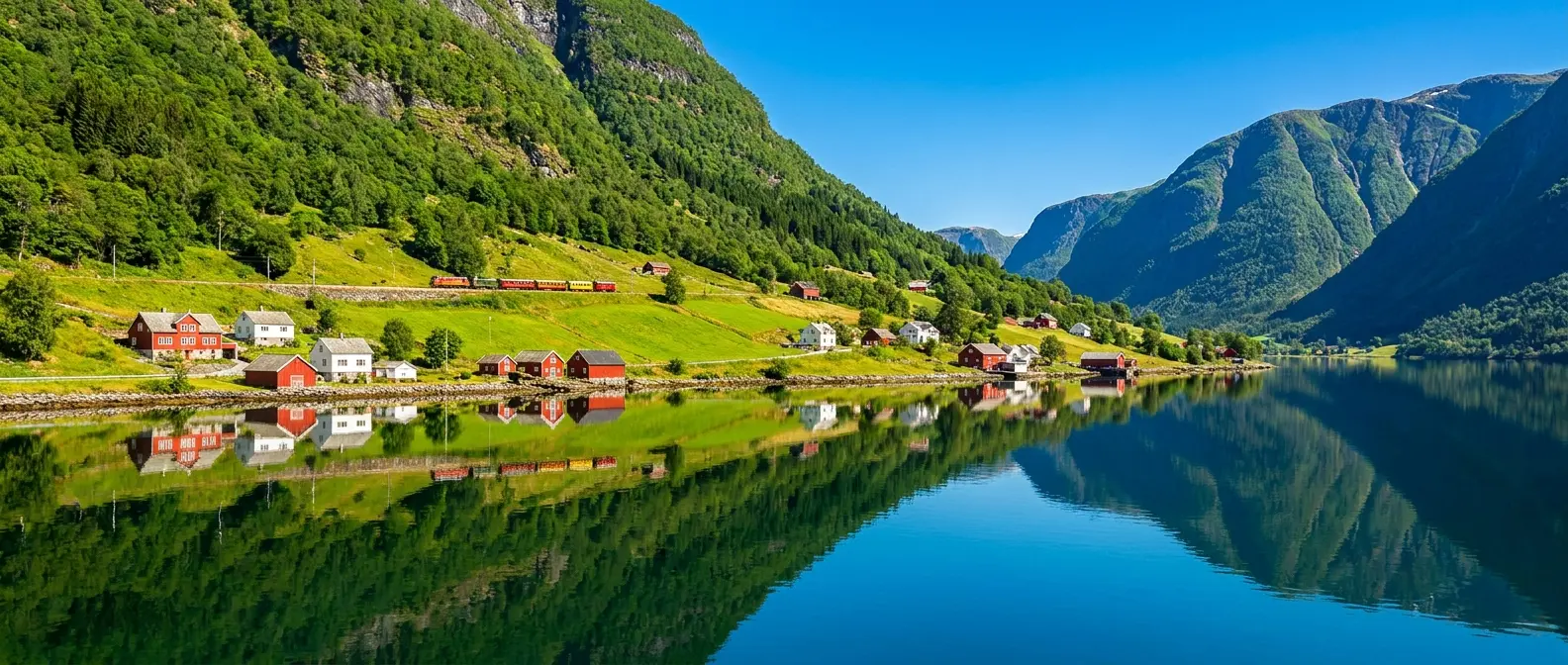
Day five is the centrepiece of the whole itinerary: optional Flam Railway (150 EUR) followed by the optional fjord boat tour (150 EUR), a two-hour cruise on the water. The month you place this day in decides the photos you bring home.
- Late May to early June: Snow still covers both fjord walls and the waterfalls are at full force from snowmelt. Dramatic scenery, but the wind on deck is cold — bring a proper jacket.
- Late June to July: The greenest landscape, the longest daylight and the mildest temperatures. The most comfortable window for two hours on the water, and also the busiest — railway and boat seats fill fast.
- August: Still excellent. Morning haze over the fjord adds depth to photographs but softens the widest views.
- September: Yellow and red begin to climb the slopes. Lower prices, thinner crowds, higher chance of rain and cancellations.
Because the fjord cruise runs at sea level, it feels 4-6°C cooler than the city. A thermos, a windproof layer and gloves belong in your bag even in July.
Oslo's second day and Vigeland: where to slot the optional tour
Day five also keeps you overnight in Oslo, so if you skip the Flam and fjord options, that day becomes free time. Day six starts with the optional Vigeland tour (40 EUR) before the drive to Gothenburg. The Vigeland installation in Frogner Park is the world's largest open-air sculpture park: 214 granite and bronze human figures and 13 wrought-iron gates across 320,000 square metres, almost entirely the work of one artist.
Because it is open-air, Vigeland is weather-dependent. June and July mornings make for a comfortable two-hour walk; in May and September the morning chill (8-11°C) usually means a coffee break halfway. The same day continues to Gothenburg for its panoramic city tour along the canals and harbour, which again benefits from summer daylight.
Gothenburg, Malmö and Copenhagen: the southern leg
Day seven drives from Gothenburg to Malmö and crosses into Copenhagen via the Öresund Bridge. The Malmö tour covers Stortorget, City Hall, the lively Lilla Torg and St. Petri Church. In Copenhagen the panoramic route includes Christiansborg Palace, Amalienborg Palace, the Little Mermaid, Strøget — Europe's longest pedestrian street — and the Nyhavn canal district.
This leg has a clear seasonal advantage: Denmark and southern Sweden are the mildest part of the route. Copenhagen evenings in July and August hold around 20°C, which makes a walk along Nyhavn genuinely pleasant. From May to September you are generally in a 12-17°C band, and layering is enough. The Öresund Bridge crossing takes under an hour, so the window for the view is short — try to sit on the right-hand side of the coach.
Price and booking timing: when does it actually pay to commit?
The current listed price for this tour on Turlago is 53,051 TRY with a capacity of 100 guests. Included: Pegasus return economy flights (Istanbul SAW to Helsinki, Copenhagen to Istanbul SAW), airport taxes, six nights bed and breakfast in 3* and 4* hotels, one night in an economy inside cabin on the Silja Line cruise with breakfast — seven nights total — airport and hotel transfers, all city transfers by private coach, the Helsinki-Stockholm cruise, panoramic city tours in Helsinki, Stockholm, Karlstad, Oslo, Gothenburg, Malmö and Copenhagen, professional Turkish-speaking guiding, and TÜRSAB professional liability insurance.
Three practical rules on timing:
- Book three to five months ahead for June to August. Hotel rooms and cruise cabins are the fastest-selling components in this window, and summer departures within a 100-guest capacity close early.
- Early May and mid-to-late September usually produce a lower total cost for the same content, since flights and hotels loosen up outside peak.
- Run your visa timeline alongside your price timeline. Schengen visa fees, the Turkish overseas departure fee and the mandatory travel health insurance (20 EUR) are not included. Because the tour enters through Finland and exits through Denmark, building your visa file around both countries smooths the process.
Optional tours add up quickly: Porvoo 45 EUR, Vasa 50 EUR, Flam Railway 150 EUR, fjord boat 150 EUR, Vigeland 40 EUR — roughly 435 EUR per person if you take everything. They are purchased locally rather than in advance, so you are not locked in. The exception is the fjord boat and Flam Railway, where summer seats can sell out; plan those two early.
Packing and light: what the season really changes
This is a summer itinerary, but at these latitudes "summer" is a misleading word. Layering is the only reliable rule:
- Base layer: a thin breathable thermal top. It feels unnecessary on a July afternoon and saves you on the fjord.
- Mid layer: light fleece or wool sweater. June nights drop to around 10°C.
- Outer layer: windproof and shower-resistant jacket — essential in May and September, sensible in July.
- Footwear: Gamla Stan's cobbles and Karl Johans gate mean long stretches on your feet. A flat, water-resistant walking shoe is ideal.
- Sleep: Without blackout curtains in late June you will wake at 4am. An eye mask and earplugs also help in the cruise cabin.
A small thermos earns its place in your suitcase on fjord and Vigeland days.
What's included and what isn't
Included: Pegasus economy flights Istanbul (SAW)-Helsinki (HEL) and Copenhagen (CPH)-Istanbul (SAW), airport taxes, six nights bed and breakfast in 3* and 4* hotels, one night economy inside cabin with breakfast on the Silja Line cruise (seven nights total), airport-hotel-airport transfers, all city transfers by private coach, the Helsinki-Stockholm cruise crossing, panoramic city tours in Helsinki, Stockholm, Karlstad, Oslo, Gothenburg, Malmö and Copenhagen, professional Turkish-speaking guiding and TÜRSAB professional liability insurance.
Not included: mandatory travel health insurance (20 EUR), visa fees, the overseas departure fee, lunches and dinners not specified in the programme, personal expenses, extras at hotels and on the cruise, museum and site entrance fees not listed, optional tours, tourist city taxes, and optional driver gratuities (10 EUR).
Which season suits which traveller
- First-timers in Northern Europe: late June and July — longest daylight, most predictable weather, best photographs.
- Crowd-averse and budget-conscious: 25 May to 10 June.
- Autumn colour and quiet cities: the first three weeks of September, accepting rain risk.
- Families with young children: July, when long daylight makes city tours easier to pace.
- Anyone chasing deep winter and snow: this is not that trip. The route is coach-based and panoramic, so winter months deliver darkness rather than atmosphere.
Frequently asked questions
Which months does the tour run?
It is listed as a fixed eight-day programme with multiple departure dates across the season. The meeting point is Istanbul Sabiha Gökçen international departures at 08:00, so plan an early start on day one.
Can the fjord boat be cancelled?
Yes — fjord cruises can be cancelled depending on sea and wind conditions. The risk rises noticeably in September and October; June and July are the safest. Optional tour fees are refunded if a trip is cancelled, but you will need to replan that day.
Do the white nights really affect sleep?
They do. In late June, Helsinki and Stockholm never reach full darkness. An eye mask is a practical fix, especially for the night on board.
How much cash should I carry?
Scandinavia is overwhelmingly card-based. That said, 150-250 EUR in cash covers optional tours, driver gratuities (10 EUR) and small cafés comfortably. Sweden, Norway and Denmark each use their own currency, so cards remain the simplest option.
Is insurance mandatory?
Mandatory travel health insurance is not included and is listed at 20 EUR. If you use your own policy, check that it covers Schengen travel and activities such as the fjord cruise.
The bottom line: the right dates turn a good tour into a great memory
The Scandinavia and Fjords Tour packs six cities and two sea crossings into eight days. What limits that route is not the countries — it is the sky: how much daylight, how much wind, how many people. If you want the long light of the white nights, mild fjord air and the deepest greens, aim for 10 June to 20 July. If you prefer emptier streets, softer prices and a little more weather risk, target 25 May to 15 June or the first half of September.
Whichever window you choose, the first step is checking live departure dates and availability. View the Scandinavia and Fjords Tour — 8 Days on Turlago, compare the programme against your own calendar, and start packing in layers today.