Short-Term City Car Rental in Istanbul: Budget Questions
Most people who look for a car in Istanbul for a day or two are not really shopping for a vehicle. They are trying to answer a narrower question: what will this actually cost me, all in, and where does the price surprise come from? The headline daily rate is the least interesting number on the page. In short-term city rentals — typically one to three days, picked up and returned inside the city rather than at the airport — the total is shaped by deposit holds, mileage policy, fuel rules, insurance excess and the calendar. This guide answers the budget questions in the order they actually come up. When you are ready to compare live offers, start with Turlago premium car rental options and put your dates in.
What counts as a short-term city rental?
In practice, one to three days is treated as short-term. Some offices set a two-day minimum, others sell weekend packages that stretch across three days. Just as important as the length is the geography: a city rental begins and ends at an urban branch, not at the airport. That single choice usually removes a location surcharge and saves you a pointless round trip through airport traffic.
The detail that catches people out is the 24-hour rule. A car collected at 10:00 is due back at 10:00 the next day. Return it at 11:00 and many offices will bill an extra day. On a two-day booking, one hour of optimism about traffic can add roughly half a day's cost to your total. Short-term rentals punish loose scheduling far more than long rentals do.
What is actually inside the daily rate?
The price you see advertised is a base rate. The total is assembled from several lines, and comparing two offers without lining these up is the most common budgeting mistake:
- Vehicle class base rate: The largest line. The gap between an economy hatchback and an automatic SUV can change your total dramatically.
- Transmission: Automatic is a real comfort upgrade in Istanbul traffic and is priced as such.
- Insurance package: A basic level is normally included; anything that reduces your excess is a separate line.
- Additional driver: Usually charged per day if a second person will drive.
- Young driver surcharge: Some offices apply a premium below a certain age.
- Equipment: Child seats, boosters and navigation units are added per day.
- Pick-up location: Airport or hotel delivery costs more than an urban branch.
- Mileage package: Unlimited kilometres included, or a daily cap with a per-kilometre charge beyond it.
- Deposit hold: Not a charge, but it reserves part of your credit limit.
Write these lines down before you decide. A cheap daily rate with a tight mileage cap and a high excess is often more expensive than a mid-priced offer that includes unlimited kilometres and a lower excess.
Which car class makes sense for city driving?
In Istanbul, class choice affects your budget and your day. Narrow side streets, stop-start traffic and scarce parking can turn a large car from a comfort into a liability.
Economy hatchback: lowest total cost
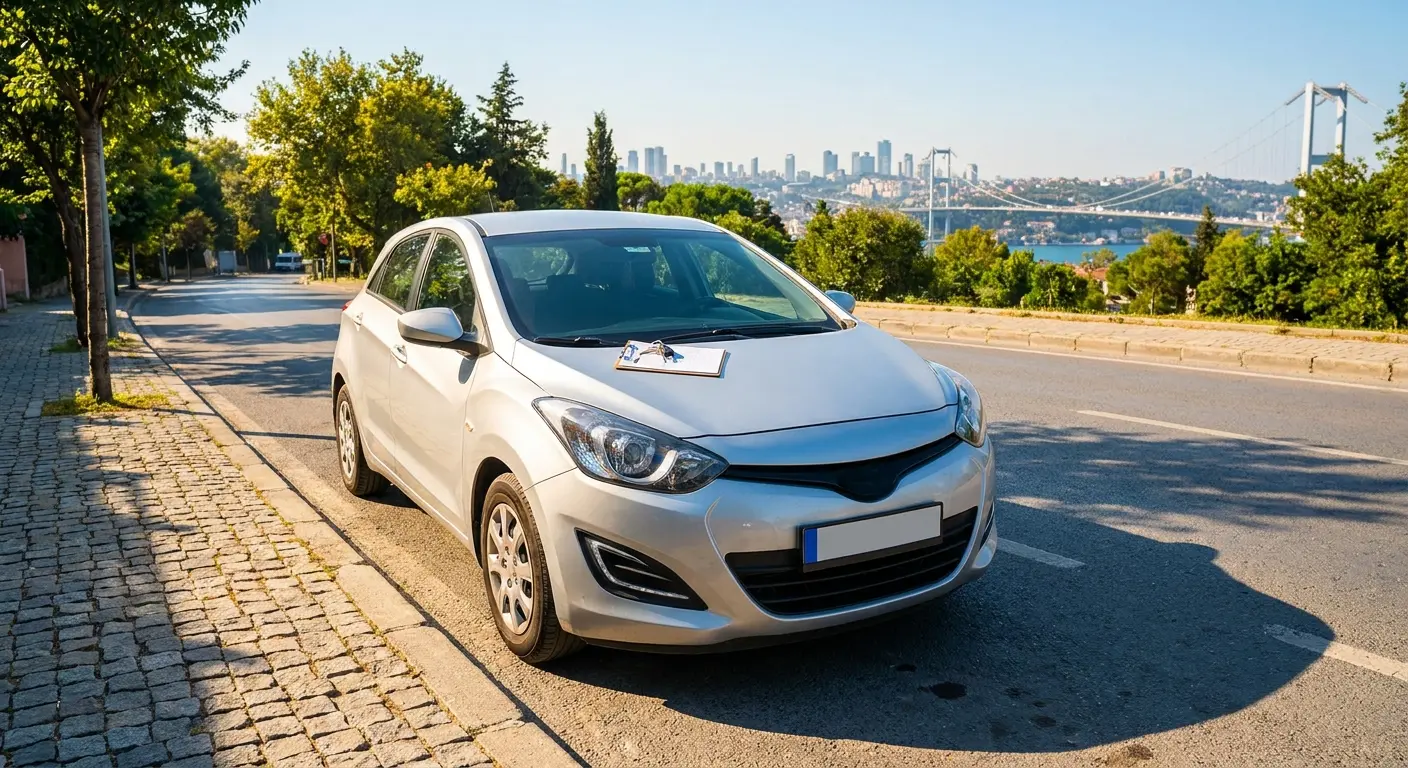
Small cars carry the lowest base rate, sip fuel and slot into parking spaces that larger vehicles have to drive past. For one or two travellers doing short urban hops, staying in this class is the single most effective budget decision available.
Mid-size sedan: boot space and comfort
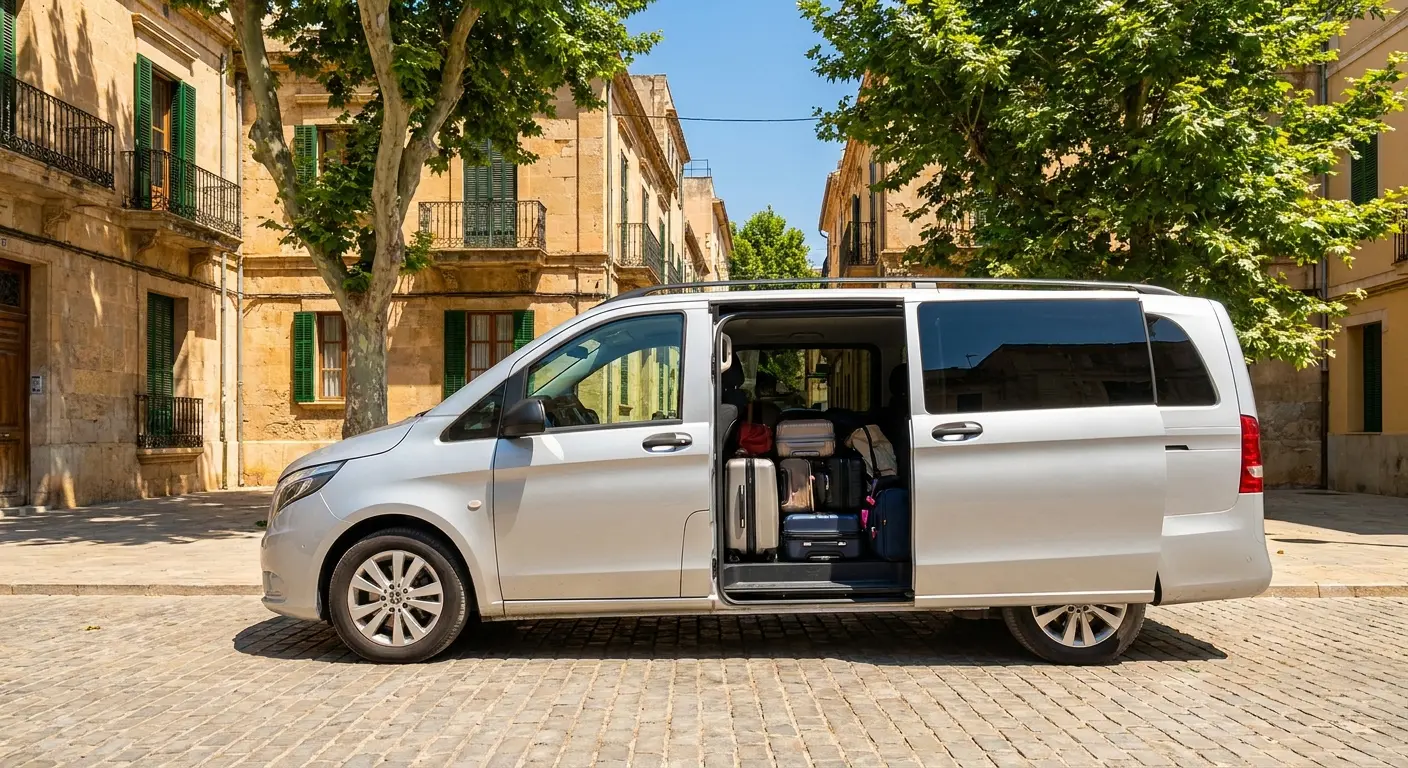
For three or four people with luggage, the sedan is the pragmatic middle. You pay more per day than economy, but you get a boot that swallows suitcases and rear seats that survive a full day of city miles. If your itinerary involves shopping bags or airport-adjacent errands, the upgrade earns its keep.
SUV and premium: when is it justified?
Higher seating position and automatic transmission are genuinely pleasant, but in the city they cost you in fuel, in parking time and occasionally in height restrictions inside car parks. For a short city rental, choose an SUV only when you have a concrete reason: heavy luggage, child seats, or a motorway leg that justifies the size.
How much does automatic transmission add?
Automatic is the most requested upgrade on short city rentals, and for good reason: the city's traffic is constant clutch work in a manual. The budget reality is that an automatic in the same class carries a noticeably higher daily rate than its manual equivalent. On a two-day booking, that difference is a visible share of your total.
The honest test is time behind the wheel. If you are doing two or three short trips a day, manual is fine. If you will be driving at both peak periods for two days straight, treat automatic as a comfort purchase rather than a luxury — it is the upgrade most people actually feel.
Is there a mileage limit, and how far will I really drive?
Short-term rentals come in two flavours: a daily kilometre cap, or unlimited kilometres included. Capped packages always look cheaper up front. The real cost appears at the counter when the per-kilometre overage is applied.
City driving adds up faster than people expect: hotel to meeting, hotel to a family visit, a shopping stop, two crossings between the European and Asian sides. "I won't drive much" is the most frequently disproved assumption in short-term rental. Estimate your daily distance before booking. If your estimate sits anywhere near the cap, paying for the unlimited package up front is almost always cheaper than paying per kilometre afterwards.
Watch for a second detail: some packages only convert to unlimited after a minimum number of days. A one or two-day rental may sit under the cap while a four-day rental is unlimited. On a short booking, that clause is a direct budget item, not fine print.
Which fuel policy is cheapest?
Fuel is the most misunderstood line in short-term rental. There are three models, and they behave very differently over two days:
- Full to full: Collect full, return full. Completely transparent — you pay only for what you burned. For short city rentals this is the most predictable option and usually the best one.
- Same level return: Return at the level you collected. Reasonable in principle, but it depends on documenting the gauge at pick-up. Photograph the dashboard before you drive away.
- Prepaid fuel package: You buy the tank up front and unused fuel is not refunded. On a one or two-day city rental you will rarely empty the tank, which makes this the least attractive model for short bookings.
Consumption is the other half of the equation. Stop-start traffic, short trips and air conditioning push city figures well above the brochure's combined number. Budget using a city estimate, not a motorway one. And when you return the car, refuel nearby and keep the receipt — it is the simplest way to close out a fuel dispute before it starts.
How big is the deposit hold, and when is it released?
The deposit is not a charge, but it is the least visible line in your short-term rental budget. At pick-up, the office places a temporary authorisation on your credit card. That amount is locked against your limit until the car is returned clean and compliant — and the release can take a few business days depending on your bank.
Three situations come up repeatedly:
- Debit cards declined: Many offices only accept credit cards for the authorisation, and may refuse debit cards or cash entirely.
- Insufficient limit: Rental charge and deposit are held at the same time. A maxed-out card during a holiday period can stall the booking at the desk.
- Card in the driver's name: Frequently required, so plan whose card is used before you arrive.
For a two-day city rental, this is a five-minute check that prevents an hour of friction at the counter.
Which insurance level do I actually need?
Insurance is where short-term renters either panic-buy the top tier or skip the section entirely. Both are wrong. The car already carries mandatory third-party cover and, in most cases, basic collision protection. What you are buying with an upgrade is a reduction of the excess — the amount that comes out of your pocket if the car is damaged.
Read for these four things:
- What is the excess amount? The number matters, not the package name.
- What is excluded? Tyres, wheels, glass, underbody, interior damage and lost keys are commonly treated separately.
- Is roadside assistance included? Relevant even on short city rentals — batteries, punctures and warning lights happen.
- Does it cover an additional driver? If someone else will drive, confirm it is on the policy.
A workable rule: a one-day rental that mostly sits in a hotel car park rarely justifies the top package. A car that will be driven all day through dense traffic and narrow streets makes excess reduction a sensible purchase.
Which costs appear after the fact?
Short-term rental budgets are rarely broken by the base rate. They are broken by small additions. Check this list before signing:
- Extra day charge for a late return
- Mileage overage beyond the daily cap
- Missing fuel: refuelling charge plus a service fee
- Traffic fines and toll or bridge crossings passed through
- Excess cleaning fees (heavy soiling, pets, smoking)
- Lost keys, damaged wheels or tyres
- Cross-province or cross-border usage notification fees
- Additional driver and young driver premiums
Most of these are preventable: choose a realistic return time, keep the fuel receipt, and photograph all four corners plus the dashboard at pick-up. Five minutes of documentation saves an argument later.
Does the pick-up location change the price?
Yes, noticeably. The same car, same day, same insurance can cost more from an airport desk than from a city branch, because airport locations carry higher operating costs and see higher demand. Add your own transport to and from the airport and the gap widens.
If your trip is city-based, collect from a branch near where you are staying. Hotel or address delivery buys convenience but appears as a separate line. On a short rental, where you pick the car up is very nearly as much a money question as which car you pick.
How much do weekends and public holidays change the price?
Rental pricing follows demand, not the calendar on your wall. Friday evening pick-up with Sunday evening return is the most contested slot of the week. The same car on a Tuesday or Wednesday can be available on visibly better terms.
Public holidays and long festive breaks are a category of their own: prices rise and availability in the economy classes disappears first. If your budget is the priority, you have two levers — shift your dates to midweek, or book the holiday period very early. A last-minute holiday booking is the most expensive version of the same trip.
Is booking early cheaper than booking late?
For short-term rentals, early booking is the safer economics. It gives you class and transmission choice. Booking late means choosing from whatever remains, and what remains is frequently a larger or higher-class vehicle — which is precisely how a carefully planned budget ends up exceeded.
There is one exception worth knowing: same-day and next-day bookings sometimes produce genuine deals because offices want to move idle cars. But that is luck, not a plan, and it cannot be built into a trip. Once your dates are fixed, compare and confirm.
Self-drive, chauffeur, or transfer: how do you compare them properly?
Comparing these three on sticker price is misleading. Compare them on total cost for the day.
- Self-drive rental: Daily rate + fuel + parking + insurance package + a locked deposit. You drive and you find the parking space.
- Chauffeur service: A fixed hourly or daily rate that typically includes fuel, driver and parking, often insurance. If you have several stops, the total can land surprisingly close to self-drive once parking and fuel are counted.
- Transfer: A fixed price from A to B. Perfect for a single journey, useless if you need the vehicle all day.
The rough thresholds: more than three distinct stops in a day, self-drive. One or two stops and no appetite for parking, chauffeur. A single one-way journey, transfer. For larger families, chauffeur service often turns out to be more competitive than expected precisely because it removes parking and fuel from your side of the ledger.
Parking, bridges and congestion: the invisible budget line
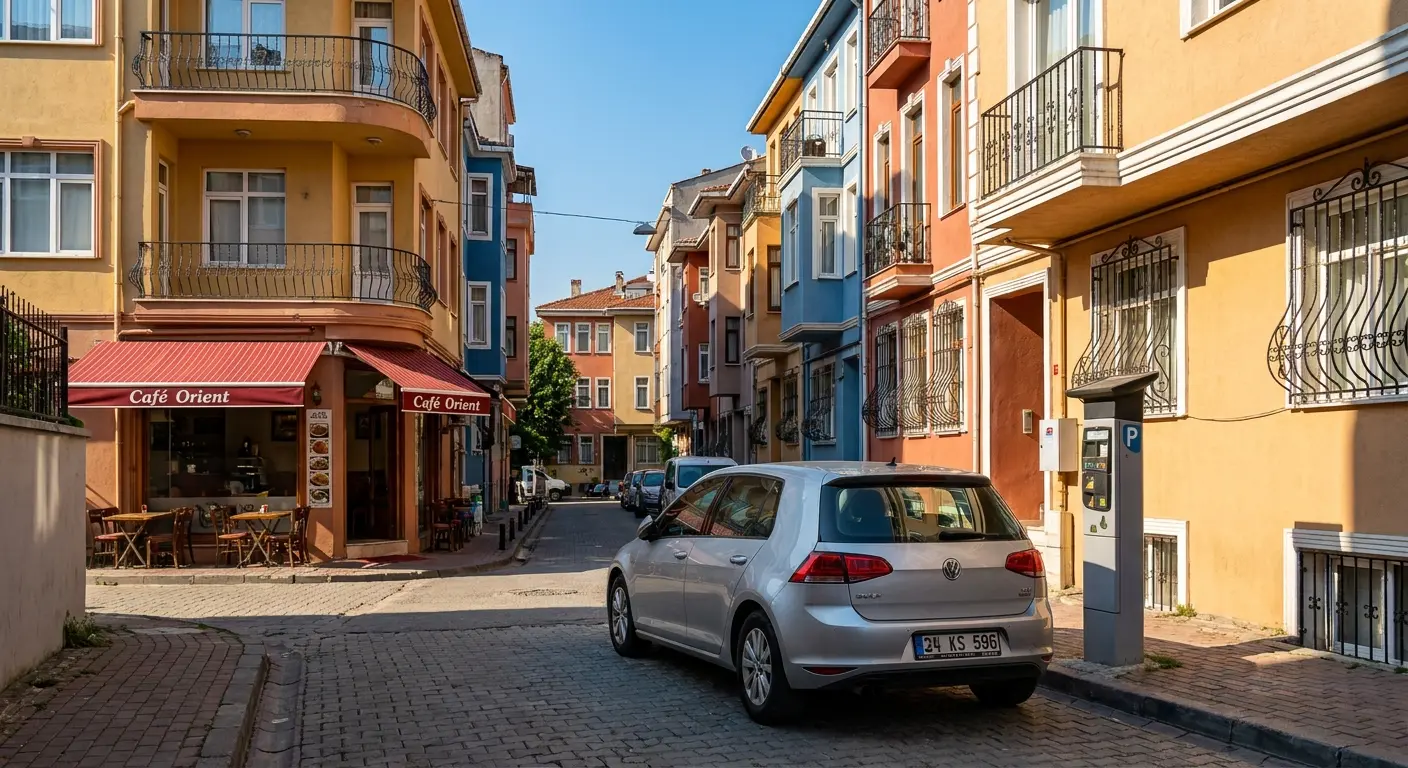
Parking is the most underestimated cost in short-term city rentals. Hourly and daily rates vary widely by district, and in central business and tourist areas the total can eat a meaningful share of a daily rate. If your hotel has parking, confirm it before booking — it changes your budget immediately.
Tolls and bridge crossings are the second hidden line. If the car is fitted with an electronic toll tag, crossings are billed to the rental; if it is not, you risk a fine. Ask at pick-up. On a short rental, that question takes ten seconds and prevents an invoice arriving weeks later.
The third line is traffic itself. The same distance takes twice as long, and burns more fuel, at peak times. When you build your budget, plan the hours as well as the kilometres.
How do you structure a two-day city rental budget?
Use this skeleton to build the total, then fill in real numbers from Turlago premium car rental options with your dates selected:
- Class and transmission decision: Choose the car first, then compare prices. Doing it the other way round locks you into the wrong vehicle.
- Daily base rate × days: Pick a return time that respects the 24-hour rule.
- Mileage package: Capped or unlimited, measured against your realistic daily distance.
- Insurance: Read the excess and choose deliberately.
- Additional driver and equipment: Add if relevant, otherwise zero.
- Fuel estimate: City consumption × days.
- Parking and tolls: Check parking at each destination in advance.
- Deposit hold: Not a charge, but reserve room on your card.
- Buffer: Add a small margin for a late return or a partial refuel.
Once this is filled in, two offers become genuinely comparable. In practice, the difference between them usually sits in the insurance package and the mileage policy rather than the headline daily rate.
Five budgeting mistakes that show up again and again
- Comparing only the daily rate: Insurance, mileage and pick-up location change the total.
- Ignoring the mileage cap: The overage charge is the most expensive surprise in short-term rental.
- Not planning the return around traffic: One hour late can equal one extra day.
- Forgetting the deposit hold: An insufficient limit can cancel a booking at the desk.
- Skipping photos at pick-up: Undocumented existing damage is the usual source of return-desk disputes.
The bottom line
Short-term city car rental in Istanbul is not a single price to be hunted down. It is an equation made of class, transmission, mileage policy, insurance excess, pick-up location and date flexibility. Write those lines down before you compare, and two things happen: the surprise charges disappear, and you end up in a car that actually fits what you are doing.
Quick summary: several stops in a day, self-drive; one or two stops and no parking appetite, chauffeur; a single journey, transfer. Always check the mileage cap, always read the excess rather than the package name, always set a realistic return time, and always photograph the car at pick-up. To compare current offers and see what is available on your dates, begin with Turlago premium car rental options.