Visa-Free Balkan Tour 2026: Best Time & 7-Night Route
Visa-free Balkan tour 2026: pick the date before you pick the route
Most travelers planning a Balkan trip start with the same question: "will I need a visa?" For 2026, the answer is genuinely encouraging. Serbia, Bosnia and Herzegovina, North Macedonia, Albania, Montenegro and Kosovo admit Turkish citizens without a visa. So the real planning question is not your passport — it is your calendar. Which month gives you the best balance of weather, crowds and price? I built this guide around that exact timing question, using a typical 7-night visa-free route departing from Izmir and spending serious time in and around Belgrade.
Two travelers can spend the same amount of money on the same route and have completely different trips: one strolls across the Old Bridge in Mostar on a cool morning, the other waits in a photo queue at 38°C. The difference comes down to the season you choose. If you want to compare options side by side, you can view visa-free Balkan tour packages on Turlago — and this article explains why some dates work far better than others.
Which countries does a visa-free Balkan tour cover in 2026?
The word "visa-free" can be misleading, because the Balkans is a big region with very different rules from country to country. What matters is the specific set of countries on your itinerary. For Turkish citizens in 2026, the main visa-free Balkan destinations are:
- Serbia: Visa-free, tourism stays up to 90 days. Belgrade, Novi Sad and Subotica anchor the route.
- Bosnia and Herzegovina: Visa-free, and under certain conditions even ID-card entry is possible. Sarajevo and Mostar are the most photographed stops.
- North Macedonia: Visa-free. Skopje and Ohrid are among the region's most underrated gems.
- Albania: Visa-free. Tirana, Berat and the coast have drawn serious interest recently.
- Montenegro: Visa-free. The Bay of Kotor and Budva are where the route touches the sea.
- Kosovo: Visa-free. Prizren offers cobbled streets and Ottoman traces in a short, high-impact stop.
By contrast, Croatia, Bulgaria, Greece, Romania and Slovenia follow Schengen or EU visa regimes. The moment you add Dubrovnik to a route, the trip stops being visa-free. That is precisely why most Izmir departures keep the loop inside Serbia, Bosnia and Montenegro, and why this guide focuses on that triangle.
A 7-night visa-free Balkan route from Izmir, day by day
The itinerary below leaves Izmir, loops around Belgrade, drops south into Bosnia and flies back. Packages are usually built on this skeleton, and the number of nights varies by operator.
- Day 1 — Izmir to Belgrade: Often a connection through Istanbul, arriving in Belgrade by evening. A gentle walk through Skadarlija and a welcome dinner.
- Day 2 — Belgrade city tour: Kalemegdan Fortress, the confluence of the Sava and Danube, Knez Mihailova street and the Church of Saint Sava.
- Day 3 — Novi Sad and Petrovaradin: North from Belgrade to the historic Petrovaradin Fortress, with free time in the old town.
- Day 4 — Belgrade to Sarajevo: A long but scenic transfer; the Drina river valley is the most beautiful stretch of the drive.
- Day 5 — Sarajevo: Baščaršija, the Latin Bridge, the war tunnel museum and the history that splits the city in two.
- Day 6 — Mostar and Blagaj: The iconic Old Bridge, the Blagaj Tekke and the Buna spring.
- Day 7 — Free day and departure prep: Shopping, local food and a hotel near the airport for the early flight.
- Day 8 — Sarajevo to Izmir: Morning flight home.
This structure balances culture, city time and nature. Unlike classic Balkan itineraries that spend six hours a day on a bus, it gives Belgrade and its surroundings two full days, so you actually breathe.
Belgrade and beyond: the stops that make the route work
Belgrade is the easiest anchor for a visa-free Balkan tour because flight connections are strong, hotel supply is wide and the city is simple to navigate. But staying only in the center does the region a disservice. Around Belgrade, these stops enrich the trip:
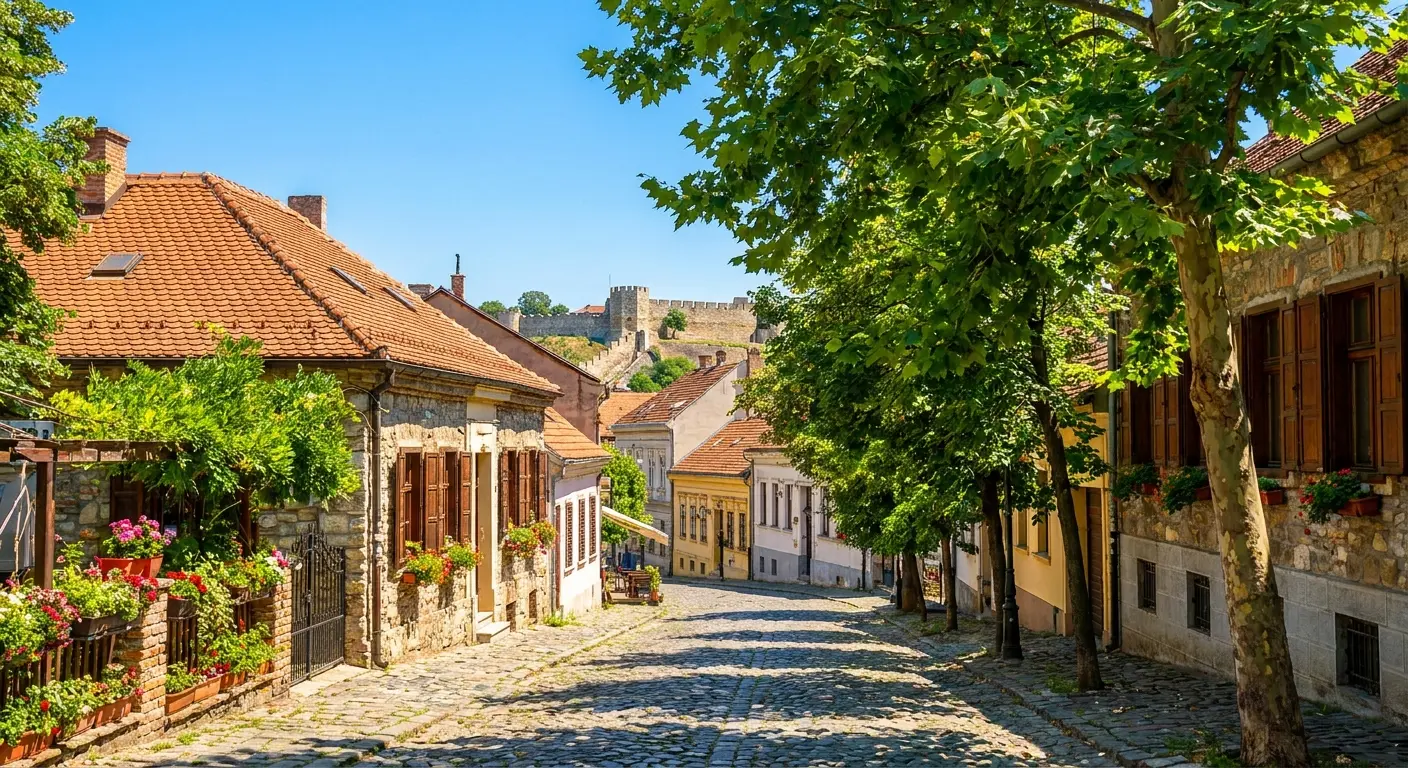
- Zemun: The calmer face of Belgrade, along the Danube, with quiet streets and riverside restaurants.
- Novi Sad: Petrovaradin Fortress and a European Capital of Culture identity make for an architecturally rich day.
- Fruška Gora: Wine routes and monasteries offer a genuine nature break.
- Subotica: Art Nouveau architecture that surprises most first-time visitors to northern Serbia.
Anchoring in Belgrade also buys you seasonal flexibility. The city lives year-round, so whatever date you choose, you will find hotels and things to do. Sarajevo and Mostar are more seasonal; coastal and mountain crossings can get harsh in winter.
The best time for a visa-free Balkan tour: a season-by-season decision guide
This is the heart of the article. There is no single "best month" for the Balkans, because your priority decides it: history, coast or overall comfort. Here is the real trade-off for each window.
April to May: the photography and comfort sweet spot
The most balanced window for a visa-free Balkan tour is usually late April through mid-May. Temperatures sit between 15°C and 24°C, cities are uncrowded, and prices are clearly below peak summer. Mostar and Sarajevo offer soft light for photos. The downside: mountain passes can still be cool, so pack a light jacket.
June to August: the liveliest, most crowded and most expensive stretch
Summer is festival season across the region. Streets are vibrant and cafés spill late into the night. But there are two costs: heat and price. In Belgrade and Sarajevo, July and August averages can reach 30-35°C, which makes city walking tiring. Flights and hotels peak too. If you want a short, high-energy break, this works. If you want a relaxed, cool and affordable tour, it does not.
September to October: the golden window
This is the window most travelers end up preferring. Sea temperatures are still pleasant in early September, cities empty out, grape harvest and gastronomy festivals begin, and prices drop below midsummer. By late October, temperatures fall in the highlands, so watch the timing of night transfers.
November to March: for flexible, experienced travelers only
Winter quiets the region and lowers prices for budget travelers, but some mountain roads close, daylight shrinks and outdoor stops get limited. If you plan a city-focused, museum-and-café tour, winter can make sense. But for a standard visa-free Balkan tour that includes mountain crossings like Mostar to Sarajevo, I would not recommend November through February.
How to budget a 7-night visa-free Balkan tour
The price question is unavoidable, but a single number would be misleading because the cost swings heavily on your dates, hotel class, whether flights are included and how many meals are covered. Still, for 2026 planning, you can build a sound estimate by breaking the budget into these lines:
- Flights: Return from Izmir; the biggest seasonal variable.
- Accommodation: 7 nights in 3-4 star hotels; staying outside central Belgrade cuts cost meaningfully.
- Intercity transfers: Usually by coach; ask about total driving time and comfort up front.
- Entries and guiding: Fortresses, museums and sites like the Blagaj Tekke are often outside the package.
- Food and personal spending: Local cuisine is cheap, but free days can inflate the total.
A practical move: put the same route's April and August prices side by side. In most cases the difference between the two dates is bigger than a single hotel night — which is the clearest proof that the date matters more than anything else.
Booking steps: move in the right order
The most common mistake in booking a Balkan tour is buying flights first and then hunting for a package. When packages bundle flights, both flexibility and price improve. Here is the order I recommend:
- Clarify your priority: Do you care most about history, coast or food? That decides your season.
- Choose a date range: Not a single day, but a week of flexibility.
- Compare packages: How many nights, which cities, which meals, how are transfers handled?
- Confirm visa status: Check passport validity and current entry rules before travel.
- Book early: Especially for September and October, good hotels sell out fast.
- Add travel insurance: A cheap but effective safeguard across the region.
Practical tips that pay off on the road
This section is about the details that make a real difference, drawn from years of gathering post-trip feedback:
- Money: Serbia uses the dinar, Bosnia the convertible mark, Montenegro the euro. Rather than carrying every currency, remember that cards are widely accepted.
- Clothing: Dress in layers. A cool morning in Sarajevo can turn into a warm evening in Mostar, especially in transition seasons.
- Footwear: Balkan cities are full of cobblestones and slopes; bring a broken-in, comfortable walking shoe.
- Connectivity: Mobile data changes as you cross borders; downloading offline maps makes everything easier.
- Food culture: Local staples like ćevapi, burek and sarma are usually affordable; the best meals are often the unplanned ones.
- Pace: Intercity distances look short, but border crossings take time — leave buffer in the schedule.
Frequently asked questions
Is a visa-free Balkan tour 2026 really visa-free?
Serbia, Bosnia and Herzegovina, North Macedonia, Albania, Montenegro and Kosovo admit Turkish citizens without a visa. Rules can change periodically, so confirm the current status before you travel and ask your operator to verify it at booking.
How many days is ideal?
Seven nights is a solid minimum if you want to absorb cities rather than skim them. A longer trip lets you add Montenegro and Albania.
Which season is cheapest?
November through March is generally the lowest on price, but weather limits what you can do. For the best comfort-to-cost ratio, choose April-May or September-October.
The takeaway: choose the calendar and the route takes care of itself
In planning a visa-free Balkan tour for 2026, the decision that matters most is not the itinerary — it is the date. Two travelers walking the same route in two different months see almost two different countries. So start by deciding which season you actually want, then build the 7-night Izmir route, the Belgrade surroundings and your budget around it. To make that planning step easier, view visa-free Balkan tour packages on Turlago; compare dates, inclusions and current options. Once you pick the right month, the visa question simply disappears — and what is left is a genuinely great Balkan journey.