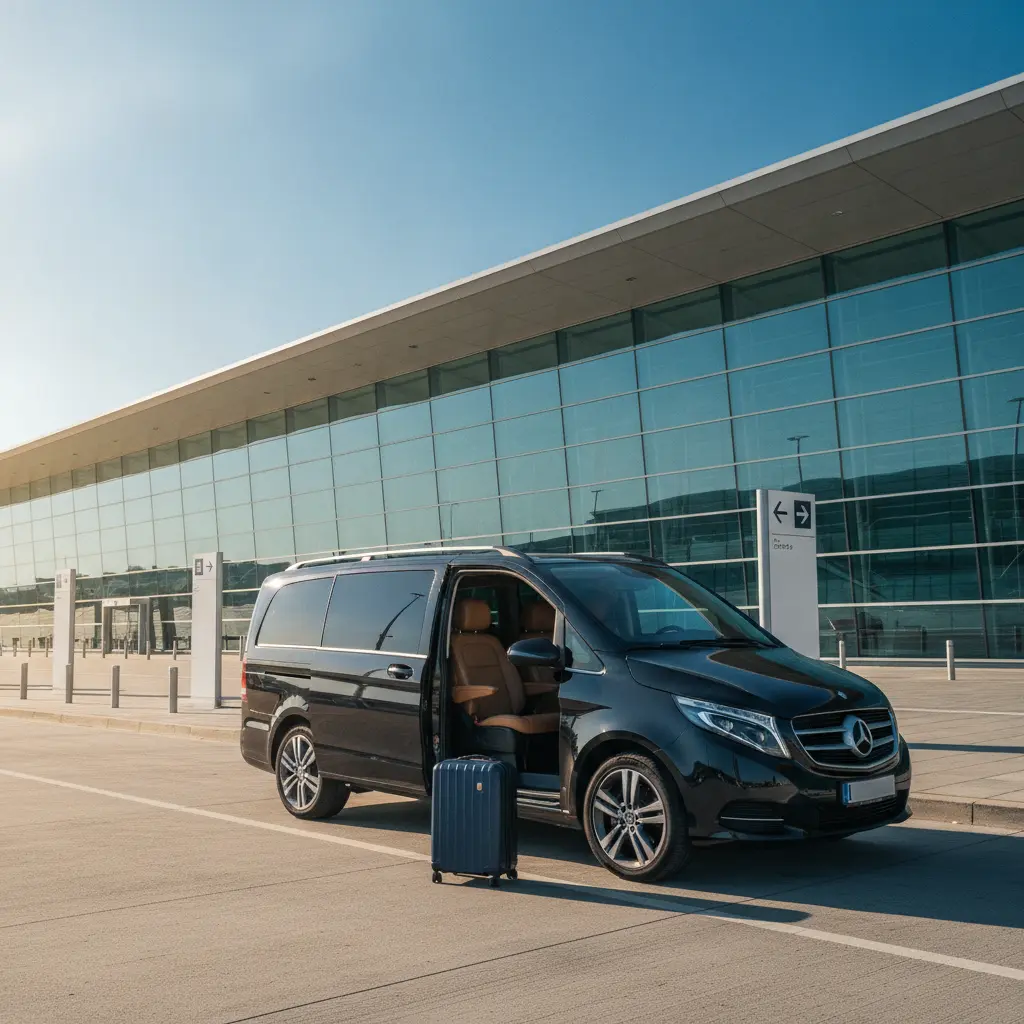
Winter Airport to Hotel Transfer: Which Questions to Ask?
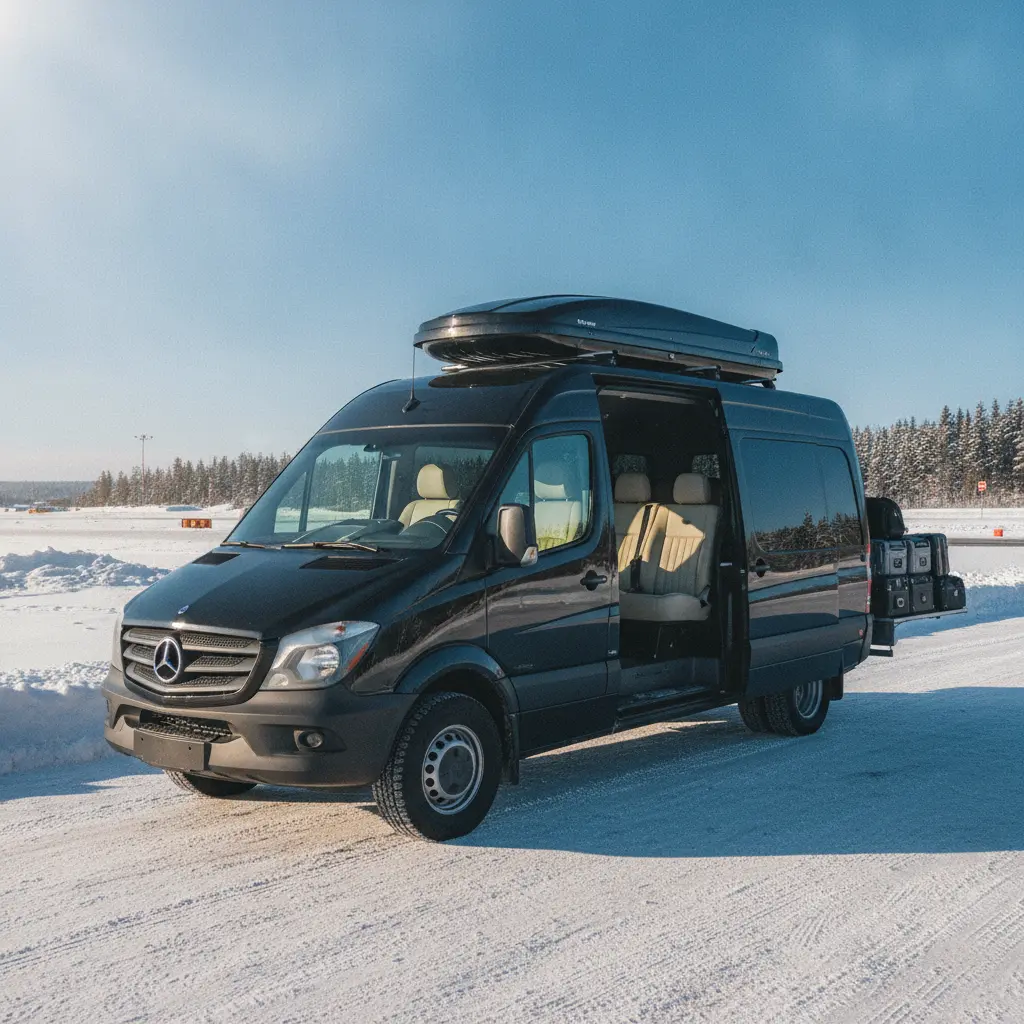
Booking a winter transfer from the airport to your hotel is a different job from the easy summer version. Flights slip, roads close, hotel driveways freeze over, and luggage doubles in size. The transfer itself is rarely the problem; the problem is the part nobody clarified in writing. Below is a practical, question-by-question checklist to run through before you pay — the same list you can send straight to a provider. If you are still deciding which vehicle class fits your group, start with premium VIP car rental options.
Why does winter change the transfer conversation?
In summer, a transfer is a simple movement between two points. In winter, the variables are no longer yours: the aircraft lands late, the ring road drops to one lane because of gritting, the street up to the hotel is sloping and icy. In that situation the important question is not the price — it is who carries the uncertainty.
Daylight matters too. With sunset before 5 pm, the arrivals hall is crowded and darker when you land, name boards are harder to spot, and the driver cannot simply recognise you in the crowd. Add winter clothing, boots and ski bags, and the real questions in winter fall into three groups: timing, safety equipment and who is responsible when something goes wrong.
The ten questions to ask before you book
If you are short on time, run this list first. Each point is expanded below.
- If my flight is delayed, how long will the driver wait and is waiting charged?
- Do you track my flight number live?
- What happens to my money if snow closes the road?
- What exactly is included in the quoted price?
- Does the car have proper winter tyres, and are chains carried?
- How will the driver find me at arrivals — will there be a name board?
- Does the vehicle fit my luggage, including ski or snowboard bags?
- Is a child seat available, and is it free?
- Is there a night surcharge for late arrivals?
- Are cancellation, refund and invoicing terms confirmed in writing?
“If my flight is delayed, will the car still be there?”
This is the single most important question of a winter booking, and the answer has two halves.
- Flight tracking: does the provider monitor your flight number automatically, or do they rely on the arrival time you typed into the form? If they track it, a delay moves the pickup on the driver's screen without you doing anything.
- Free waiting time: how many minutes are included? International arrivals with passport control and a slow baggage belt can easily take an hour. Typical allowances sit between 45 and 60 minutes, and that number should appear in your confirmation, not just in conversation.
Ask when the clock starts. Is it the scheduled landing time, the moment the aircraft touches down, or the moment the doors open? On a snowy day a plane can sit on the apron for twenty minutes, so the difference is real. The cleanest answer sounds like a single sentence: “sixty minutes of free waiting from your scheduled landing time.”
“What if my flight is cancelled or I never arrive?”
Winter cancellations are normal, so test two separate scenarios before booking.
- Cancellation outside your control: the airline cancels and you never travel. Is the transfer refunded, partially refunded, or converted into a credit?
- Moved to the next day: your flight shifts by 24 hours. Is the booking re-dated free of charge, or treated as a cancellation and re-priced?
Also ask for the definition of a no-show. If the driver turns up and you are not in the terminal, how much is retained? Do not accept a verbal “don't worry about it” on this point; it is the clause most likely to be used against you.
“What happens if snow closes the road?”
A force majeure clause is the core of a winter transfer contract, not a decorative paragraph. A good answer is short: “If the road is officially closed or the vehicle cannot move, the fare is refunded; if an alternative route exists, it is used at no extra cost.”
In practice there are three situations worth separating:
- Slow but open: the car comes, the road is open, traffic is heavy. This is traffic, not waiting, and should never generate a surcharge.
- Route change: the street to your hotel is closed. The driver drops you at the nearest accessible point. You must be told in advance — otherwise you are dragging suitcases through slush.
- Full closure: the intercity road is officially shut. Refund or re-dating applies.
Ask which of these three is covered and how the decision is communicated to you on the day. A mobile number that actually answers is part of the answer.
“What is included in the price, and what is not?”
Winter quotes drift upwards because of small extras. Tick each item off when you receive an offer:
- Airport parking or entry fee
- Tolls and motorway charges
- Night tariff between midnight and 6 am
- Minutes beyond the free waiting period
- Extra stops (picking up keys, a second hotel)
- Ski or bike carrier equipment
- Child seat or booster
- Driver overnight costs on long intercity runs
A serious quote lists these as included or excluded instead of giving one flat number. Ask about the currency too: winter bookings are often made months ahead, so a fixed exchange rate protects you from a surprise at pickup.
“Does the car have winter tyres and chains?”
Ask this for two reasons: safety and liability. In Turkey, commercial passenger-carrying vehicles are required to run winter tyres between 1 December and 1 April, so a professional transfer vehicle should already comply. Still confirm the details:
- Are these genuine winter tyres rather than all-season rubber?
- Are chains carried in the vehicle, or is it a vague “we'll fit them if needed”?
- Does the route require a four-wheel-drive vehicle (mountain roads, high-altitude hotels)?
- Can you share the vehicle model, age and safety features such as ABS and ESP?
If you are heading to a ski resort, a hillside boutique hotel or a coastal road with steep driveways, settle the four-wheel-drive question at booking. Upgrades are hard to find at short notice in peak winter weeks.
“Will the driver know the route, and can we communicate?”
In snow, local knowledge beats navigation. Mapping apps do not reliably show which incline has been gritted or which side street is frozen, while a driver who runs the route daily does. Ask:
- Does the driver cover this route regularly?
- Which languages can the driver use?
- Will I receive the driver's phone number and a WhatsApp contact before pickup?
- Will I get a “your driver is on the way” message before arrival?
For solo travellers arriving at night, this communication channel matters as much as the vehicle itself.
“Will my luggage and ski gear actually fit?”
Winter luggage roughly doubles. A family of four can easily travel with four large suitcases, four cabin bags, heavy coats and a ski bag. A “four-passenger” vehicle does not automatically mean four passengers plus that load. Ask precisely:
- How many suitcases does the boot take, stated in bags rather than litres?
- Are skis, a snowboard or a pushchair travelling with you?
- Is the seat count still comfortable once luggage is loaded?
- Is a roof box available, and is it an extra charge?
Sending a photo of your luggage is not excessive. In winter, replacement vehicles are scarce, so choosing the right class at the start is far easier than upgrading at the kerb.
“We are travelling with children — what else should we ask?”
A winter transfer with children needs its own set of questions:
- Is an age-appropriate child seat or booster provided, and is it free?
- What weight and age range does the seat cover (rear-facing infant carrier, or a 15–36 kg booster)?
- How quickly does the heating warm the cabin, and are blankets provided?
- Can we take a comfort break on a longer run without extra charge?
- Does a folded pushchair fit in the boot alongside the suitcases?
A twenty-minute break on an icy road genuinely helps both children and driver. Confirm whether it affects the price or the estimated arrival time before you set off.
“How exactly will we meet at the airport?”
In winter it is dark early and the arrivals hall is busy, so a vague meeting plan wastes the first half hour of your trip. Nail down the protocol:
- Will the driver wait inside with a name board, or guide you by phone?
- Which floor and which exit door number is the meeting point?
- If your flight lands forty minutes early, will the car be ready?
- Who pays airport parking or any waiting-related parking fee?
Ask whether meet-and-greet is standard or an add-on. Some operators include a name board, others charge for it, and in a crowded terminal the difference is noticeable.
“What if I cancel — do I get my money back?”
Winter bookings deserve a flexible cancellation window. Three dates need to be clear before you pay:
- Free cancellation deadline: how many hours before pickup can you cancel at no cost (48, 24, or 6)?
- Partial refund: what percentage is retained if you cancel inside the final 24 hours?
- Right to re-date: can you move the booking instead of cancelling?
Because winter flight cancellations are common, the right to re-date is often more valuable than a refund. Also ask when the payment is taken: at booking, before arrival, or after the ride.
“How do I pay, and will I get an invoice?”
Payment method is a trust question in winter conditions. Confirm:
- Deposit only, full prepayment, or cash on arrival?
- Are credit cards accepted, and is there a card terminal in the vehicle?
- Can a proper invoice be issued for business travel?
- Is a security deposit held, and when is it returned?
Landing at midnight and hunting for a cash machine is not how you want to start a winter holiday, so settle payment before you fly.
Five mistakes people make with winter transfers
- Comparing price only. Most of the gap between two quotes comes from waiting time, parking and night tariffs.
- Not sharing the flight number. Without it, delay tracking is impossible.
- Being vague about luggage. “It will fit” usually means a vehicle change at the kerb.
- Skipping the meeting point. Dark, crowded terminals punish unclear instructions.
- Ignoring cancellation terms. When snow is likely, flexibility is worth more than the cheapest fare.
A ten-step winter transfer checklist
Work through this order when you complete the booking:
- Have flight number, date, time and terminal ready.
- Write down passenger count and real luggage volume, including ski bags and pushchairs.
- Give the hotel address with street name and any access notes.
- Choose the vehicle class for winter conditions; request four-wheel drive if needed.
- Ask the winter tyre and chain question in writing.
- Confirm free waiting time and the cost of exceeding it.
- Read the force majeure and refund clauses.
- Get the meeting point and the driver's contact details.
- Verify night surcharges and extras line by line.
- Keep the confirmation email or message until travel day.
Complete these ten items and the three most common winter failures — a delay, a closed road, and late luggage — are largely neutralised before you leave home.
The bottom line: a good winter transfer is a well-asked one
Winter airport transfers are not improved by hunting for the lowest number. They are improved by closing uncertainty in advance: flight tracking, free waiting time, winter equipment, luggage capacity and cancellation terms. Once those are written down, the only thing left is the pleasant part — dinner in a snowy city on your first evening. To compare vehicle classes before you decide, browse premium VIP car rental options, ask your questions in writing, and keep the answers. One minute of care when booking saves the whole journey.